Vertical vs. Horizontal Siding: How to Choose (and When to Mix Them)
May 2025The choice between vertical vs horizontal siding usually gets framed as a style debate, but that is only half of it. The direction you run the boards changes how your home looks, how the siding handles rain, and what it costs to install. What matters far more for how long it lasts and how much you maintain it is the material and the quality of the install.
Treat it as two decisions in a set order: pick the material first, since that locks in lifespan and upkeep, then choose the orientation for the look and the budget. This guide covers both, including how to mix the two without it looking accidental.
Vertical vs. Horizontal Siding at a Glance
Both orientations protect the same wall and use the same materials. Here is the short version before the details.
| Factor | Horizontal siding | Vertical siding |
|---|---|---|
| Common profiles | Lap, Dutch lap, shiplap, nickel gap | Board-and-batten, vertical panel, tongue-and-groove, standing-seam metal |
| How it installs | Nails straight into the wall studs | Needs furring strips or blocking added first |
| Relative install cost | Lower | About 10-25% more for the same material |
| Water shedding | Good, but laps can trap water if poorly flashed | Sheds straight down, fewer crossing seams |
| Cleaning | Hose down carefully to avoid the seams | Rinses off easily |
| Makes a home look | Wider and more grounded | Taller |
| Best-fit architecture | Ranch, colonial, craftsman, Cape Cod | Farmhouse, modern, coastal, barn-style |
Keep one thing in mind as you read: orientation is a look-and-budget call. Lifespan and upkeep are decided by what the boards are made of and who installs them.
Horizontal Siding: The Traditional Default
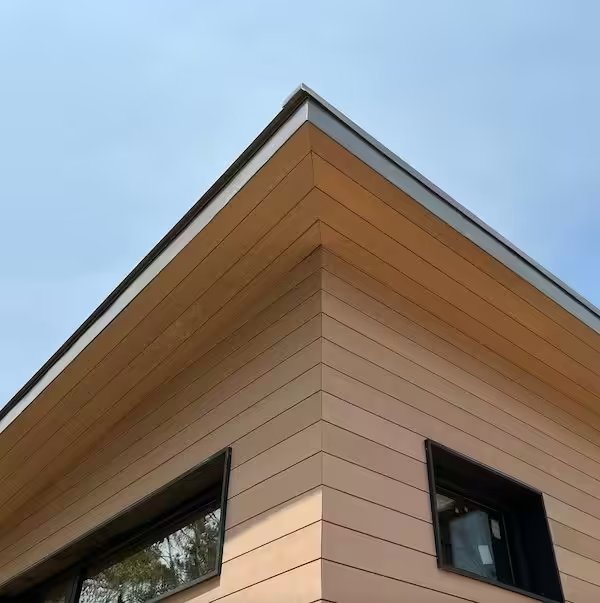
Horizontal siding runs parallel to the ground in long, overlapping courses. It is what most people picture when they think of a sided house, and it covers the majority of homes in the country. Lap siding and clapboard are the classic versions, but horizontal shiplap siding, Dutch lap, and nickel gap all run the same direction.
There is a structural reason it dominates. House walls are framed with studs that run vertically, so horizontal boards cross those studs and nail straight into them. No extra framing, less labor, and almost every siding crew has done it a thousand times. That keeps it the faster and cheaper option to install.
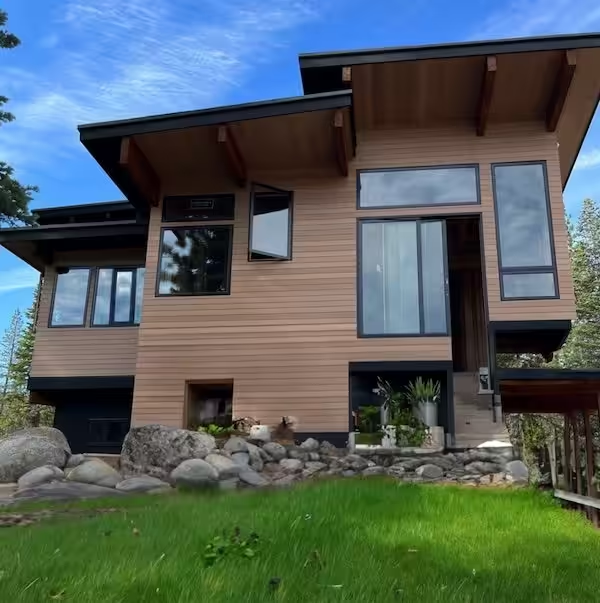
Horizontal lines also read as traditional. They suit ranch, colonial, craftsman, and Cape Cod homes, and they make a house look wider and more grounded, which flatters single-story and low, spread-out designs. Because it is the expected look in most neighborhoods, it is the safer choice for resale and broad curb appeal.
The trade-off is water. Every lap creates a small ledge where one board overlaps the one below, and those ledges can hold moisture or let wind-driven rain push up behind the overlap. That is not a reason to avoid horizontal siding, but it does mean the flashing and the drainage layer behind the boards have to be right. Paint also tends to fail first along those wet seams, so a horizontal wall rewards good detailing and regular upkeep.
Vertical Siding: The Modern Statement
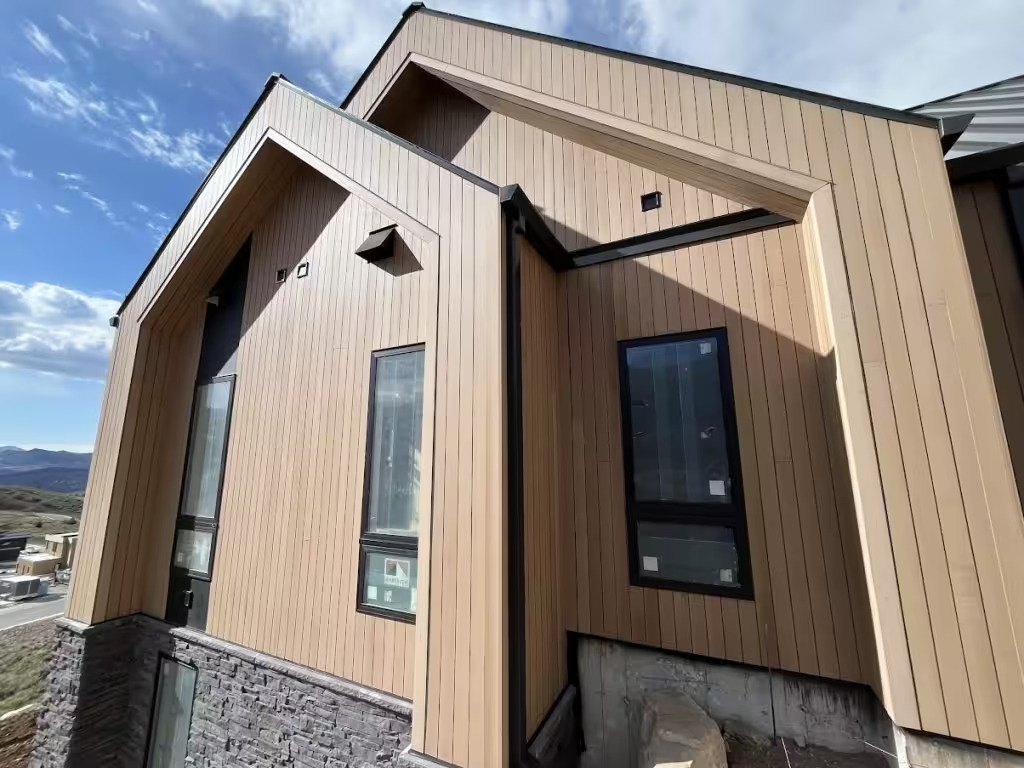
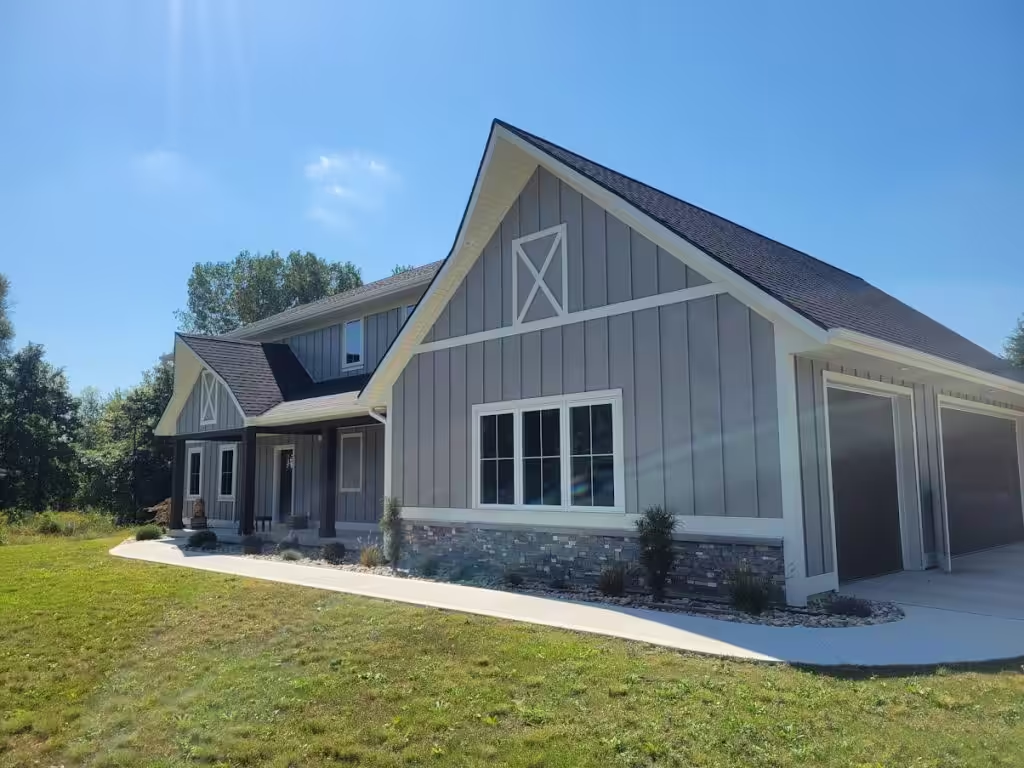
Vertical siding runs boards or panels up and down the wall, from the foundation to the roofline. The most common style is board-and-batten siding, where wide boards are joined by narrow battens over the seams, but vertical panels, tongue-and-groove, and standing-seam metal all run the same way. It reads as modern and a little unexpected, which is exactly why it is everywhere on farmhouse, contemporary, coastal, and barn-style homes right now. Vertical lines draw the eye up and make a house look taller, a useful effect on two-story homes or narrow lots.
The part most guides skip is structural. Because the studs run vertically, vertical boards have nothing to nail into between the top and bottom plates. So installers first add horizontal furring strips or blocking across the wall to create a fastening surface. That extra framing, plus the care it takes to keep long runs perfectly plumb, is the real reason vertical siding costs more. It is a framing-and-labor story, not a siding-material one.
When it is installed well, vertical siding sheds water cleanly. Gravity pulls rain straight down the board faces across fewer crossing seams, and it collects less dust and debris, so it tends to clean up with a quick rinse.
The trade-offs: it costs more, fewer crews are fluent in it, and the fasteners carry more load over long spans, so the fastening schedule matters. If water does get behind the boards, it can travel sideways along the furring as hidden moisture damage before it finds a way out, which makes good flashing and a proper weather barrier non-negotiable.
How Much Does Vertical vs. Horizontal Siding Cost?
Vertical typically runs about 10 to 25 percent more than horizontal for the same material. The reason is worth understanding before you treat that as a dealbreaker: the gap comes almost entirely from the added framing and labor, the furring strips, the material they require, and the time it takes to keep tall runs plumb.
Installed, most projects land between $3 and $11 per square foot for horizontal and $4 to $12 for vertical, ranges that Angi and other national cost guides report. The per-material figures below are typical industry estimates; your material grade and local labor market move them more than the orientation does.
| Material | Horizontal (installed) | Vertical (installed) | Typical vertical premium |
|---|---|---|---|
| Vinyl | $3-7 / sq ft | $4-9 / sq ft | 15-20% |
| Engineered wood | $4-9 / sq ft | $5-11 / sq ft | 10-20% |
| Fiber cement | $8-13 / sq ft | $10-16 / sq ft | 20-25% |
| Cedar / wood | $8-12 / sq ft | $9-14 / sq ft | 10-15% |
| Composite | Premium tier, dealer-quoted | Premium tier, dealer-quoted | Profile-driven |
Two caveats matter here. Board-and-batten is a vertical profile with no real horizontal equivalent, so there is no apples-to-apples premium to apply; you are simply pricing board-and-batten. And the material you choose swings the bill far more than the direction. On a 2,000-square-foot wall, the orientation premium works out to roughly $1,000 to $4,000, while moving from vinyl to fiber cement can change the total by far more than that. If you want to see how a single profile prices out, our board-and-batten cost guide breaks down materials and sizing.
Which Holds Up Better to Water and Weather?
In theory, vertical wins. Water runs straight down the boards and crosses fewer seams, while horizontal laps give rain more ledges to sit on and more chances to creep up behind an overlap in a storm. That is the case you will read in most comparisons, and it is directionally true.
The honest answer is more useful: orientation matters less than the install. Fine Homebuilding’s guide to rainscreens puts it bluntly: “virtually all common siding systems will leak at some point, especially when subjected to wind-driven rain.” The real water management is done by the layers behind the siding: the weather-resistant barrier, the drainage gap, and the flashing. The U.S. Department of Energy’s Building America program makes the same point, advising builders to flash the bottom of every exterior wall and integrate it with the other details to “direct water down and out of the wall.”
Put those together and the takeaway flips the usual framing. A well-flashed horizontal wall will usually outlast a sloppy vertical one. Vertical has its own catch, noted earlier: water that slips behind it can hide before it finds a way out, so the detailing has to be right. If you are weighing water resistance across other exterior materials too, our guide to water-resistant building materials covers decking, trim, and porches alongside siding.
Climate can still tip the scale. In wet, driving-rain regions, vertical’s faster drainage is a genuine edge, and in high-wind areas the fastening schedule matters more than the direction. If your decision is climate-driven, our guide to high-performance materials for extreme weather goes deeper on matching material and detailing to local conditions.
The Factor That Outweighs Orientation: Material
Here is the point that gets lost in every vertical-versus-horizontal debate. Both orientations use the same materials, so the thing that actually decides how long your siding lasts, how much you maintain it, and what it returns at resale is the material, not the direction.
The differences between materials are real. Wood looks warm but asks for the most upkeep, which is exactly why more builders are specifying composite siding instead. Vinyl is the budget option and can read as flat, especially when a thin vertical board-and-batten profile makes the texture look painted on rather than built in. Fiber cement is durable and holds paint well but is heavy and brittle to work. Rice-hull composite sits at the premium end and trades the maintenance away. Resale tracks the material too: the 2025 Cost vs. Value Report puts fiber-cement siding replacement at 113.7 percent cost recouped and vinyl at 96.5 percent, with the orientation playing no part in those figures.
In our experience at Modern Mill, this is where homeowners overthink the orientation and underthink the material. Our ACRE siding is made with upcycled rice hulls bound in a proprietary resin, and installed to spec it performs the same whether you run it as horizontal shiplap or vertical board-and-batten. It resists water, weather, rot, and insects; it cleans with soap and water; and you can paint it or keep the factory color. Orientation is a design call with ACRE, never a durability one, because the material is identical either way.
If durability is your priority, compare the materials before the direction. Our breakdown of the longest-lasting siding options and our head-to-head on ACRE versus fiber cement are better starting points than any orientation chart. If wood is the material you are weighing ACRE against, see how synthetic wood siding compares to real wood, and if you are still deciding whether the category earns its price tag, our breakdown of whether composite siding is worth it walks through the numbers.
Can You Mix Vertical and Horizontal Siding?
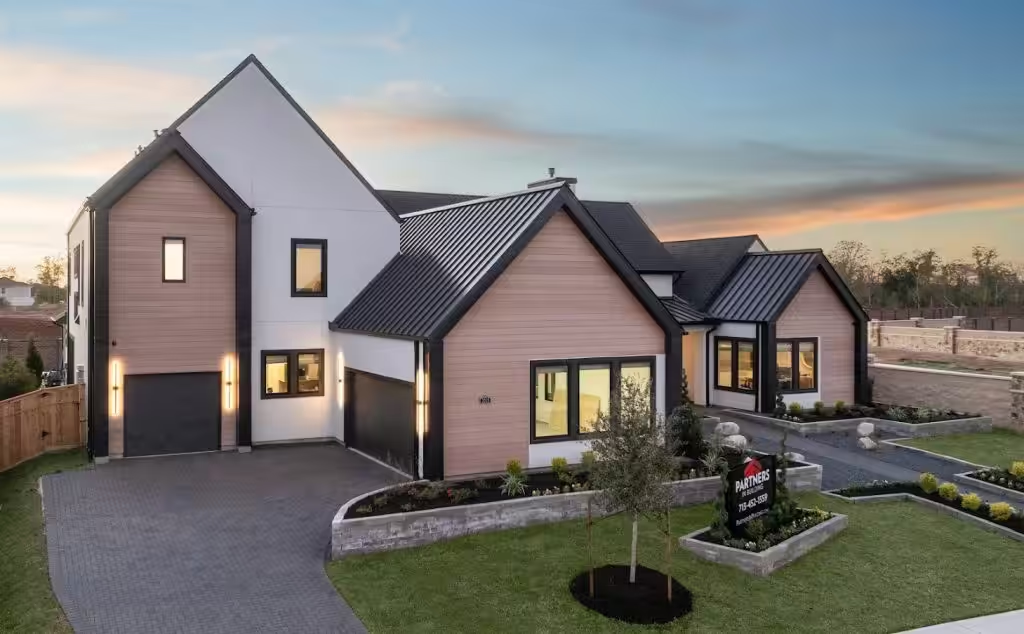
Yes, and it is one of the most popular looks in residential design right now. Mixing breaks up large walls and calls attention to specific features, but the line between custom and chaotic is thin, so it takes a plan. Expect it to add a little to the budget too, since the wall now needs two install methods and extra trim where the orientations meet.
A few rules keep it looking designed rather than random:
- Pick one primary orientation for most of the walls, then use the other as an accent, not a 50/50 split
- Put the vertical sections where they earn their place: gables, dormers, entry surrounds, or a single feature wall
- Draw clean transition lines with trim, a color change, or a roofline so the switch looks deliberate
- Match the material and finish across both directions; mixing a thin vinyl with a wood accent is the fastest way to look disjointed
- Keep it symmetrical where the architecture is symmetrical
Because ACRE comes in both horizontal shiplap and vertical board-and-batten profiles in the same colors and finish, mixing is straightforward: the accent and the field read as one material, which is what sells the look.
How to Choose: A 6-Step Decision Framework
If you strip away the style debate, the decision comes down to six questions in order.
- Choose the material first. It decides lifespan, upkeep, and a large share of the cost, so lock it in before you argue about direction.
- Match the orientation to your home’s architecture and street. Horizontal reads traditional, vertical reads farmhouse or modern. Check your HOA covenants before you commit, since many restrict siding style and color.
- Read your home’s proportions. A low, wide house wears horizontal lines well; a tall or narrow house, or one where you want more presence, benefits from the height vertical adds.
- Weigh your climate. Driving rain and wet regions reward vertical’s faster drainage, but both perform when they are flashed correctly, so treat this as a tiebreaker, not the deciding factor.
- Set your budget. Horizontal is cheaper and faster to install; expect vertical to run roughly 10 to 25 percent more for the same material.
- Hire for the orientation you chose. Vertical needs correct furring, blocking, and flashing, so ask any crew to show you vertical jobs they have finished, and confirm whether the added framing triggers a permit or inspection in your area.
Ready to Experience the
Difference?
Ask for ACRE at your local lumber yard or order samples to see for yourself why builders are making the switch.
Frequently Asked Questions
Is vertical siding more expensive than horizontal?
Yes, usually by about 10 to 25 percent for the same material. The premium is labor, not material: vertical boards need horizontal furring strips or blocking added to the wall before they can be fastened, and keeping tall runs plumb takes more time.
Does vertical siding increase home value, or is it too trendy?
Orientation itself is close to resale-neutral. What moves value is whether the siding fits the home’s architecture and the neighborhood and how well it is installed. Board-and-batten and other vertical looks pay off when they suit the house; they work against you when they clash with everything around them.
Is horizontal siding cheaper than vertical?
Yes. House framing runs vertically, so horizontal boards nail straight into the studs with no added blocking. That means less labor, a faster install, and more crews who can do it well, all of which lower the cost.
What siding orientation is best for a modern or farmhouse home?
Vertical, usually as board-and-batten. The upright lines and the batten shadow lines are central to the modern-farmhouse and contemporary look, which is why the style has become shorthand for it.
Does vertical siding really shed water better?
Directionally, yes, because water runs straight down and crosses fewer seams. In practice the flashing, the drainage layer behind the siding, and the material matter more, so a well-detailed horizontal wall can easily outperform a poorly installed vertical one.
Can any siding be installed vertically?
Most materials can run either direction, but anything not designed as a vertical profile needs horizontal furring or blocking added first. Board-and-batten is built for vertical installation; lap and clapboard are built for horizontal. Check the manufacturer’s instructions before you switch a profile’s intended direction.
The Bottom Line
Get both decisions right and they work together. Orientation sets the look and a slice of the budget: horizontal for a traditional, grounded, lower-cost wall, vertical for height and a modern statement at a small premium. The material sets everything that happens after the install, how long it lasts, how often you touch it, and what it returns at resale.
That is the order to decide in: pick the material that fits your climate and maintenance tolerance, then run it in the direction that fits your home. Modern Mill makes ACRE siding profiles for both directions, from horizontal shiplap and V-groove to vertical board-and-batten, in the same colors and finish, so you can choose the look without trading away durability. Order samples to see how a profile reads on your wall before you commit.