What Is Composite Wood? Types, Pros and Cons, and Wood Alternatives
July 2025Shop for decking, siding or trim and “composite wood” shows up on very different products, from capped deck boards to MDF trim to boards made from rice hulls. Those differences decide how a board handles water, whether it takes paint, and where it belongs on a house.
What Is Composite Wood?
Composite wood is a manufactured material made by binding wood, or another plant fiber, together with a resin, an adhesive or a plastic. The result looks and works like wood but behaves more predictably, because the fibers, strands or veneers are bonded into a board or panel with controlled properties.
The term is an umbrella, and that is where most of the confusion starts. A deck builder saying “composite” usually means wood-plastic decking. A cabinetmaker means MDF or particleboard. An architect may mean plywood, OSB or a structural beam.
Some composites skip wood entirely and use another plant fiber, such as rice hulls, to get the look and workability of wood. They are sold for siding, trim, decking and sheets, usually as wood alternatives.
All of these share one idea: take a natural fiber, bond it with a binder, and get a board that is more uniform than solid lumber. What changes from one family to the next is the fiber, the binder, and how each one handles water, paint and weather.
The 3 Types of Composite Wood
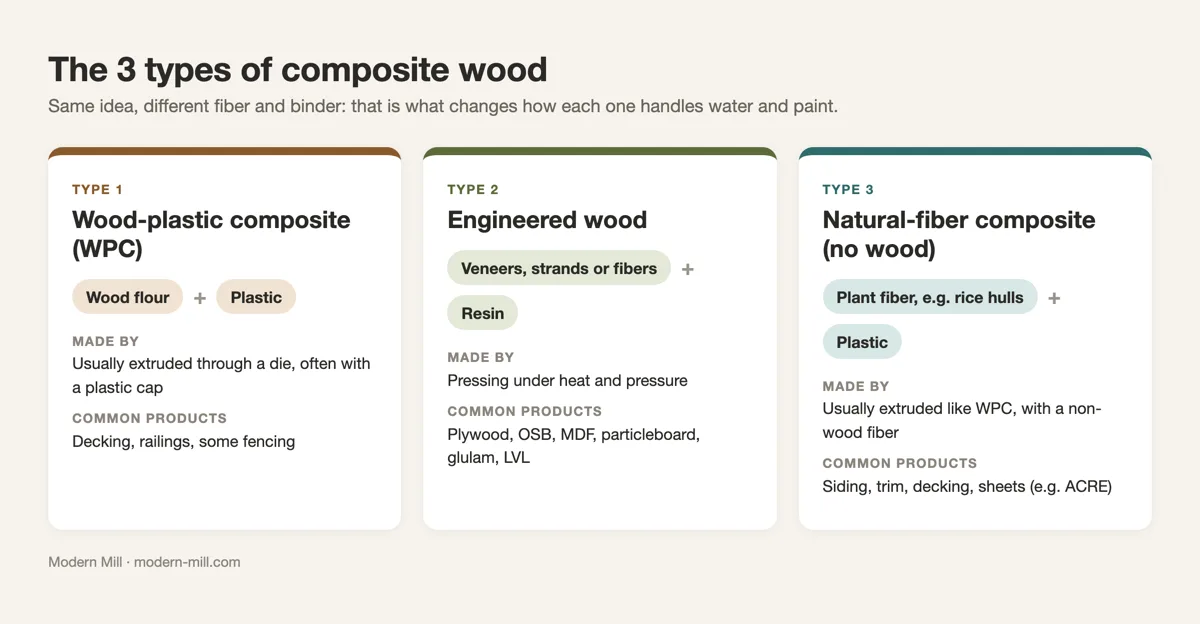
Most products sold as composite wood fall into one of the families below, and the table is the fastest way to tell them apart.
| Type | What it’s made of | Common products | Outdoor use | Paint and stain |
|---|---|---|---|---|
| Wood-plastic composite (WPC) | Wood flour or fibers mixed with plastic | Decking, railings, some fencing | Yes, especially capped boards | Capped boards come prefinished in the factory color |
| Engineered wood | Wood veneers, strands or fibers bonded with resin | Plywood, OSB, MDF, particleboard, glulam, LVL | Exterior-rated siding and trim kept painted; structural plywood and OSB as wall and roof sheathing | Exterior siding and trim need paint |
| Natural-fiber composite (no wood) | A non-wood plant fiber, such as rice hulls, bonded with plastic | Siding, trim, decking, sheets | Yes | Depends on the product; ACRE takes approved water-based paint or stain |
Wood-Plastic Composites (WPC)
A wood-plastic composite blends wood flour or fine wood fiber with a thermoplastic such as polyethylene, polypropylene or PVC, then extrudes the mix into boards. It is the material usually meant by “composite decking.” Capped boards add a plastic shell over that core to shield the wood fiber from water and sun.
In the US, ASTM D7032 is the specification used to establish performance ratings for wood-plastic composite and plastic lumber deck boards and guardrail systems, so they can be recognized under building codes. Its notes describe wood-plastic composites as containing wood or other cellulosic materials, which is why plant fibers other than wood belong in the same broad family.
Engineered Wood Panels and Lumber
Engineered wood is still almost entirely wood. Veneers, strands or fibers are pressed together with resin to make plywood, oriented strand board (OSB), medium-density fiberboard (MDF) and particleboard, plus structural products such as glulam and laminated veneer lumber. APA, The Engineered Wood Association, has helped establish quality standards for many of these structural panels and beams.
Because the binder is usually a resin, emissions matter for indoor panels. The EPA’s TSCA Title VI rule sets formaldehyde emission standards for composite wood products, covering hardwood plywood, MDF and particleboard, and these products must carry a TSCA Title VI compliant label.
Rice Hull and Other Natural-Fiber Composites
Natural-fiber composites keep the wood-plastic recipe but swap the wood for another plant fiber. Rice hulls are one example: an agricultural by-product that researchers have studied as a filler in plastics, including PVC, in a 2021 review of rice husk polymer composites. ASTM D7032’s wording places these boards in the wider wood-plastic family; this guide lists them separately because they contain no wood at all.
ACRE by Modern Mill is one of these materials, sold as a wood alternative. Its California State Fire Marshal listing for ACRE Shiplap describes it as 60% upcycled rice hulls and 40% PVC. The ACRE Sheets fact sheet describes ACRE as tree-free and free of phenol, formaldehyde and adhesives, and the ACRE Shiplap specification lists recycled content of more than 50% by volume.
How Composite Wood Is Made
Wood-plastic and natural-fiber composite boards are usually extruded. The fiber is blended with molten plastic, and manufacturers often add coupling agents and other additives to help fiber and plastic bond, a role the rice husk review describes for agents such as maleic anhydride grafted polypropylene. The mix is then pushed through a shaped die into boards.
Engineered wood is pressed instead. Plywood is made from thin layers of cross-laminated wood veneer bonded under heat and pressure to form a strong, stable panel. OSB uses thin rectangular wood strands, cross-oriented in layers and bonded under heat and pressure with moisture-resistant adhesives. MDF and particleboard follow the same idea with finer fibers and particles.
ACRE is made in the USA in a zero-waste manufacturing environment, and it has an externally verified environmental product declaration (EPD) under the SCS Global Services program, valid through November 14, 2027.
Other Names for Composite Wood
Composite wood goes by a lot of names, and some of them point to different products:
- Engineered wood or manufactured wood: usually the resin-bonded panels and beams, such as plywood, OSB, MDF and glulam
- Pressed wood: an everyday name for particleboard and fiberboard
- MDF: one type of composite wood, but composite wood is not only MDF
- Wood-plastic composite (WPC), composite lumber or composite decking: wood fiber mixed with plastic
- Plastic lumber or cellular PVC: boards made mostly or entirely from plastic, with little or no fiber, often sold alongside composites
- Fake wood, synthetic wood, faux wood or artificial wood: appearance terms for anything that imitates wood, whether or not it contains any
That last group causes the most mix-ups. “Fake wood” describes how a product looks, not what it is made of, so it can mean a capped deck board, a PVC trim board or a rice hull composite. When you compare products, ask what the fiber and the binder are.
Is Composite Wood Waterproof?
No. Exterior composites are water-resistant, not waterproof, and standard indoor MDF and particleboard are not built for wet conditions at all.
The fiber is the part that takes on water. A review of water absorption in wood-plastic composites explains that wood flour is hydrophilic, that adding more wood flour increases water absorption, and that absorbed water lowers strength and stiffness while increasing swelling. Capping limits that by keeping water away from the core.
Rice hulls absorb water too, and the rice husk review reports higher absorption as rice hull content rises. The same review cites research in which rice hull composites absorbed less water than composites filled with wood fibers, and the ACRE Sheets fact sheet rates ACRE as suitable for ground and water contact. For a specific product, check the measured figure: the ACRE technical data sheet lists water absorption of less than 1.0% under ASTM D7032.
Engineered wood is mostly wood held together by resin. Engineered wood siding and trim rely on paint, sealed edges and proper flashing to keep water out of the core. Structural panels are graded by exposure: APA notes that Exterior panels withstand long-term weather exposure, while Exposure 1 panels resist construction moisture but are not meant for permanent outdoor exposure.
One more point applies to every type. Siding is not the waterproofing layer of a wall. Flashing, a water-resistive barrier and the installation details in the manufacturer’s guide do that job, whatever the boards are made of.
What Makes a Wood Alternative Look and Feel Real?
The usual complaint about composite wood is that it looks like plastic. That comes down to the surface, the color and how the board behaves in your hands.
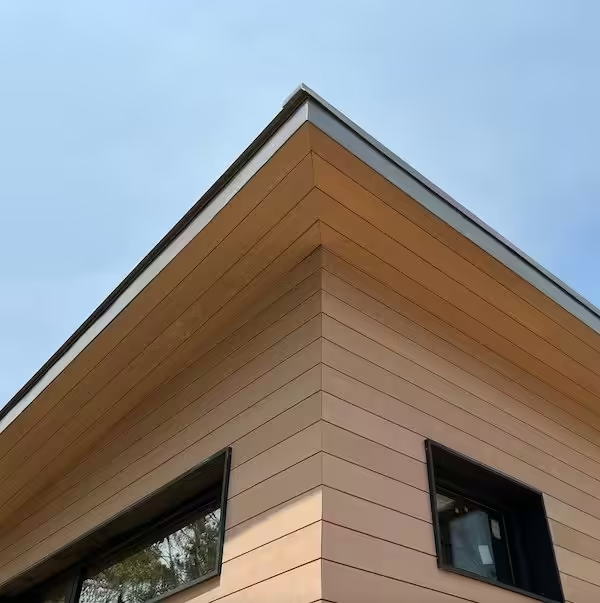
Surface and grain. Capped boards carry their grain in the plastic shell, so the look depends on that molded surface. ACRE comes in ACRE Grain and ACRE Embossed surfaces, and because the material is uniform all the way through, cut ends don’t need sealing.
Color. Real wood varies from board to board. Rice hulls do too, so ACRE boards show natural color variation, without the knots or sap lines of lumber.
Workability. A convincing wood alternative should behave like wood on the job. According to the ACRE fact sheets, the boards can be cut, routed, fastened and sanded with standard woodworking tools, they need no pre-drilling, and screws and nails won’t mushroom the surface. They can also be thermoformed for curves and folded corners. Fastening still follows each product’s installation guide, and all of them rule out brads and staples. We cover tool wear in more detail in wood alternatives that don’t wreck tools.
The last test is how the board takes a finish, which is where the composite families split the most.
Can You Paint or Stain Composite Wood?
Yes, but it depends on the type, and the manufacturer’s rules come first.
Capped wood-plastic decking is sold in its factory color and is generally cleaned rather than painted. Engineered wood siding and trim usually arrive primed and need a quality exterior paint to protect the wood inside. Natural-fiber composites vary by brand.
New ACRE boards take approved paint or stain with no primer, according to the ACRE Sheets fact sheet. The ACRE Field Coating Requirements set the rules: a coating must meet the requirements or come from Modern Mill’s approved color lists.
- Water-based only, with 100% acrylic latex for exterior paints
- A light reflectance value (LRV) of 55 or higher; below 55, contact Modern Mill for approval
- No custom tinting at a local paint store, because untested colors can void the warranty
- On decks, only Sherwin-Williams SuperDeck stains, unless Modern Mill tests and approves another product
- When repainting over a different color, a white primer goes on first
The same document recommends a water-based protective clear finish to resist dirt, staining and UV fading, and notes that clear coats can slightly darken the boards. The approved lists cover hundreds of water-based paint colors plus the ACRE signature stains, all collected on the ACRE coatings page.
Composite Wood Pros and Cons
Here is how exterior composites, meaning wood-plastic and natural-fiber boards, compare with solid lumber in general terms.
| Pros | Cons |
|---|---|
| Resists rot, splitting and insects better than untreated wood | Usually costs more upfront than pressure-treated lumber |
| Less upkeep than wood: no routine sanding, and painted or stained surfaces follow the coating maker’s schedule | Colors can fade in sun; a protective finish slows it |
| Uniform boards with no knots | Plastic-based boards expand and contract with temperature |
| Many products use recycled or upcycled content | Dark colors and reflected sunlight can overheat the surface |
| Long lengths and consistent sizes | Scratches on capped boards can’t be sanded out |
Heat deserves a closer look on every exterior surface. ACRE’s fact sheets carry an extreme heat warning: sunlight reflected from Low-E windows, along with fire or direct sun, can push surface temperatures high enough to make the boards melt, sag, warp or move beyond normal tolerances. That is why the LRV rule (55 or higher unless Modern Mill approves the color) covers siding and trim as well as decks, and why the installation guides set gapping by the temperature at installation. Modern Mill states that ACRE expands and contracts less than competitive PVC.
Scratches are easier to deal with on a board that is the same material all the way through, because it can be sanded like wood. For fire performance, the ACRE technical data sheet lists a flame spread index of 40 under ASTM E84, where lower numbers mean slower flame spread. Modern Mill’s installation guides also invite customers to contact the company about recycling options for ACRE.
The cost question is broader than the price per board. Composite usually costs more to buy, then avoids the rot repair and frequent sealing that solid wood needs.
Where Composite Wood Works Best
Each type has a natural home on and in a house.
Decking is the classic use for wood-plastic composites, and natural-fiber boards compete there too. Our guide to what composite decking is covers the options.
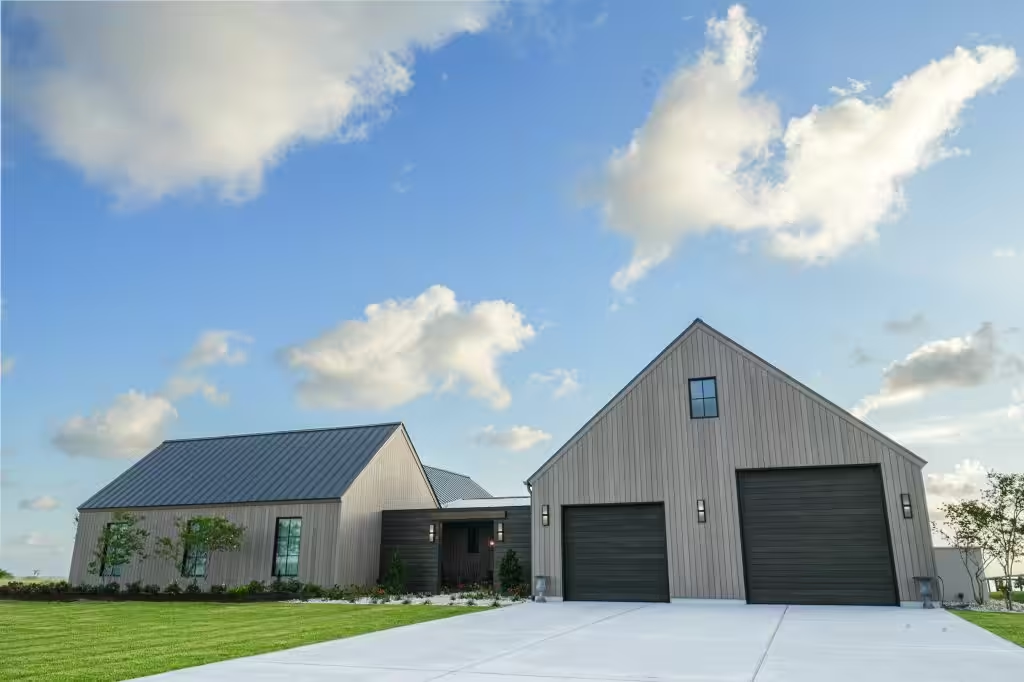
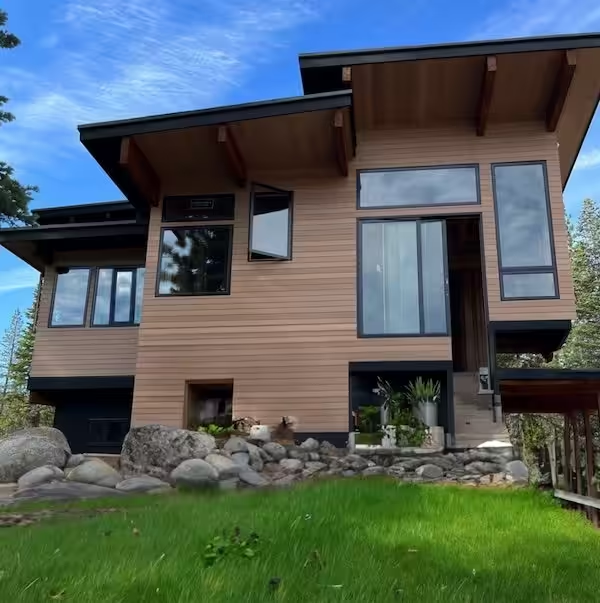
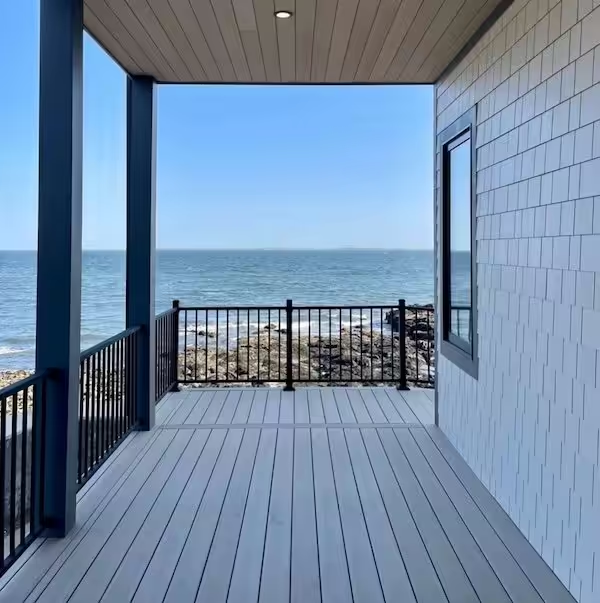
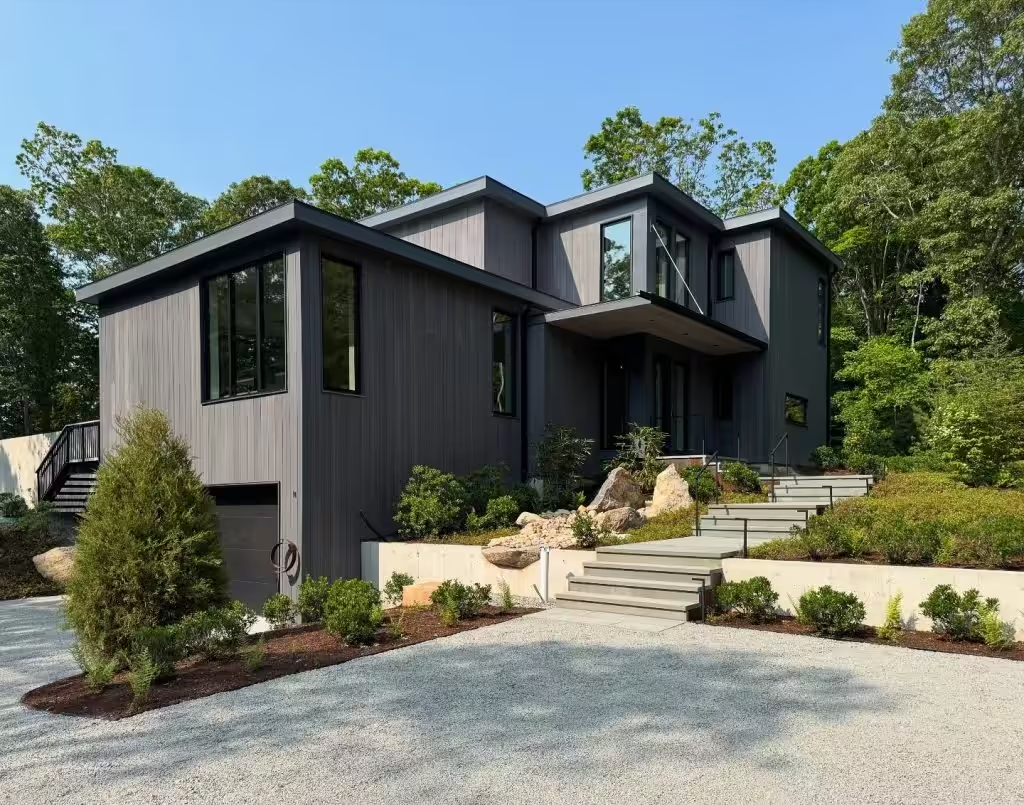
Siding suits engineered wood and natural-fiber composites. ACRE siding is sold in shiplap, nickel gap, V-groove, board and batten, and shingle profiles, and every installation follows Modern Mill’s published guides. Lap siding is not an approved application.
Trim is a common place for PVC and composite boards to replace pine and cedar, and ACRE trim is one of the wood-free options.
Sheets of ACRE suit exterior and interior projects that need a panel you can cut, curve and shape.
Indoors, composite wood usually means MDF, particleboard or plywood in cabinets, furniture and interior trim.
ACRE is not approved for structural use, and composite deck boards still sit on structural framing. Framing and sheathing call for lumber or structural engineered wood such as plywood, OSB, glulam and LVL, chosen by its own rating.
Frequently Asked Questions
Is Wood a Composite Material?
Yes. Solid wood is a natural composite: cellulose fibers give it strength in tension, and lignin holds them together. Manufactured composite wood copies that idea by bonding fibers, strands or veneers with a resin or plastic.
Is Composite Wood Real Wood?
Partly, depending on the type. Wood-plastic composites contain real wood fiber, and engineered wood is mostly wood. Natural-fiber composites such as ACRE contain no wood at all, which is why they are sold as wood alternatives.
How Long Does Composite Wood Last?
It depends on the type, the product and the installation. Exterior composites are built to resist rot and insects, but a warranty term is not a lifespan, so read what the warranty covers. ACRE’s Lifetime Limited Warranty, for example, covers manufacturing defects, not ordinary weathering such as fading or graying.
Ready to Experience the
Difference?
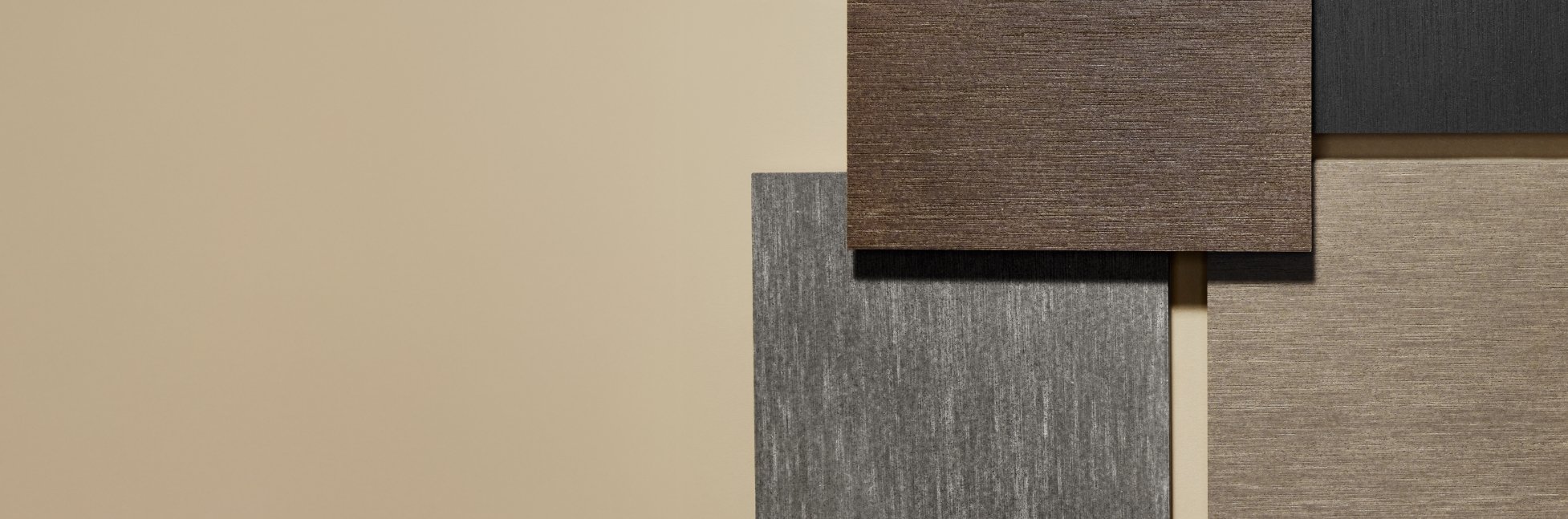
Ask for ACRE at your local lumber yard or order samples to see for yourself why builders are making the switch.