What Is Tongue and Groove Siding? Exterior Use, Profiles and Install Basics
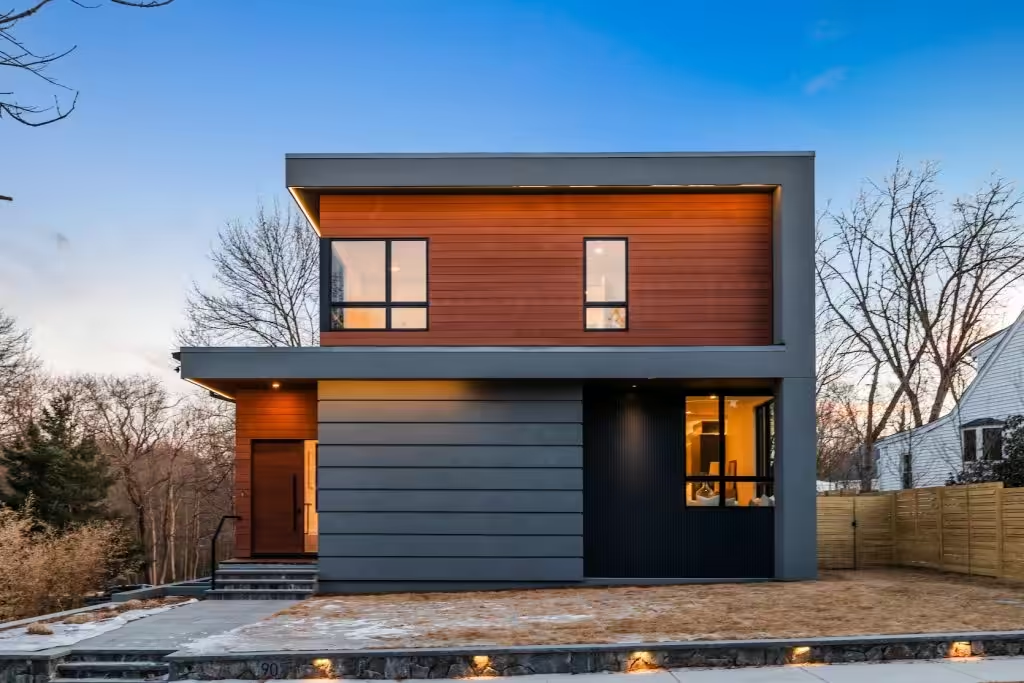
July 2025Tongue and groove (T&G) siding is exterior cladding made of boards with a protruding tongue on one edge that fits into a matching groove on the next board, so the boards fit edge to edge into one flat, interlocking surface. It’s a long-standing way to side a house, and it works outside when the wall behind it is built to drain.
How Tongue and Groove Siding Works
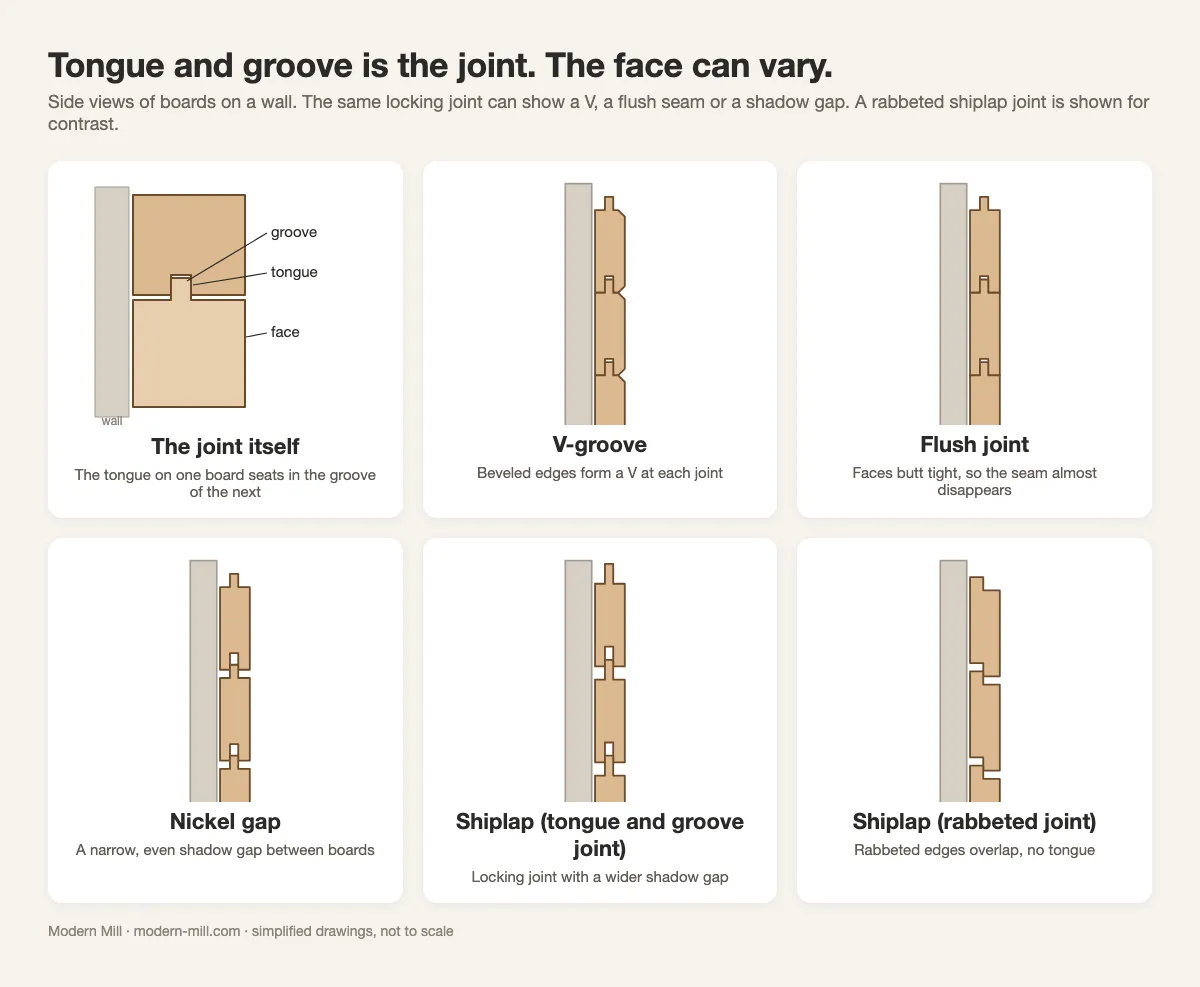
Every board has two edges that fit together. One edge has a narrow ridge, the tongue. The opposite edge has a channel, the groove. When you set the next board, its groove slides over the tongue of the board before it, and the two lock into one flat plane.
The name simply describes that locking edge: a tongue that fits a groove.
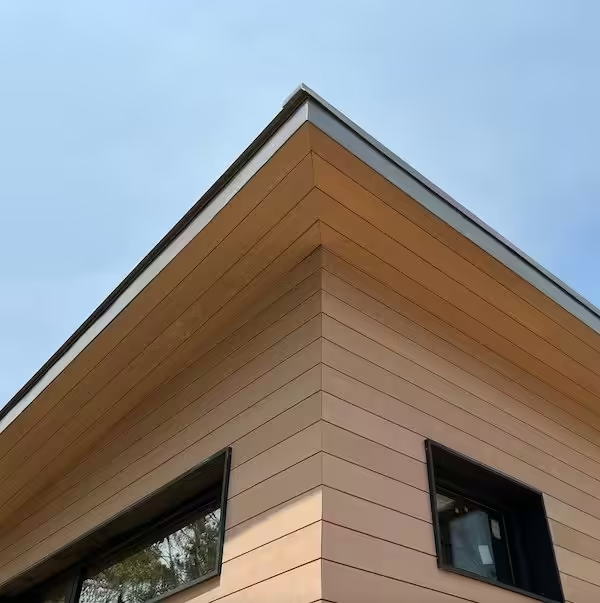
Tongue and groove describes the joint, not the look. The face of the board can be shaped with a V at each seam, a flush seam that almost disappears, or a small shadow gap. So two walls can both be tongue and groove siding and still look nothing alike.
The joint also changes how boards attach. On narrow wood boards, a nail driven at an angle through the base of the tongue gets covered by the next board’s groove, so the fastener never shows. That’s called blind nailing. Wider wood boards are face-nailed instead, and many composite boards add face fasteners too.
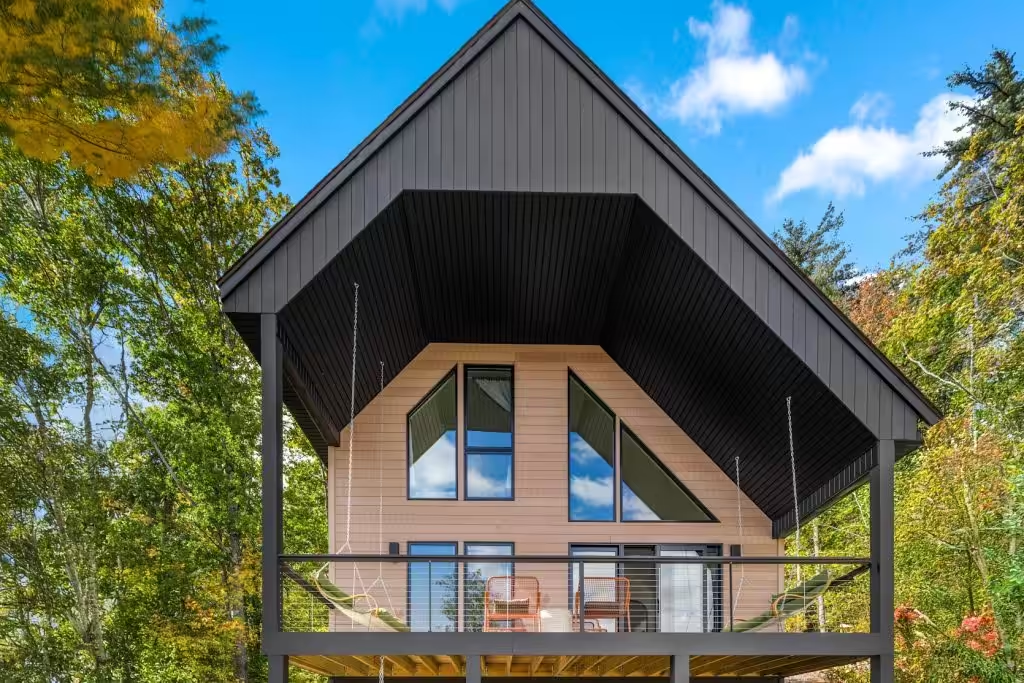
Tongue and groove boards can run horizontally, vertically or on a diagonal. Each direction changes the look of the wall, and each one changes how water moves across the joints, which matters once the boards go outside.
Tongue and Groove Siding Profiles
The profile is the shape of the board’s face and edges. It decides how each seam reads from the street, from a crisp V line to almost no line at all. The Western Red Cedar Lumber Association notes that joints are usually V-shaped, with flush, reveal and radius joints also available.
| Profile | What you see on the wall | Common uses |
|---|---|---|
| V-groove (V-joint) | A sharp V line where beveled edges meet | Traditional and farmhouse siding, porch ceilings |
| Flush joint | Faces sit tight, so the seam nearly disappears | Clean, modern walls that read as one surface |
| Nickel gap | A narrow, even shadow line between boards | Modern siding and accent walls |
| Shiplap (tongue and groove joint) | A wider shadow gap over a locking joint | Horizontal shiplap siding |
| Edge and center bead | A rounded bead at the edge and center of each board | Porch ceilings, wainscoting |
Wood boards also come with a rough-sawn or smooth face.
Sizes follow the nominal system, so a “1×6” board is not 6 inches wide. For dry western red cedar, the association lists a nominal 6-inch board at 5-3/8 inches wide, with 5 inches of face exposed once the tongue is seated. That exposed width is what you order coverage from.
The association’s coverage factor for a 1×6 is 2.40, so 100 square feet of wall takes about 240 linear feet of boards before cutting waste. Lumberyards also sell car siding, a tongue and groove pattern covered in the FAQ below.
Composite boards publish their own numbers. A 1×6 ACRE Shiplap board has a 4-1/2-inch reveal, the figure to order coverage from. ACRE Shiplap leaves a 1/4-inch shadow gap and ACRE Nickel Gap leaves 1/8 inch, per the profile tables in our installation requirements, which list a tongue dimension for every width of all three ACRE profiles, V-Groove included. Gaps on wood boards vary by mill, so check the profile drawing before you order.
Can Tongue and Groove Be Used as Exterior Siding?
Yes. Tongue and groove is one of the classic exterior siding patterns, and mills grade and sell it specifically as siding. It’s just as common indoors on accent walls, ceilings and wainscoting, but for an outside wall, buy boards made and graded as siding rather than interior paneling. What makes it last outside is the wall behind it, not the joint on its own.
As Building Science Corporation’s drainage plane guide puts it, “All exterior claddings pass some rainwater.” A tight joint sheds most of it, but some water will reach the back of the boards.
That’s why the 2024 International Residential Code calls for a water-resistive barrier behind the exterior cladding and a way to drain any water that gets past the siding. Many builders add furring strips or a drainage mat to create a rainscreen gap, and the Wood Handbook lists rain-screen construction, which vents the back of the siding, as one way to prevent the streaky water stains called extractives bleed. For ACRE, our installation requirements strongly recommend a draining or vented water-resistive barrier.
Which Way the Tongue Faces
On a horizontal wall, the tongue points up and the groove faces down. You start at the bottom and work up, so each board’s groove drops over the tongue below and water running down the face can’t collect in an upturned channel.
Vertical runs behave differently, because every joint runs with the rain, so the top and bottom of the wall need careful flashing. For vertical ACRE siding, our requirements call for breaking long runs with scarf or rabbet joints, band boards or Z-flashing, and never running a board across a floor line. Our guide to vertical vs horizontal siding covers the trade-offs in more depth.
Caulking ACRE Siding
For ACRE, the caulk that matters goes at openings. Our installation requirements call for exterior caulk on the vertical siding clearances beside windows and doors, while the horizontal siding clearances above and below stay open so water can drain. The window or door head itself gets sealed per the guide’s detail. A pliable caulk can also go in board end joints to hide gapping, but nothing in the requirements calls for caulking the seams between courses.
Finishing Wood Boards on Every Side
Wood tongue and groove siding moves with moisture. If you finish only the face, a dry season can shrink the boards enough to show a stripe of bare tongue at each seam, so finish the tongue and back before the boards go up.
The USDA Forest Products Laboratory’s Wood Handbook recommends back-priming siding before it goes up. It reports that back-priming decreases water absorption, so the siding is less likely to cup. It also advises sealing end grain and priming the ends you cut during installation.
Shiplap vs Tongue and Groove Siding: What’s the Difference?
The difference comes down to how the edges meet. Classic shiplap has a rabbet, an L-shaped notch, cut along both long edges, so each board laps over the next. Tongue and groove boards interlock instead, with the tongue seated inside the groove.
Shiplap can be made either way. Some shiplap siding pairs that wide shadow gap with a locking tongue and groove edge instead of a rabbet, and ACRE Shiplap is one of them.
| Shiplap (rabbeted joint) | Tongue and groove | |
|---|---|---|
| How the edges meet | Rabbeted edges overlap | Tongue locks into groove |
| Typical look | Even shadow gap between boards | V-groove, flush, nickel gap or shiplap shadow gap |
| How boards are fastened | Face-nailed | Narrow wood boards can be blind-nailed through the tongue; many composite boards add face fasteners |
| Board alignment | Each board rests on the lap below | Each joint pulls the next board into line |
Which Is Better for Siding?
Neither joint wins on every wall, and both work outside over a properly drained wall.
Start with the look you want: a crisp V, a flush wall or a shadow line. Then the material, since cedar, PVC and composite each bring their own upkeep. Then the installation guide for the exact board, which sets the fastener pattern and gapping, and which some makers, ours included, require you to follow for the warranty to apply.
What Is Tongue and Groove Siding Made Of?
Tongue and groove siding is traditionally solid wood, but the profile also comes in PVC, fiber cement and composite boards. The material decides how much finishing and upkeep you take on.
Wood
Tongue and groove wood siding brings real grain, takes stain well and can be refinished many times. Western red cedar, cypress, pine, Douglas fir and redwood are the usual species. Boards also come in grades: the Western Red Cedar Lumber Association describes clear grades as suited to a more formal look and knotty grades to a smart, casual one.
They don’t age the same way, though. The Wood Handbook groups the heartwood of western red cedar as resistant to decay, and young-growth redwood, young-growth baldcypress and Douglas fir as moderately resistant. Most pines land in the slightly or nonresistant group. It’s one reason cedar tongue and groove siding is the classic exterior choice, and why pine siding needs its finish kept in good shape.
Painted or stained wood siding needs a recoat cycle. Stain or paint protects the boards from sun and water, and the schedule depends on the product and your climate.
PVC and Fiber Cement
Both are sold in tongue and groove profiles. PVC doesn’t rot and needs no paint to protect it, though it moves with temperature. Fiber cement takes paint well and needs careful detailing at cut edges and joints.
Composite (ACRE)
ACRE is the composite board we make at Modern Mill, from upcycled rice hulls and PVC. It has natural-looking grain, it cuts, routs and sands with standard woodworking tools, and it fastens without pre-drilling.
The ACRE technical data sheet lists water absorption below 1.0% under ASTM D7032. Per our fact sheets, cut ends don’t need sealing, and bare boards need no primer before their first coat.
ACRE siding comes in its natural color, ready to paint or stain, or factory-finished in seven stain colors. To finish it yourself, our field coating requirements call for a water-based coating (100% acrylic latex for exterior paints) with a light reflective value of 55 or higher, or a color from our approved lists. Get Modern Mill’s testing and approval before applying multiple coats, and don’t have a color custom-tinted at a paint store, because untested tints can void the warranty. ACRE is backed by a Lifetime Limited Warranty covering manufacturing defects.
Like PVC boards, ACRE expands and contracts with temperature, though our fact sheets list less movement than competitive PVC. That’s why darker field finishes need our approval and the installation requirements set gaps by install-day temperature.

How to Install Tongue and Groove Siding
For a horizontal wall, the basic sequence is the same for most tongue and groove siding. The fastening details are not, so always work from the installation guide for the board you bought.
- Prepare the wall. Install the sheathing, flashing and water-resistive barrier your local code requires, plus furring strips if you’re building a rainscreen gap.
- Set a level starting course. On a horizontal wall, fasten a level starter strip or first board at the bottom, tongue facing up.
- Work up the wall. Seat each groove over the tongue below and fasten into framing as the guide specifies.
- Leave clearances. Keep the gaps the guide calls for at windows, doors, corners and roof lines.
- Finish the top course. Rip the last board to width and face-fasten it.
Fastening Wood Boards
The Western Red Cedar Lumber Association says siding up to 6 inches wide can be blind-nailed with one nail per bearing, toe-nailed through the base of each tongue. Wider boards get face-nailed with two nails per piece, and nails must penetrate 1-1/4 inches into solid wood. The Wood Handbook notes that stainless steel, aluminum or hot-dipped galvanized nails help prevent the stains steel causes when it reacts with wood extractives.
For vertical boards, the association recommends starting at a corner with the grooved edge toward the adjacent wall. The boards fasten to horizontal blocking between studs or to furring strips.
Fastening ACRE Boards
ACRE follows its own published schedule. Our installation requirements for Shiplap, Nickel Gap and V-Groove siding call for at least 7/16-inch OSB or 1/2-inch plywood sheathing. If you fur the wall, space the furring 16 inches on center for horizontal siding or 12 inches for vertical or diagonal runs. The requirements combine face fasteners with a blind fastener in the tongue flange. On 1×6 and 1×8 boards, that means two face fasteners at joints and board ends, and one face plus one blind fastener in between.
The same document sets minimums of 2-1/2-inch #8 screws or 2-1/2-inch 8d ring-shank nails 0.099 inch in diameter or larger, with screws highly recommended and fasteners penetrating framing at least 1-1/4 inches. Fasteners go no more than 16 inches on center into framing, or 12 inches when they hold only in sheathing, and fasteners at board joints must reach solid framing. Brads, staples, and finish- or trim-head nails or screws are not allowed. Use exterior-rated fasteners, and stainless steel where a coastal site calls for it.
Board ends get a gap based on the temperature during installation, a chart that applies to finishes with a light reflective value of 55 or higher. For vertical runs, the first board has its groove edge removed. Following the published guide is also a condition of the warranty, so download the current version from our resources page before you start.
Frequently Asked Questions
How Thick Is Standard Tongue and Groove Siding?
Most tongue and groove siding is sold as nominal 1-inch stock, which is thinner once milled. Dry western red cedar comes in at 11/16 inch, and green cedar at 3/4 inch, according to the Western Red Cedar Lumber Association. ACRE Shiplap, Nickel Gap and V-Groove boards are 3/4 inch thick.
What’s Cheaper, Shiplap or Tongue and Groove?
It depends more on the board than on the joint. Species, grade and availability drive the price. Compare quotes for the same material and grade, then add finishing and labor, before deciding one style is less expensive.
What Is Tongue and Groove Car Siding?
Car siding is the name lumberyards use for tongue and groove boards, usually 1×6 or 1×8 pine, with a V-groove at each joint. Some patterns add a center V, so one wide board reads as two narrow ones. It’s common on barns, cabins and rustic interiors, and it installs like any other tongue and groove board.
Before You Order
Measure the wall area and decide the run direction before you price boards. Horizontal and vertical runs change the board count, the furring layout and the flashing at the top and bottom of the wall.
If you want the look of wood without sealing every cut end, Modern Mill’s ACRE Shiplap, Nickel Gap and V-Groove siding give you that on the same locking tongue and groove joint. Order ACRE samples for $5 each to see the profiles and colors on your own wall before you commit.

Ready to Experience the
Difference?
Ask for ACRE at your local lumber yard or order samples to see for yourself why builders are making the switch.