Outdoor Living Space Design: Choosing Materials for Summer
June 2026Covered porches and outdoor living spaces used to be occasional add-ons. They’re now standard in most new residential construction and renovations. According to National Association of Home Builder’s 2025 research, 68% of new homes now include porches and 64% include patios. This reflects a deliberate shift by homeowners to expand their usable living spaces without adding square footage. Decks, covered porches, outdoor kitchens, and pergolas are increasingly part of a checklist for building and design pros.
Getting them right requires more planning than most projects allow for. Material selection, climate conditions, sun orientation, and how covered structures handle moisture are all decisions that compound into the finished result. Most of them get made too quickly or without enough detail.
How to Plan an Outdoor Living Space That Works in Summer
Sun orientation and zone logic come before any material decisions. A covered structure that traps afternoon heat on a west-facing wall in Arizona is a much different environment than a shaded north-facing porch in the Northeast. The exposure each surface sees determines how materials will perform and that assessment needs to happen early in the planning process. Shading strategy depends on orientation and latitude. There is no universal rule. What matters is that the orientation question gets answered for the specific site before going too far in the project.
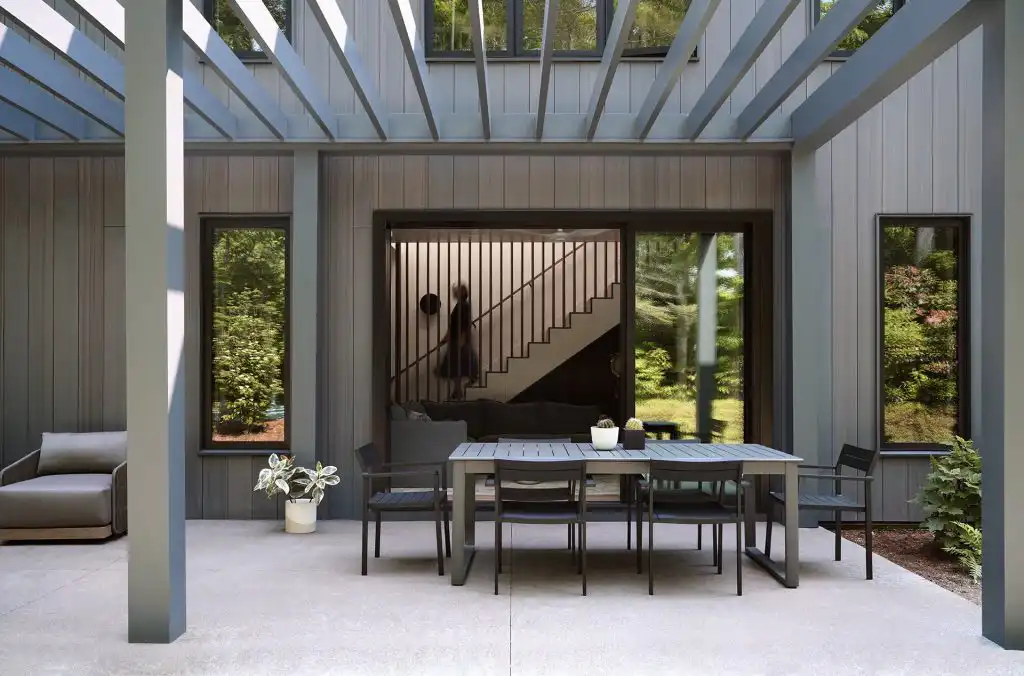
Drainage and ventilation deserve the same early attention. Water needs a clear path away from the structures and covered outdoor spaces need designed airflow or moisture accumulates against wall surfaces and beneath decking. As Modern Mill noted in a piece published in the Los Angeles Times Spaces Column, the real damage from moisture happens at the micro-level: working into joints, getting trapped under finishes, and corroding fasteners that can’t be seen. “The projects that avoid this aren’t using magic, they’re using smarter planning.”
Climate zone is the third variable to establish before specifying anything. The material selections that work in one region won’t automatically hold up in another. Knowing the climate zone before the design is locked in is what allows the material selection to match the actual conditions the project will face.
Which Exterior Materials Hold Up Through Summer Heat and Humidity
Three factors determine how an exterior material performs through summer: how much moisture it absorbs, how it handles UV exposure, and how it responds to daily temperature swings. Getting all three right for your climate is the selection decision that separates materials that hold up from ones that don’t.
Wood absorbs moisture readily. Heat causes materials to expand during the day and contract at night, which over time leads to cracking or warping, and humidity introduces moisture that can seep behind panels causing swelling, mold growth, or structural issues. On a covered outdoor structure where airflow is restricted and drying is slower, that cycle compounds. The USDA Forest Products Laboratory identifies the mechanism as excessive dimensional change from moisture absorption stressing film-forming finishes like paint and stain, causing early failure.
Fiber cement handles moisture better than wood and holds up well under UV exposure, but it still requires periodic repainting to maintain its finish through summer cycling conditions.
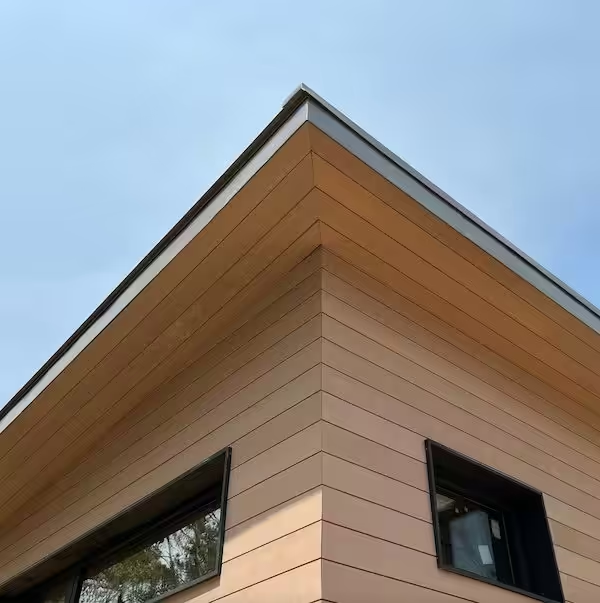
Composite siding doesn’t absorb moisture at all, which removes the primary failure driver for outdoor surfaces in humid climates. Temperature still drives some expansion and contraction, which proper installation mitigates. For covered outdoor structures, the material choice matters across every surface, not just the primary cladding. In humid climates, consistency across the full assembly is what holds up over time.
As LBM Journal reported in April 2026, Modern Mill Founder and CEO Chris Guimond sees the trend firsthand: “More and more of our customers are adding extensions to their home with outdoor living spaces, which is another indicator towards continued decking growth in the years ahead.”
Why Covered Porches and Pergolas Often Fail Within a Few Seasons
According to Houzz’s 2024 U.S. Outdoor Living Trends Study, 41 percent of outdoor renovation projects are driven by replacing deteriorated materials. Those projects exist because the original material decisions didn’t account for what those surfaces would face.
Covered porches and pergolas fail for predictable reasons, and most of them come down to where water collects and how long it stays there. Open decks and facades dry quickly after rain. A covered structure changes that dynamic. The roof keeps direct sun off the walls, airflow is restricted on three sides, and rain doesn’t need to fall directly on a surface to wet it. Overspray, condensation, and humidity do the same job more slowly. Materials that would dry out on an open facade stay damp longer under a roof, and that extended moisture contact is where finish failure, cupping, and rot begin.
The specific failure points are usually the same across projects. Anywhere water can collect and sit (at the base of wall panels, around fasteners, at horizontal trim transitions) is where deterioration starts first. Wood and fiber cement are particularly vulnerable at cut edges and end grain, where factory finishes don’t always provide full protection and moisture gets in fastest.
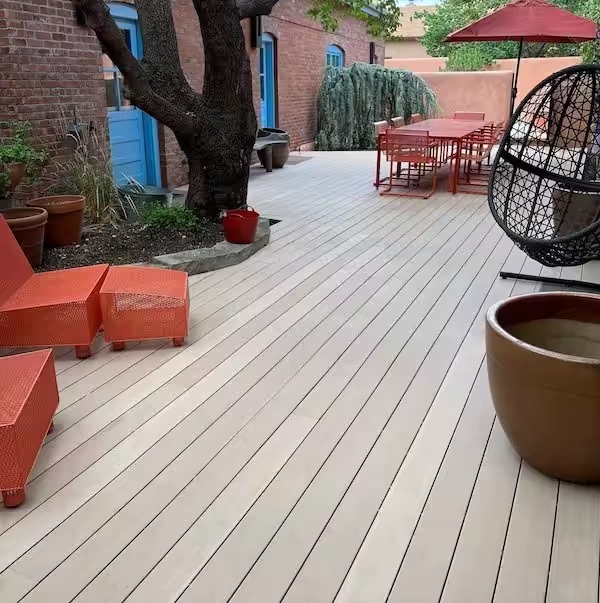
When wetting exceeds drying, accumulation follows. On a covered structure, that rate imbalance is built into the design. Specifying materials that don’t absorb moisture in the first place, including composite decking at the floor level, removes the variable rather than managing it.
What Low-Maintenance Outdoor Living Actually Looks Like
The maintenance question is where material decisions become financial decisions. Wood siding typically needs to be painted or stained every few years and in humid climates that timeline often shortens. On a covered outdoor structure where moisture cycles more aggressively than an open facade, the interval between refinishing jobs gets shorter, not longer.
At Modern Mill, we’ve worked on hundreds of outdoor living spaces in coastal and humid markets and the projects that hold up best over time share one thing in common. The material decisions were made with the climate in mind before anything went up. Covered porches, outdoor kitchens, and pergolas in these environments demand more from their materials than a standard facade and the decision makers who account for that upfront are the ones who stay satisfied for years.
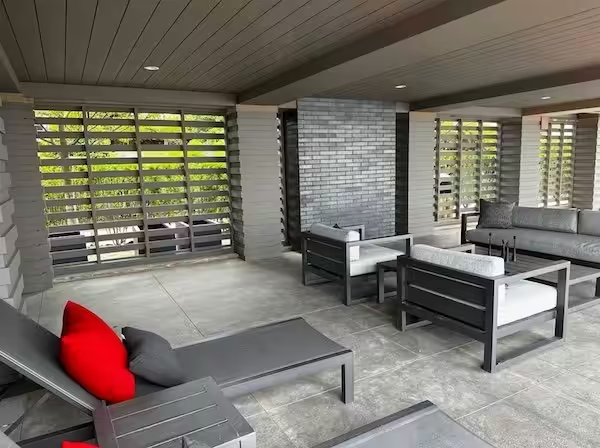
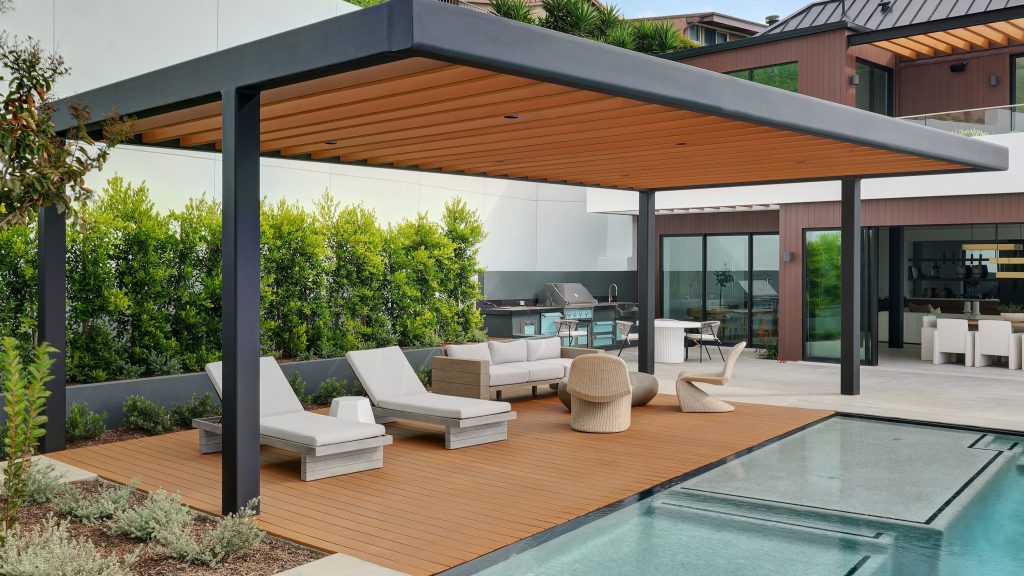
The Pool Pavilion in Cedar Hills, Utah puts that approach into practice. A covered outdoor structure with ACRE V-Groove Siding and ceiling panels facing the UV intensity and daily temperature swings of a Utah summer. Material selection was paired with thoughtful drainage and strategic coverage to protect the highest-traffic areas, which is exactly the kind of planning-stage decision that determines how a space holds up over time.
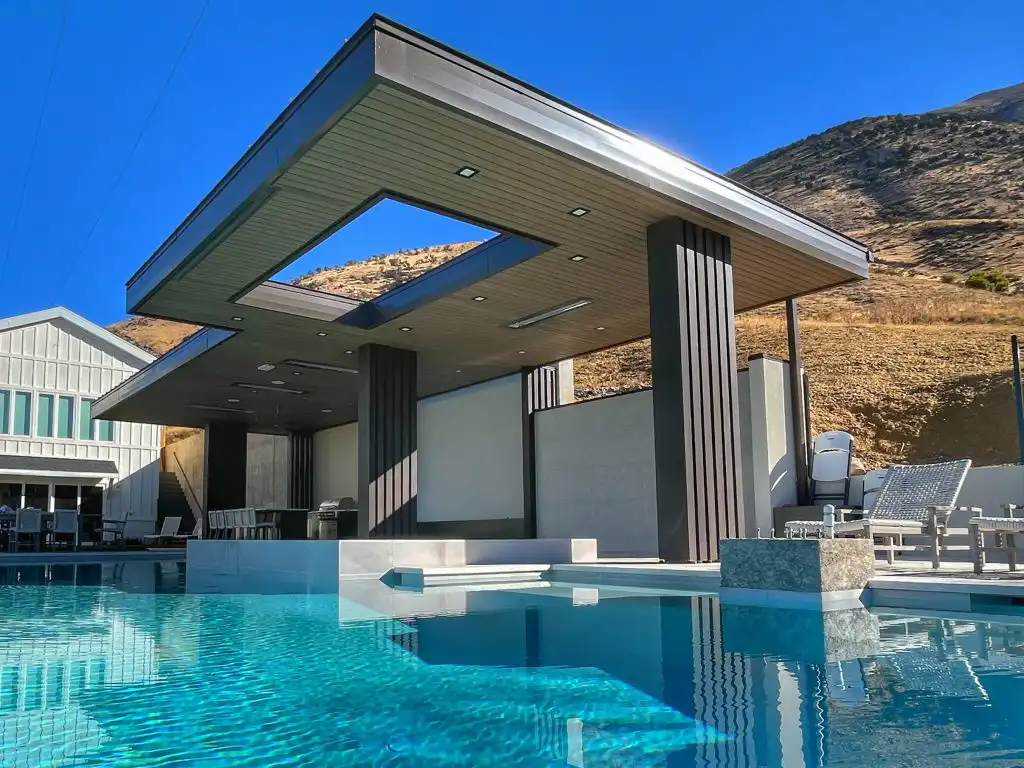
That kind of planning matters most in hot and humid climates. The U.S. Department of Energy defines hot-humid climates as Zones 1 through 3A, covering Florida, the Gulf Coast, and the Southeast through Atlanta. In these regions, summer alternates heavy rain with high ambient humidity, preventing wood from fully drying between wetting events.
Conclusion
Outdoor living spaces are one of the few parts of a project where the planning decisions and the performance outcomes are separated by years. The orientation gets set at design, the materials get selected before installation, and how well those decisions were made becomes clear over time. Getting them right doesn’t require a bigger budget. It requires asking the right questions early enough to act on the answers.
If you’re planning, designing, or building an outdoor living space this summer, get inspired by projects that got the materials right.
Ready to Experience the
Difference?
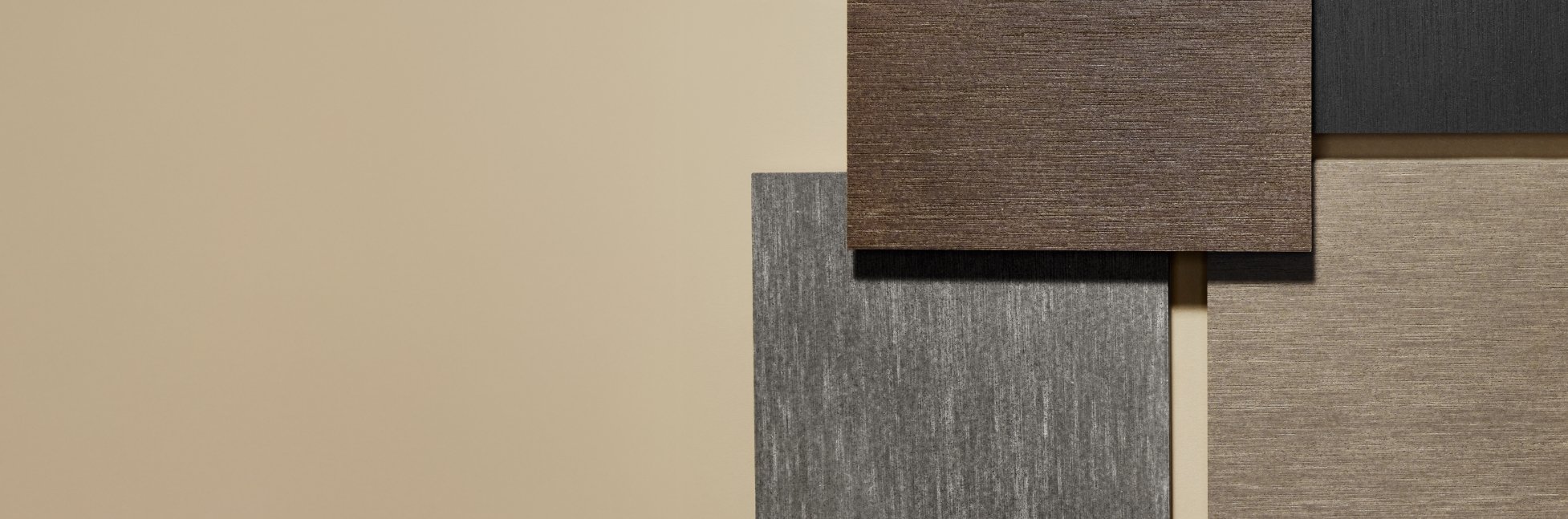
Ask for ACRE at your local lumber yard or order samples to see for yourself why builders are making the switch.