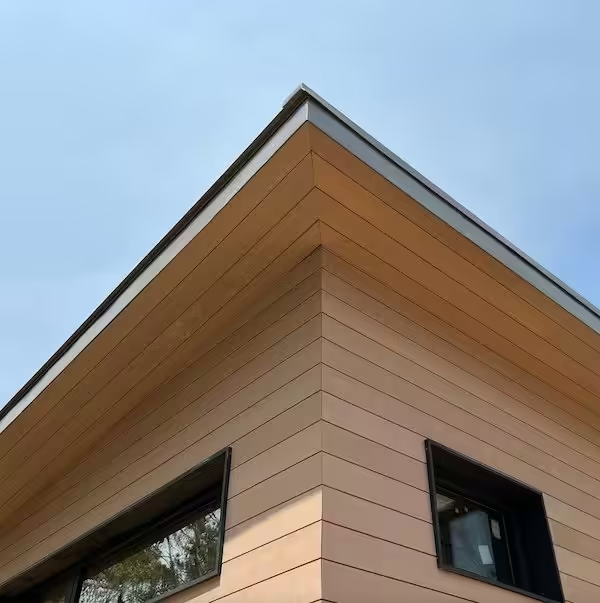
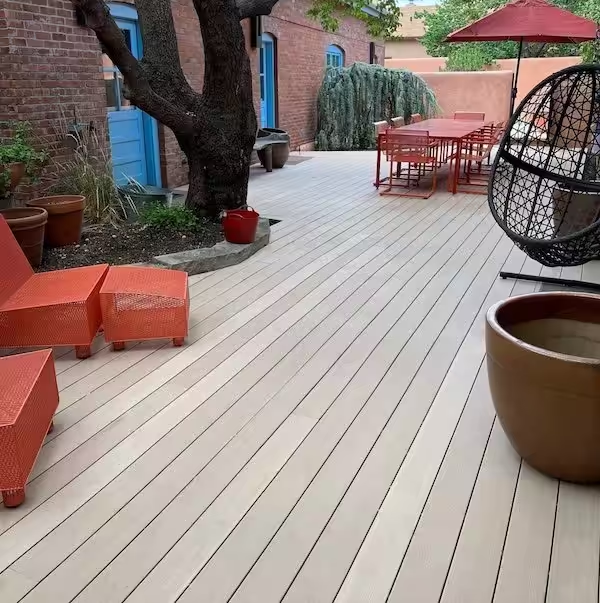
Best Materials for Exterior Shiplap Siding
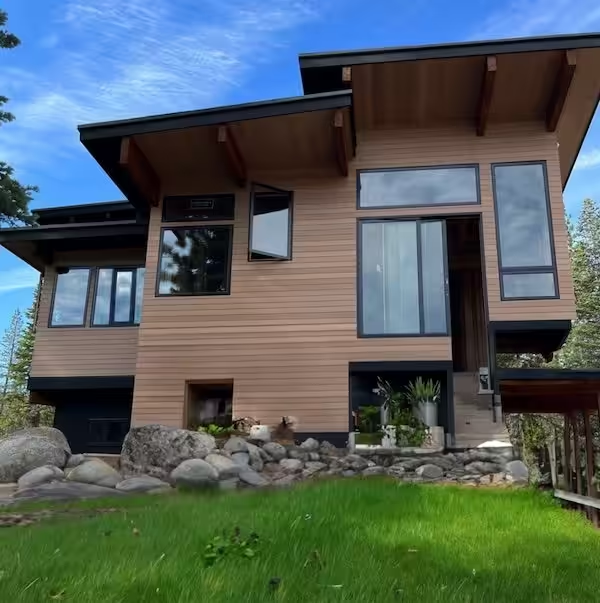
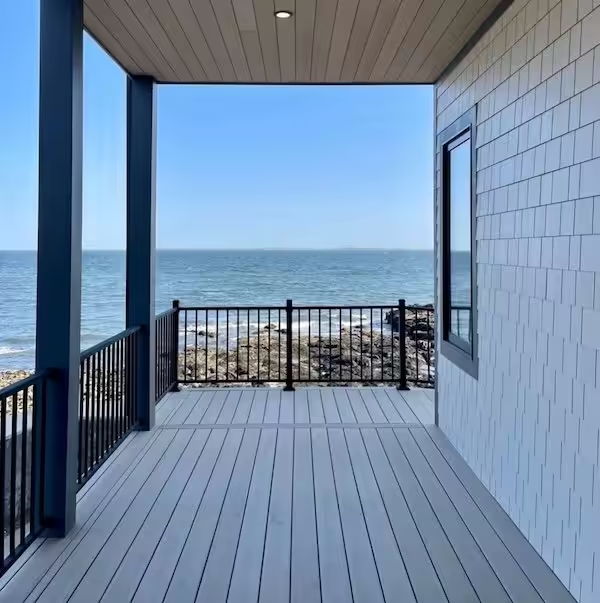
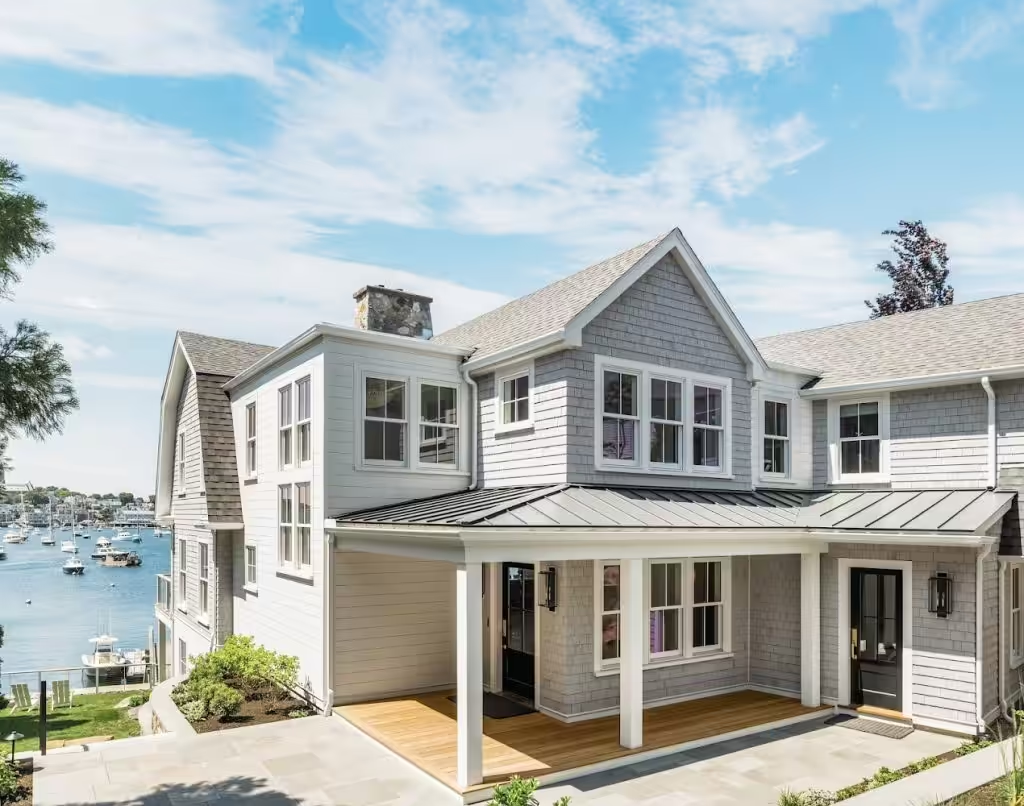
January 2026Exterior shiplap siding has become a defining detail in modern residential design. Once associated primarily with interiors, shiplap has moved confidently outdoors, appearing on everything from coastal homes and modern farmhouses to contemporary builds with clean, architectural lines — see our guide to designing the perfect coastal retreat with shiplap siding for a closer look at that application.
What makes exterior shiplap appealing isn’t just the look. It’s the rhythm, the shadow lines, and the way horizontal boards give a home a sense of scale and proportion. But choosing shiplap for the exterior also raises an important question: what material actually performs best outside?
Not all shiplap siding materials are created equal. Exterior conditions demand more from a product than interior applications ever will. Moisture, sun exposure, temperature swings, and long-term maintenance all play a role in how well a shiplap installation holds up over time.
Below, we look at the best materials for exterior shiplap siding, what each offers, and how to think about long-term performance rather than just first impressions.
What Exterior Shiplap Siding Needs to Handle
Before comparing materials, it’s worth understanding what exterior shiplap siding is up against.
Unlike interior applications, exterior shiplap siding must:
- Resist moisture intrusion and seasonal humidity
- Hold its shape through expansion and contraction cycles
- Maintain consistent shadow lines over time
- Perform across multiple exposures on the same home
- Minimize ongoing maintenance requirements
These factors often matter more than how the siding looks on installation day. A material that performs well in controlled environments may struggle when exposed to the elements year after year.
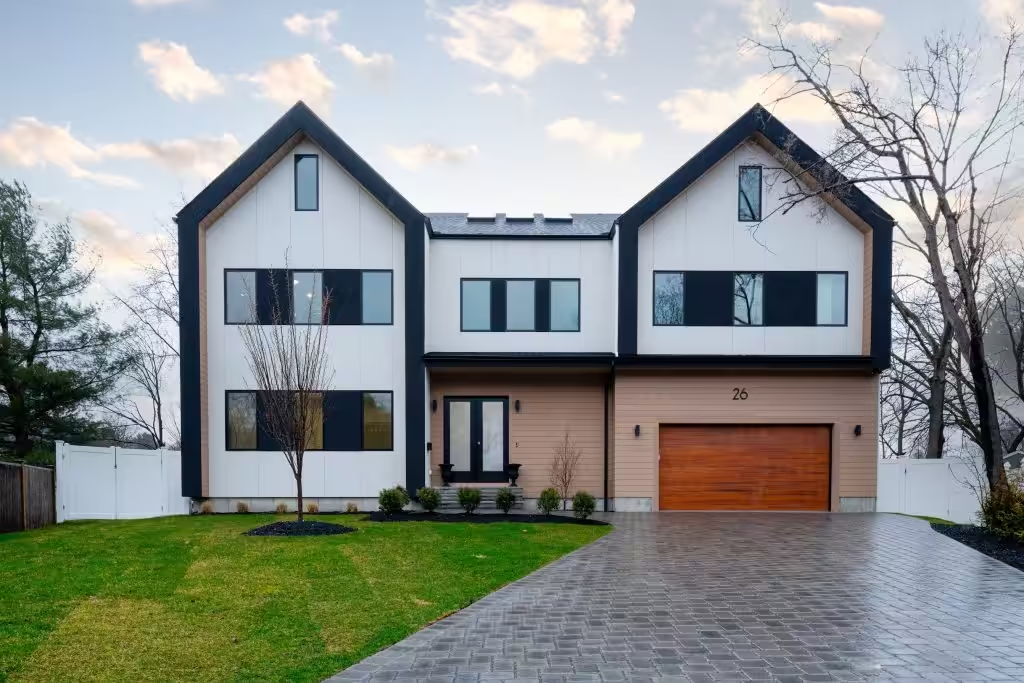
Natural Wood Shiplap Siding
Traditional wood remains the reference point for shiplap aesthetics. Its grain, texture, and warmth are what made shiplap desirable in the first place. That said, using wood for exterior shiplap siding introduces tradeoffs.
Wood naturally expands and contracts with moisture. Over time, this movement can affect board alignment and shadow lines. Regular sealing or refinishing is required to protect against weathering, and performance can vary significantly depending on exposure. A shaded elevation may age very differently than a west-facing wall that takes full sun and rain.
Wood can still make sense in protected locations or for homeowners who expect ongoing maintenance. But for many exterior applications, it’s no longer the default choice it once was.
Composite & Synthetic Wood Siding Options
Many modern exterior shiplap projects now rely on engineered alternatives rather than traditional wood. This includes both composite siding and synthetic wood siding, which are designed to preserve the look of shiplap while reducing the vulnerabilities that come with organic materials.
These products are engineered for consistency. They limit expansion and contraction, resist moisture intrusion, and maintain stable board profiles over time, qualities that matter most when shiplap is exposed to real exterior conditions — see our full breakdown of composite shiplap siding versus wood for the pros and cons of each. Clean horizontal lines only work if they stay aligned, and engineered materials are better equipped to do that year after year.
In exterior shiplap applications, engineered siding often delivers:
- Improved dimensional stability
- Reduced risk of cupping, splitting, or irregular movement
- Strong performance in wet, coastal, or freeze–thaw climates
- More predictable spacing and long-term alignment
- Lower maintenance demands over the life of the home
Rather than trying to replace the warmth of wood with something artificial, these materials focus on retaining the rhythm and proportion that make shiplap appealing while behaving more predictably in demanding environments. For homeowners and builders who want the look of shiplap without ongoing adjustment or frequent refinishing, engineered options offer a practical balance between aesthetics and performance.
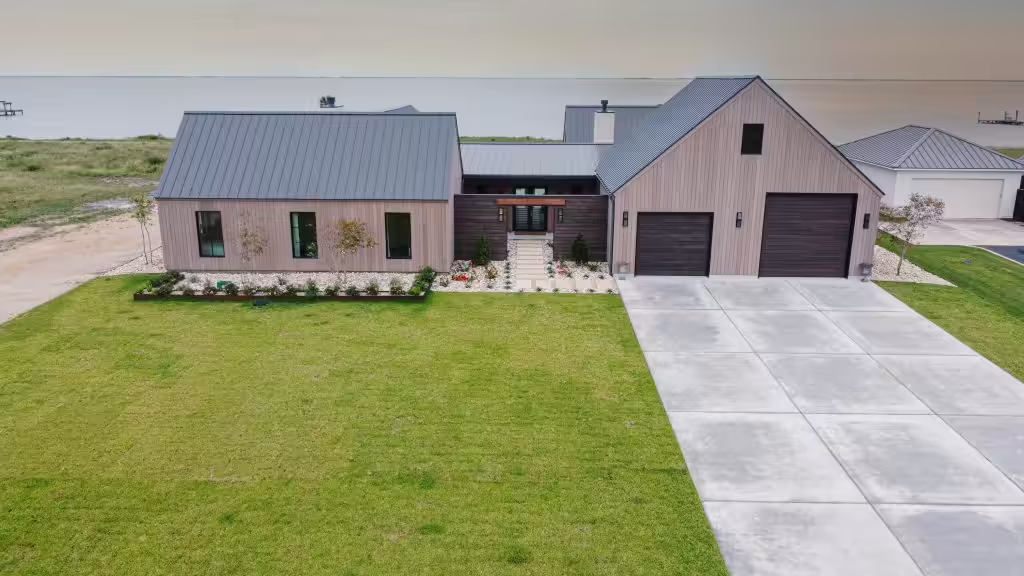
Why Factory Finished Siding Matters for Exterior Shiplap
One of the most overlooked aspects of exterior shiplap siding is how it’s finished. Traditional wood shiplap often requires on-site finishing, which introduces weather dependencies and scheduling challenges. By contrast, factory finished siding arrives ready to install.
For exterior shiplap siding, factory finishing offers several advantages:
- Finishes are applied in controlled conditions
- Color consistency is maintained across elevations
- No delays for on-site staining or drying
- Reduced exposure to weather during installation
This is especially valuable for shiplap, where consistent finish quality directly impacts the final appearance. Even small variations become noticeable when boards run horizontally across large surfaces.
Exterior Shiplap Siding and Sustainability
Material choice also plays a role in sustainability. Exterior siding that requires frequent refinishing, repair, or replacement consumes more resources over time. That’s why many designers and builders are rethinking material selection through the lens of sustainable building materials.
Materials that last longer, require less maintenance, and reduce replacement cycles often offer a lower environmental impact over the life of the building, even if they aren’t traditional wood products. This perspective has helped shift exterior shiplap siding toward materials that balance longevity with design intent.
Where ACRE Fits for Exterior Shiplap Siding
For projects that want the warmth of wood with modern performance, ACRE siding offers a compelling solution. ACRE is a synthetic wood material made from upcycled rice hulls. It’s designed to behave like wood on the jobsite while offering greater stability in exterior environments. For shiplap siding applications, that combination matters.
ACRE shiplap can be milled into clean shiplap profiles that maintain consistent shadow lines while resisting many of the issues that affect traditional wood. Its ability to accept paint or stain including factory-finished options that allow designers to achieve a wide range of exterior aesthetics without committing to ongoing maintenance cycles.
In exterior shiplap installations, materials like ACRE shiplap help bridge the gap between appearance and long-term performance.
Choosing the Right Material for Your Project
There isn’t a single “best” material for every exterior shiplap siding project. The right choice depends on how the building will be used, where it’s located, and how much maintenance the owner expects to take on over time.
As a general guideline:
- Natural wood works best where maintenance is expected and exposure is limited
- Composite and synthetic materials perform better in demanding climates
- Factory-finished options reduce scheduling and finish variability
- Stable materials preserve clean horizontal lines over time
For many projects today, exterior shiplap siding is less about nostalgia and more about performance that lasts.
Conclusion
Exterior shiplap siding continues to be a powerful design choice, but the materials behind it have evolved. What once relied almost exclusively on natural wood now includes a range of engineered and synthetic options designed for long-term exterior performance.
By selecting materials that balance durability, finish consistency, and sustainability, designers and homeowners can achieve the look they want without taking on unnecessary maintenance or risk. The best exterior shiplap siding solutions are the ones that look intentional, not just on day one, but years after installation.
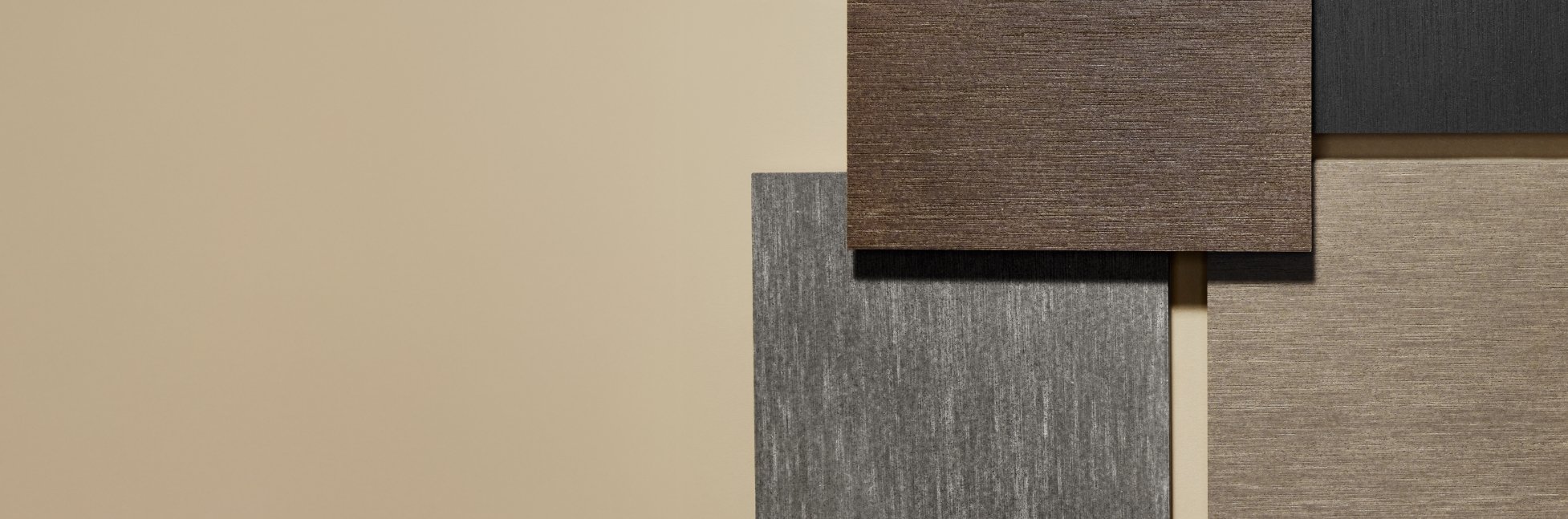
Ready to explore exterior shiplap siding options? Order ACRE samples today to see and feel the difference yourself or reach out in the contact form below to see where ACRE can fit into your next project.
Ready to Experience the
Difference?
Ask for ACRE at your local lumber yard or order samples to see for yourself why builders are making the switch.