Why Choose Eco-friendly Building Materials for Your Home?
February 2026Eco-friendly building materials are often treated like a single category. A material can be natural and still create a heavy footprint over the life of a home if it needs constant coatings, frequent repair, or early replacement. Another material can be manufactured and still end up looking like the more responsible choice because it stays stable, avoids the maintenance treadmill, and performs predictably for decades.
So the question most homeowners and builders are actually trying to answer is not, “Is this material eco-friendly?” but “does this choice reduce waste, reduce rework, and reduce the number of times I have to touch it again later? Below is a practical way to think about eco-friendly materials for a home, with an emphasis on what holds up long after the build is finished.
Eco-friendly Starts With Lifecycle Thinking
Eco-friendly materials tend to deliver value when they perform across a full lifecycle, not just at install. That includes:
- Responsible sourcing, meaning what the material relies on and what it displaces
- Manufacturing reality, meaning chemistry, waste, and efficiency
- Durability, meaning how it holds up to moisture, sun, movement, and time
- Maintenance load, meaning how often you need to seal, repaint, sand, or repair
- End-of-life outcomes, meaning whether it can be reused or whether it becomes landfill
This is why lifecycle impact reduction shows up in green building frameworks like LEED, where the emphasis is on long-term reduction rather than a single “green” attribute. The U.S. Green Building Council’s guidance on lifecycle impact reduction reinforces this approach.
You do not need to run a formal lifecycle assessment to benefit from that mindset. You just need to evaluate materials the way your house will experience them.
The First Eco-friendly Win Is Often Energy Performance
For most homes, the most meaningful sustainability gains come from reducing operational energy demand year after year. The U.S. Department of Energy consistently identifies insulation and air sealing as foundational strategies that reduce heating and cooling demand and lower utility costs over the life of a home.
Eco-friendly material decisions do not live only in the finishes. They live in the envelope, the continuity, and the parts of the house you will never see again once drywall goes up.
Eco-friendly Also Means Healthier Indoor Environments
Home sustainability is not only about carbon or forestry, its also about what you live with every day. Low-emitting paints, sealants, and interior finishes matter because they influence indoor air quality. VOC awareness is one of the most practical, immediate reasons homeowners choose eco-friendly options, and the Environmental Protection Agency’s guidance on VOCs and indoor air quality has shaped best practices for years.
This is also where long-term thinking comes back into the conversation. If you can reduce the number of re-coats and refinishing cycles over a decade, you often reduce both chemical exposure and material consumption at the same time.
Where “Natural” Gets Complicated: Exterior Exposure
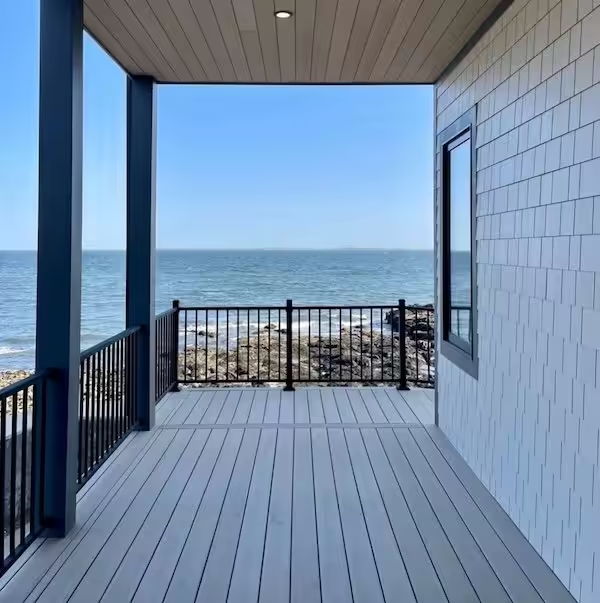
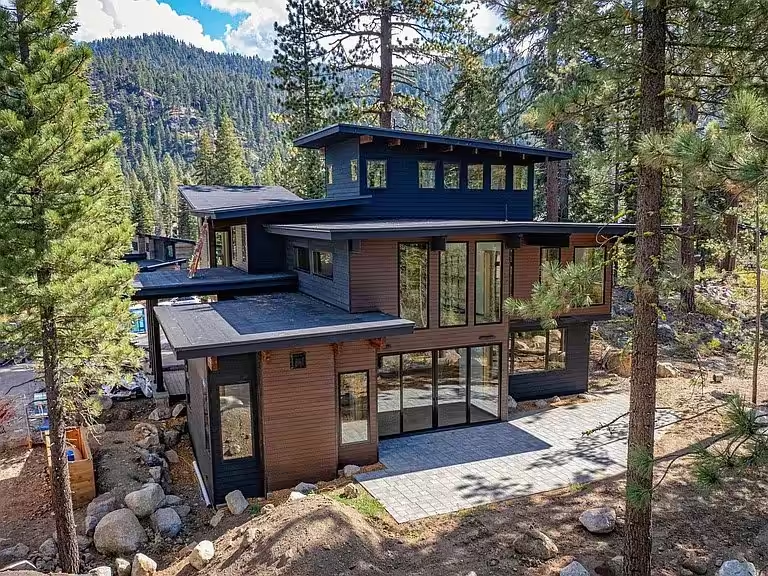
Exterior materials take the longest beating and create some of the most expensive replacements. Sun exposure is relentless. Wind-driven rain finds weak points. Freeze-thaw cycling magnifies small issues. Salt air accelerates the decline of coatings. Even in mild climates, exterior systems are where homeowners tend to learn that maintenance plans change once life gets busy.
This is why exterior durability is an eco-friendly strategy, even when it is not framed that way. A siding system that fails early creates waste, rework, labor, and disruption. A siding system that stays stable reduces replacement cycles, reduces repair, and reduces the number of times materials need to be manufactured, transported, and installed again.
If you are comparing exterior options, it helps to evaluate them by:
- Moisture resistance and dimensional stability
- Finish longevity in your exposure and climate
- Likelihood of warping, cupping, splitting, or biological decay
- Maintenance frequency and the realistic effort required to keep it protected
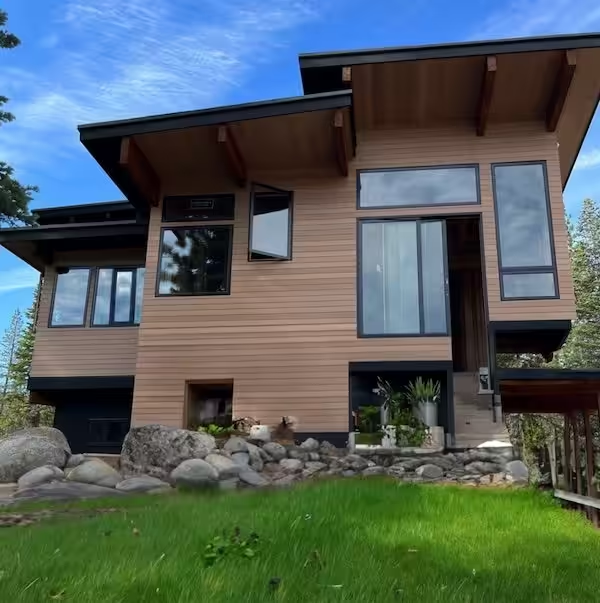
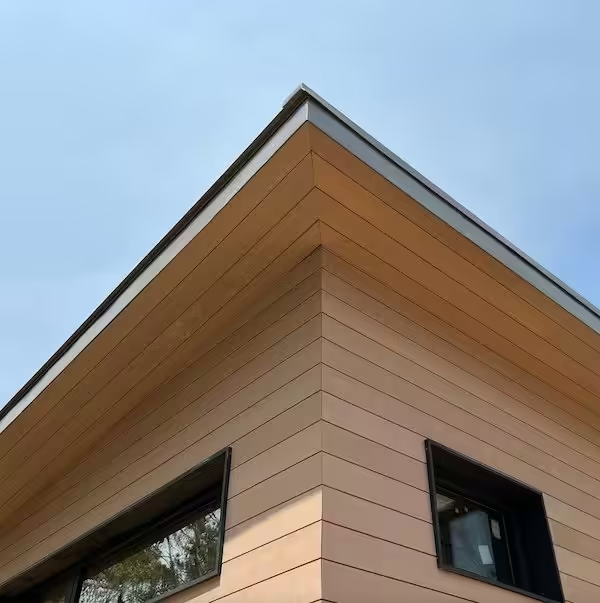
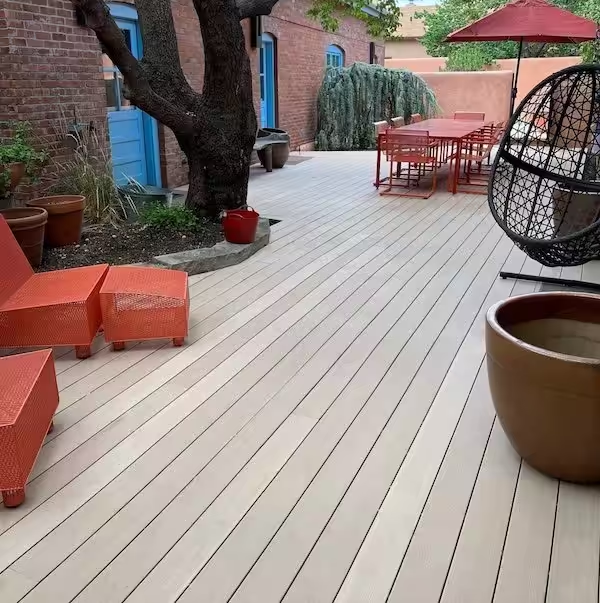
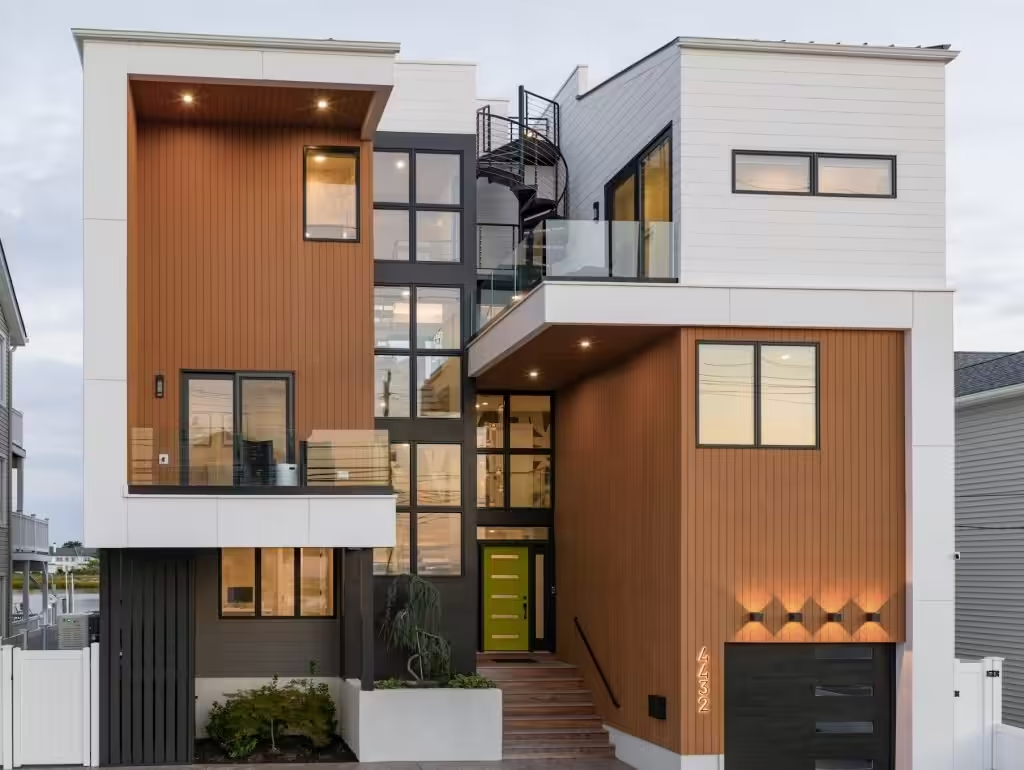
That is also where categories like synthetic wood siding can fit into an eco-friendly strategy, especially for homeowners who want a wood-forward look without committing to ongoing cycles of refinishing and repair.
Eco-friendly Materials Still Need to Support Design Intent
Homeowners often choose building materials because they want a house to look a certain way, hold a certain feel, and stay intentional over time. This is where eco-friendly decisions become more practical when the material holds its lines.
Horizontal profiles like shiplap can look incredible, but they can also look messy quickly if boards move, spacing drifts, or shadow lines start to break down. When homeowners want that rhythm without building their long-term plan around maintenance, stable wood-like profiles such as ACRE shiplap siding allow the design to remain intact while reducing long-term intervention. The eco-friendly value here is the reduction in rework and premature replacement.
Sourcing Matters, Especially Reducing Pressure on Forests
Responsible sourcing still matters. It just needs to be evaluated honestly. When eco-friendly alternatives deliver the aesthetics and performance people expect, it raises a legitimate question about whether harvested timber is always the best default for certain applications.
Builder Magazine captured that shift directly, quoting Modern Mill’s CMO Kim Guimond:
“When sustainable alternatives capture the aesthetics and performance of wood, it raises the question, why continue harvesting trees for applications like siding, trim, and decking?”
Manufacturing and Waste Still Matter
Eco-friendly materials are also defined by how they are made. If a product diverts an agricultural byproduct from waste streams, operates with closed-loop manufacturing, and reduces jobsite waste through dimensional consistency, those outcomes matter.
For homeowners, the takeaway is straightforward: eco-friendly is not only what a material is, but how often it needs to be replaced and how much waste it creates along the way.
Where Factory Finishing Fits Into Eco-friendly Builds
Eco-friendly construction is often slowed down by jobsite variability. Field finishing introduces weather delays, inconsistent coverage, rework, and material waste. Factory finishing is not automatically superior in every scenario, but it can reduce variables that tend to create excess labor and material consumption.
This is why factory finished siding has become part of the sustainability conversation for exterior systems that prioritize consistency and long-term performance.
Conclusion
Eco-friendly building materials make the most sense when they reduce the number of times a home needs to be repaired, refinished, or rebuilt. Longer service life, lower maintenance load, healthier indoor environments, and predictable performance tend to deliver better outcomes than materials selected purely for their initial appearance or cost.
If you want to continue researching lifecycle-driven material selection, Modern Mill’s overview of sustainable building materials is a useful next step. If the goal is an eco-friendly home that stays consistent and low-maintenance over time, the most sustainable choice is often the one you do not have to keep fixing later.
Ready to Experience the
Difference?
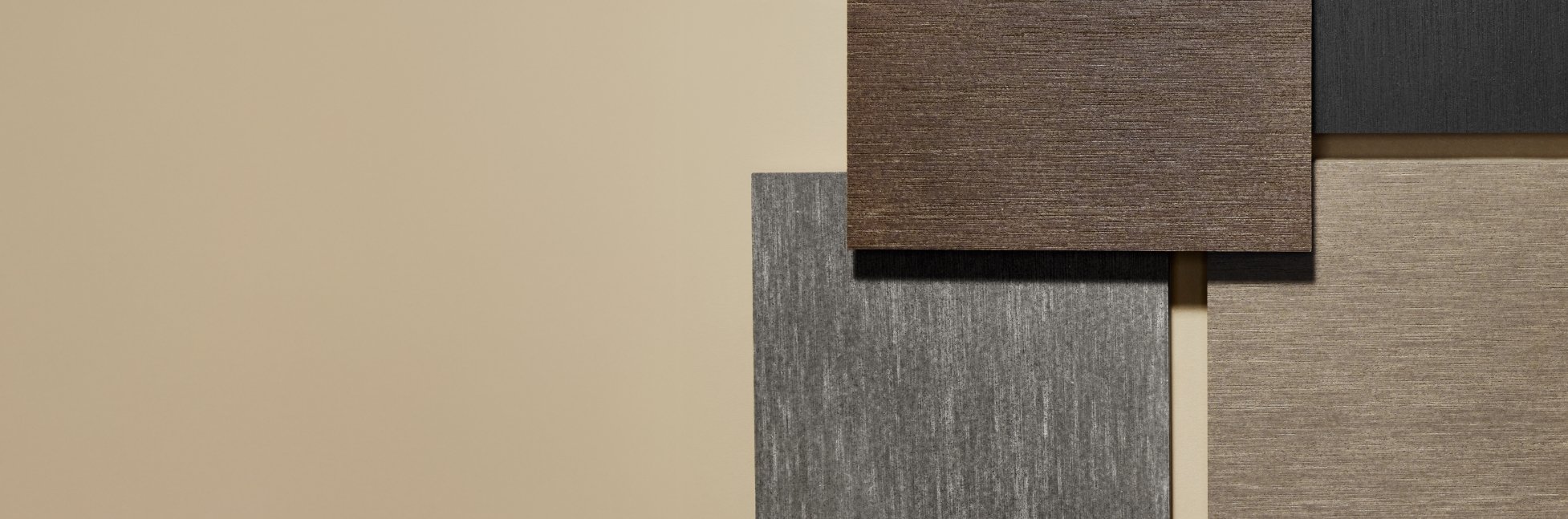
Ask for ACRE at your local lumber yard or order samples to see for yourself why builders are making the switch.