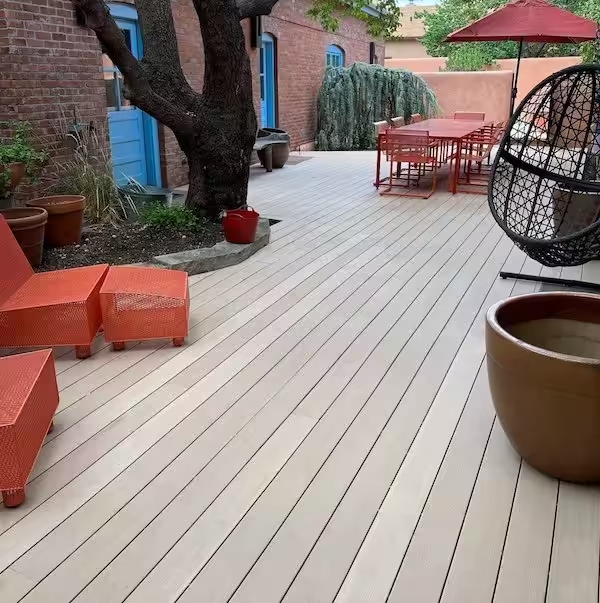
Why Builders Are Switching to Factory Finished Siding
April 2026More builders are specifying factory finished siding for the same reasons. They don’t want the hassle and inconsistencies of field finishing. A field finish adds a trade to the schedule that depends on weather, requires its own coordination window, and introduces finish variability that’s difficult to control once the crew is on site. When conditions aren’t right, the job holds.
When the hold runs long, it creates downstream pressure on everything that follows. Builders who have run those projects once tend to spec differently the next time.
Factory finished siding moves the finishing step out of the field entirely. The stain or finish is applied under controlled conditions before the product ships, so the crew goes straight from delivery to installation with no hold, no weather dependency, and no separate finishing trade to schedule.
Here’s what drives that shift, and why composite siding has become the substrate builders and architects are pairing with factory-applied finishes most often.
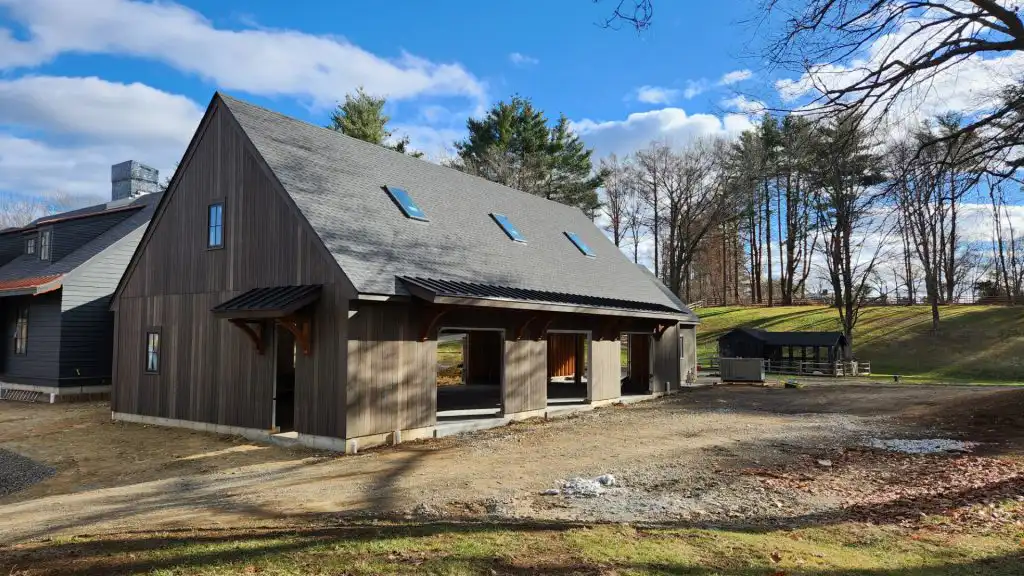
Factory Finished Siding Eliminates Manual Finishing
Field finishing is a sequential trade. Siding goes up, it dries, the finishing crew arrives, weather cooperates, coats go down, coats cure. That sequence requires multiple conditions to align, and on a given project, at least one of them tends to fail.
Temperature, humidity, and surface cleanliness are controlled variables in a factory. On a job site, none of them are reliably managed. Factory finished siding ships with the stain or finish already applied and cured. The installation crew installs it. There is no finishing crew needed, no weather window to coordinate, and no waiting period between coats that stretches the schedule.
Removing field finishing from the exterior sequence matters more than it might appear, because finishing is one of the trades where builder shortages are most persistent. The HBI Spring 2024 Construction Labor Market Report, produced jointly with NAHB, found that 52% of builders reported a shortage of painters among the labor they employ directly. Factory finished siding removes that dependency at the spec stage, before a shortage ever becomes a schedule problem.
Factory Conditions Produce Better More Consistent Finishes
Finish quality depends on surface cleanliness, temperature, humidity, and cure conditions. In a factory, all four are managed consistently across every board. On a job site, those variables shift throughout the day and between coats.
Even an experienced crew working in favorable conditions can encounter dust pickup in a wet finish, lap marks from application overlap, or surface contamination from whatever is airborne on site. Factory applications are applied at controlled temperatures under consistent conditions, producing a bond that cures more completely than a finish applied outdoors, with even film thickness and consistent coverage across all four sides of each board.
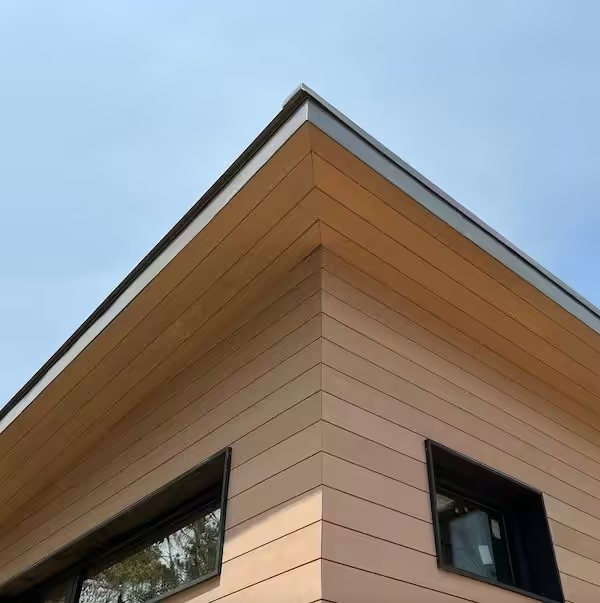
In our experience at Modern Mill, the finish consistency that comes out of a factory environment is difficult to replicate on a job site. This is for any building material, particularly on long horizontal runs of profiles like shiplap siding where any color variation across boards becomes visible when light hits the facade at an angle. Getting that right in the field depends on conditions no one controls. In a factory, it is the baseline expectation.
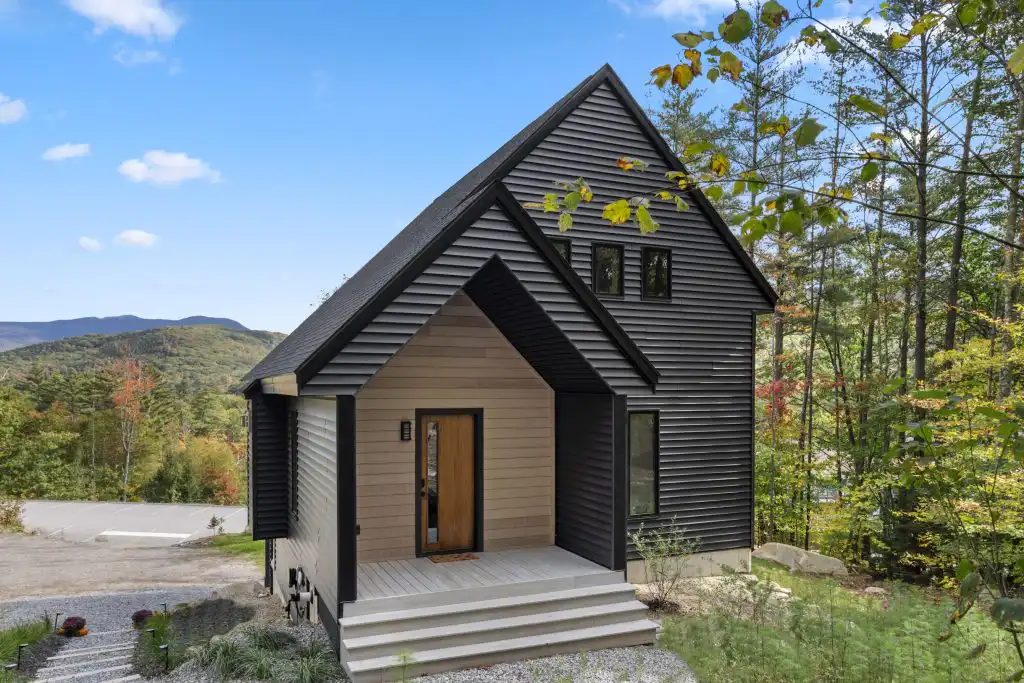
Factory Finish Holds Finishes Longer than Field Finishing
Woods like cedar hold a factory finish well at installation, but the substrate changes over time. As cedar takes on and releases moisture seasonally, the board surface moves, and that movement works on the finish. Builders who have run cedar projects long enough have seen the result: checking at exposed end grain and finish failure that migrates inward as moisture cycles continue.
Composite siding offers a dimensionally more consistent substrate for factory-applied finishes. Because it does not have the moisture content variation of wood, the finish experiences less substrate movement over time, which translates to more consistent performance across the envelope. For a side-by-side look at how the two materials compare on cost, maintenance, and long-term performance, see our composite siding vs. cedar comparison.
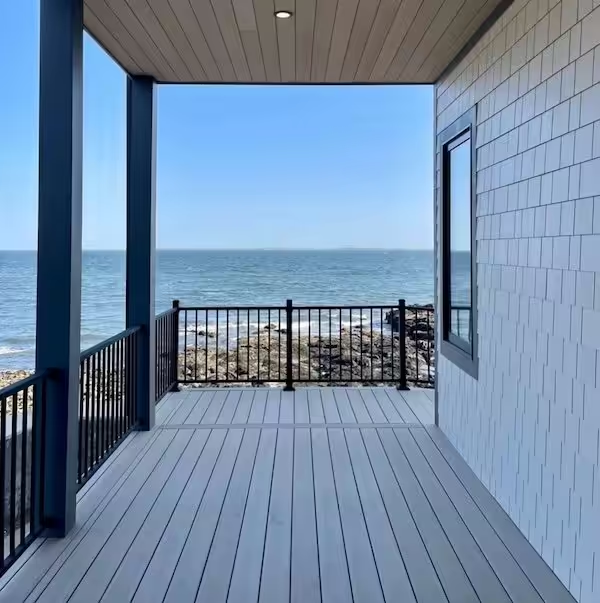
That stability matters most in coastal and high-humidity climates, where the swing between wet and dry conditions is pronounced and the gap between wood and composite substrate performance widens accordingly. Architects specifying composite shiplap siding for exterior applications are increasingly noting that substrate consistency is as important as finish quality itself. A controlled-environment finish only performs as well as the substrate beneath it stays stable.
All Siding Profiles Can Be Factory Finished
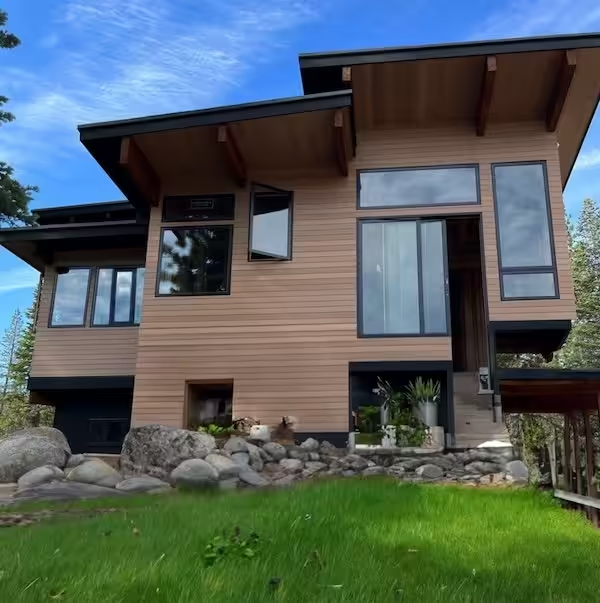
A common concern when factory finished siding comes up in a spec is profile selection. The assumption is that prefinished options are limited to a handful of standard lap profiles when the reality is composite siding is factory-finished across the full range of profiles specified in residential and light commercial work. Think popular styles like shiplap, nickel gap, board and batten, V-groove, and edge and center bead. A builder working on a coastal project can specify composite shiplap siding in a factory-applied stain. A project requiring a clean vertical line can spec board and batten with the same controlled-environment finish process.
The direction of the market reflects a broader shift in what builders are being asked to deliver. According to NAHB’s 2024 survey of siding material usage, vinyl siding has declined 12.8 percentage points over the past 20 years. Vinyl typically arrives with a factory-manufactured color, so field finishing isn’t the issue.
The more likely driver is aesthetics. Builders consistently hear from clients that they want something that looks natural. When wood isn’t the right fit because of maintenance, the ask becomes a composite that performs without compromising on that natural appearance. That’s the decision driving more specs toward factory-finished composite siding: not just schedule efficiency, but material quality that holds up to what the client actually wanted.
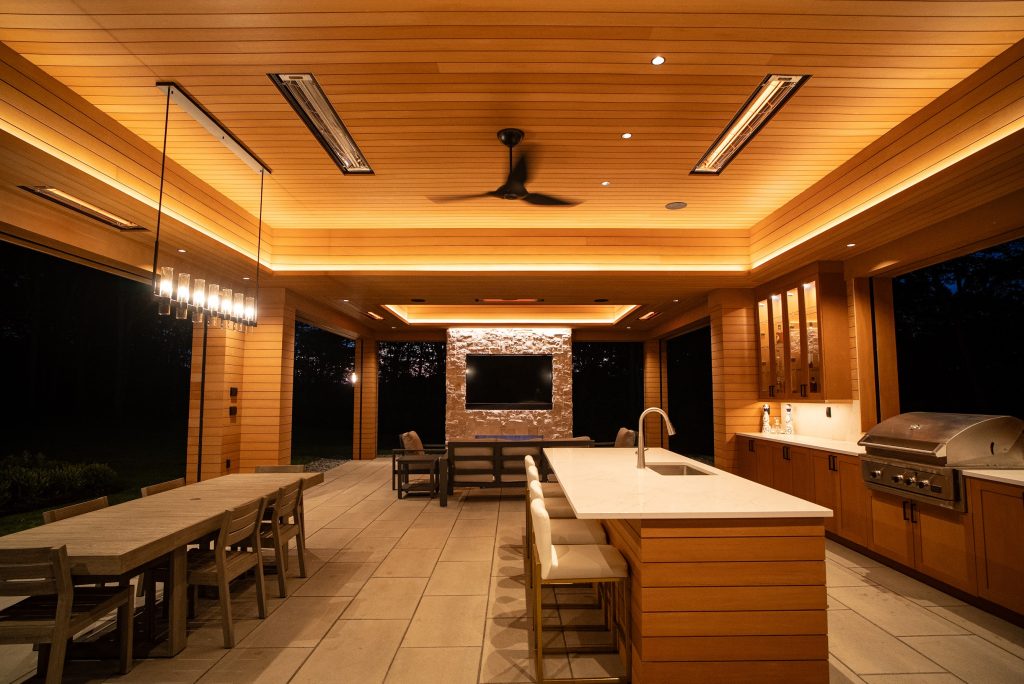
Why Switch to Factory Finished Building Materials
For builders who have run the math on field finishing, factory finished siding keeps the schedule moving and delivers a more consistent product to the owner. In our experience at Modern Mill, the builders who try factory finished ACRE once tend to come back to it, not because of any single feature, but because the combination of schedule reliability and finish consistency is difficult to replicate in the field.
Coverage from both Walls & Ceilings and Green Building Advisor points to the same outcome: factory-finished ACRE arrives ready to install, reducing jobsite labor, weather holds, and the coordination overhead that field finishing adds to the exterior phase.
For architects and builders evaluating materials for upcoming projects, a closer look at how factory-finished composite siding compares to traditional wood on schedule, maintenance, and long-term performance is a useful place to start. The spec decision tends to look different once all three are on the table.
Ready to Experience the
Difference?
Ask for ACRE at your local lumber yard or order samples to see for yourself why builders are making the switch.