Cedar Shingle and Shake Siding: Profiles, Performance, and Alternatives
July 2026Cedar shingle siding defined the New England seaside cottage long before vinyl existed as an option. Cedar shake siding built the craftsman bungalow, the mountain retreat, the Pacific Northwest farmhouse. They are closely related profiles that are often used interchangeably, and for most applications that is perfectly reasonable. The differences that matter are how each is made, how it installs, and the look you end up with on the wall.
Understanding those differences matters whether you are specifying an exterior for a new build, matching existing siding on a historic renovation, or evaluating alternatives to real cedar. This guide covers what cedar shingle siding and cedar shake siding actually are, how they compare on performance and cost, and what builders and homeowners are specifying when the look is non-negotiable but the maintenance obligation of real cedar is not.
What Is Cedar Shingle Siding?
Cedar shingles are sawn smooth on both sides and cut with a precise, consistent taper. That uniformity is the defining characteristic. As Fine Homebuilding notes, a shingle is “sawn on both sides and thinner at the butt than a shake,” producing a flat, regular profile that lays tight against the wall substrate and reads as ordered and deliberate on a facade.
Because shingles lay flat, they don’t require felt interlay between courses the way shakes do. Three overlapping layers provide the weather barrier at any given point on the wall. That flat profile also gives shingles an advantage in high-wind and coastal environments, where wind-driven rain has fewer gaps to penetrate.
The standard sidewall grades are defined by the Cedar Shake & Shingle Bureau:
- 18-inch Perfection: the most common sidewall shingle, named for its consistent taper and square butt cut
- 16-inch Fivex: a shorter shingle for lower exposures and tighter exposure patterns
- Rebutted and Rejointed (R&R): factory-assembled panels with machine-straightened edges; installs faster and holds tighter shadow lines than individual shingles
- Certigroove: a pre-grooved panel variant used when a channeled surface texture is specified
Both Western Red Cedar and Eastern White Cedar are used for sidewall shingles. Eastern White is more common in New England and along the Atlantic coast; Western Red is standard in the Pacific Northwest and mountain West.
Architecturally, cedar shingle siding is the material that defined the Shingle Style, the late 19th-century American vernacular of Newport cottages, Cape Cod retreats, and the Maine shoreline. It reappears in Colonial Revival, Craftsman, and contemporary coastal design whenever the goal is a layered, textural exterior that reads as refined rather than rustic.
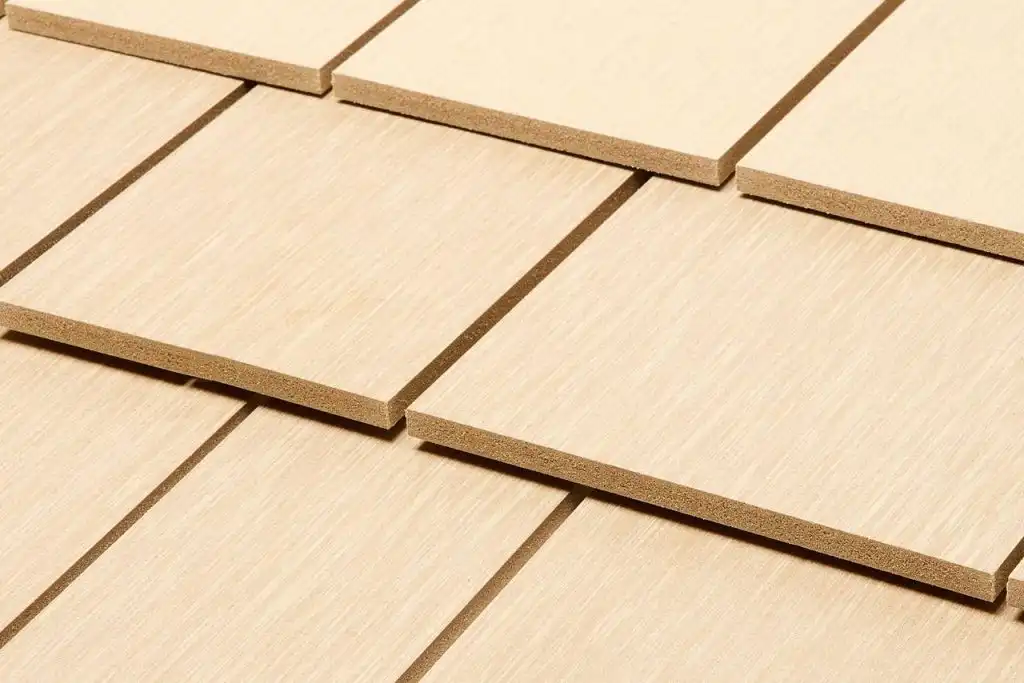
For builders specifying cedar shingle siding, the standard callout is: No. 1 Blue Label 18-inch Perfection cedar shingles, sidewall application. The sidewall callout matters because shingle grades overlap between roofing and siding applications, and exposure calculations differ between the two.
Cedar shingle siding connects naturally to exterior material choices designed for coastal durability. For a broader look at how material selection maps to performance in coastal environments, see sustainable building materials for coastal living.
What Is Cedar Shake Siding?
Cedar shakes are split from the log rather than sawn, which is where their texture comes from. Fine Homebuilding also describes, a shake is “typically split on one or both sides” and “follows the grain more closely” than a shingle. That splitting process produces a surface that is rough, dimensional, and irregular in a way a mill cannot replicate. Installed on a wall, the variation between units creates depth: shadow lines that shift with light and a surface that reads as handcrafted.
Modern cedar shakes are produced two ways:
- Handsplit and Resawn (Certi-Split): split on one face, sawn smooth on the back. This is the standard shake for most sidewall applications, delivering the irregular split-face texture with a flatter backing for installation
- Tapersawn (Certi-Sawn): sawn on both sides, but with a coarser texture than a shingle. Delivers a rustic look with slightly more dimensional consistency than handsplit
These grade names are defined by the Cedar Shake & Shingle Bureau, the industry authority for grading standards and installation specifications.
Fine Homebuilding’s technical data puts medium shakes at nominal one-half inch at the butt end and heavy shakes at nominal three-quarters inch. That greater thickness, compared to a shingle, is what produces the pronounced shadow lines visible on a finished shake wall.
Because shakes are irregular and don’t lay flat, installation requires felt interlay between each course, a standard requirement that covers the gaps created by the split face. It adds a step relative to shingle installation and is one of the practical distinctions between the two profiles.
The standard specification is No. 1 Certi-Split Handsplit and Resawn cedar shakes, sidewall application. As with shingles, the sidewall callout distinguishes this from roofing grades.
Cedar shake siding is the material of craftsman bungalows, mountain cabins, and Pacific Northwest residential design. Profiles for any architecture that wants to read as organic and rooted in its landscape. Western Red Cedar, harvested primarily from British Columbia and the Pacific Northwest, is the standard species.
Cedar Shingles vs. Cedar Shakes: The Real Differences
The comparison comes down to how each profile is made and what that manufacturing process produces. Shingles are sawn smooth on both faces; shakes are split on at least one. Shingles lay flat against the wall and do not require felt interlay. Shakes are typically thicker at the butt end, nominally one-half to three-quarters inch, which is what creates the pronounced shadow lines. Neither profile is better. They are different visual languages for different architectural contexts. Shingles for a refined, coastal, or historically grounded exterior. Shakes for an organic, textural, or rustic one. Both are cedar. Both require the same maintenance commitment. The decision is aesthetic, not performance-based.
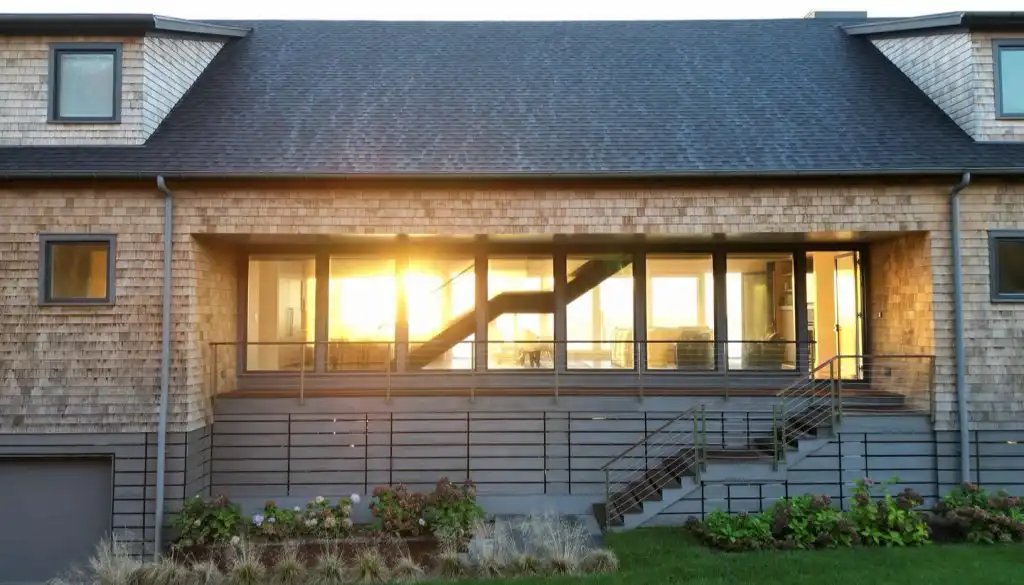
One point worth noting for builders and architects in construction documents, these terms are not interchangeable. A spec calling for cedar shakes will produce a different exterior than one calling for cedar shingles: thicker profile, rougher face, deeper shadow lines. The distinction belongs in the spec sheet, not left to the installer.
Performance and Maintenance: What to Expect from Cedar Siding
Cedar performs well when it’s maintained. That condition is the key variable. The maintenance requirement is real, it repeats on a fixed schedule for the life of the siding, and it determines whether cedar is cost-effective for a given project.
According to This Old House, cedar siding lasts between 20 and 40 years when properly maintained, with some installations in dry climates lasting longer. Without maintenance, visible deterioration begins within five to ten years as the wood starts absorbing moisture.
Cedar siding requires annual cleaning to remove algae, moss, and debris, particularly in shaded or humid environments. Staining or repainting every few years maintains the protective coating. According to Today’s Homeowner, staining runs $1.50 to $4.00 per square foot, which puts the cost for a typical 2,000-square-foot home between $3,000 and $8,000 per maintenance cycle.
In our experience, builders replacing cedar on coastal projects consistently cite the restaining cycle as the primary frustration, not the upfront cost. For readers evaluating composite alternatives, Modern Mill’s staining resources outline approved coating options and application requirements for engineered exterior profiles.
Known failure modes:
- Moisture infiltration: rot, warping, and splitting at butt ends and cut edges in unsealed wood
- Mold and mildew in shaded areas where siding stays damp between rain events
- Pest damage: carpenter ants and termites accelerate deterioration in untreated wood
These are the questions that come up most consistently when builders and homeowners are evaluating cedar shake and shingle siding.
- What is the most durable alternative to cedar shingle siding? Engineered composites and fiber cement are the two most durable alternatives. Fiber cement does not rot, warp, or attract pests and carries long manufacturer warranties. Engineered composites made from materials like ACRE offer the same durability without the weight, and accepts stain the way real cedar does rather than being limited to paint. For a full comparison, see our breakdown of top alternatives to cedar siding.
- How long does cedar shake siding last? According to This Old House, cedar siding lasts between 20 and 40 years when properly maintained. In dry climates with consistent upkeep, some installations last longer. Without regular staining or sealing, visible deterioration typically starts within five to ten years.
- What is the difference between cedar shingles and cedar shakes? Shingles are sawn smooth on both sides and cut to a consistent taper, producing a flat, uniform profile. Shakes are split from the log, which creates a rougher, thicker, more irregular surface. Shingles read as refined and coastal; shakes read as rustic and organic. They are not interchangeable in a specification.
- Can cedar shingles be easily replaced with a composite alternative? Yes. Composite profiles that match the cedar shingle silhouette are available and install with standard tools. The surface texture differs from a split or sawn cedar face, but the architectural profile, shadow lines, and overall facade read are comparable. For projects where the look matters more than the specific material, the alternative category has matured enough to deliver credible results.
Alternatives to Cedar Shake and Shingle Siding
The demand for cedar shake and shingle profiles are not going away. What is shifting is the assumption that real cedar is the only way to achieve them. As Architect Magazine noted, wood is no longer the automatic sustainable default in exterior specification, and the market for profile-matched alternatives has grown in response.
Three categories are worth understanding:
- Vinyl – The entry-level option, priced significantly below real cedar. Vinyl products replicate the profile geometry but not the surface quality. Texture is molded rather than split or sawn, and color is integral to the panel rather than applied. Vinyl requires no maintenance beyond occasional cleaning and is the most budget-accessible way to get the cedar silhouette. The trade-off is surface authenticity; the material reads as synthetic at close range.
- Fiber cement – A lower-maintenance option, generally priced below real cedar installed. Fiber cement shingle siding is pre-primed for paint, non-combustible, and backed by long manufacturer warranties. Fiber cement does not rot, warp, or attract pests. It qualifies for reduced insurance premiums in fire-risk zones. The limitation is weight, which requires professional installation. The surface texture, while convincingly wood-like, is also not as realistic as other alternatives.
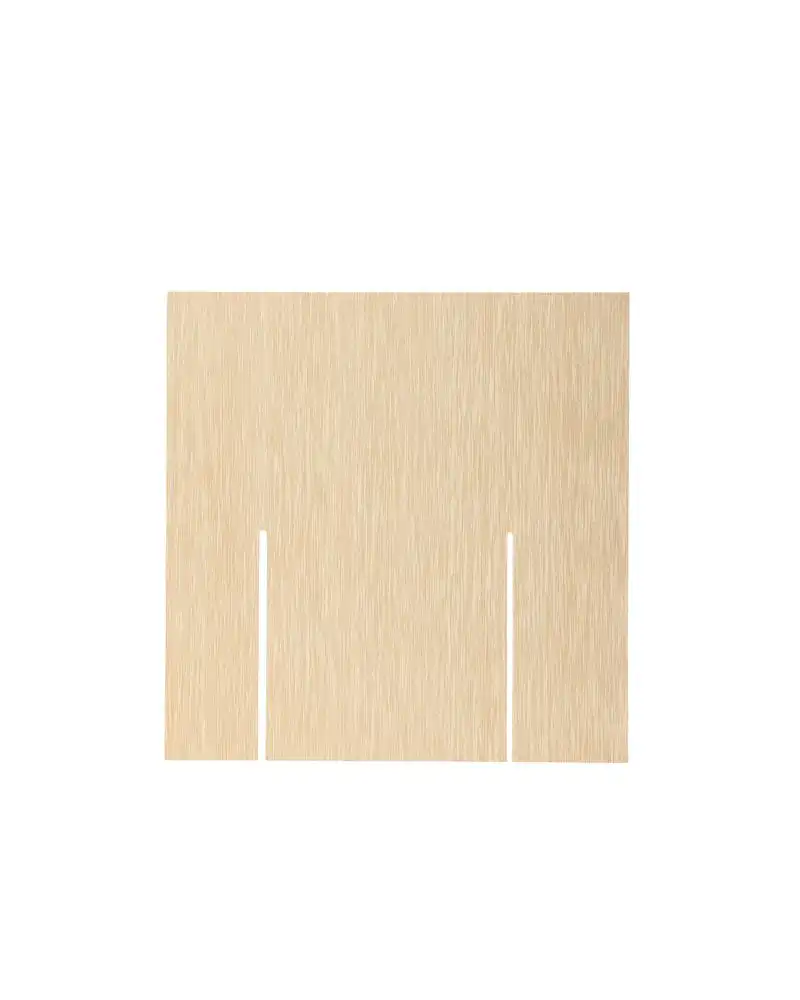
- Sustainably engineered composites – As the Los Angeles Times documented, builders are increasingly specifying materials that deliver wood aesthetics without the supply chain and maintenance demands of real cedar. Modern Mill’s ACRE Perfection Shingle Siding is the only wood alternative shingle on the market that can be stained. Every other composite or fiber cement shingle option is paint-grade only. It comes factory finished in 4-foot panels at 11-7/8″ wide with a 5″ to 5-1/2″ reveal. This allows crews to cover significantly more wall area per piece compared to installing individual cedar shingles. The profile is tree-free, made from upcycled rice hulls, does not rot or split, and does not require periodic resealing.
Choosing the Right Profile for Your Project
The choice between cedar shingles and cedar shakes comes down to four practical questions.
What does the architecture say? Shingles for refined, coastal, or historically grounded exteriors. Shingle Style, Colonial Revival, and New England vernacular. Shakes for organic, rustic, or Pacific Northwest-influenced design: craftsman bungalows, mountain cabins, and contemporary homes where texture reads as authentic. When the style is ambiguous, the roofline and window trim detail usually clarify it. The siding profile should reinforce the architectural language already established elsewhere on the building.
What is the climate exposure? Shingles lay flat and perform slightly better in high-wind coastal environments where wind-driven rain is the primary threat. In either profile, the moisture management commitment for real cedar is identical: regular cleaning, consistent sealing, and annual inspection for butt-end rot.
What is the maintenance tolerance? For an owner-occupied primary residence with an engaged homeowner, the schedule is manageable. For a rental property, a second home, or any project where long-term maintenance is uncertain, a profile-matched alternative is worth pricing at the start of the project, not after installation. Both profiles require the same care on the same schedule, so the material choice does not change the obligation, only swapping to an alternative does.
Is the site in a fire zone? Verify local code before specifying any cedar product. Fiber cement and engineered composites are non-combustible alternatives that qualify for insurance premium reductions in most WUI jurisdictions, which partially offsets the installation cost difference.
On specifications, name the profile precisely in construction documents: No. 1 Blue Label 18-inch Perfection cedar shingles, sidewall application, or No. 1 Certi-Split Handsplit and Resawn cedar shakes, sidewall application. The Cedar Shake and Shingle Bureau publishes full grading rules and installation standards for both. An ambiguous spec produces inconsistent results.
Ready to Specify
The shake and the shingle share the same architectural DNA: that tapered, layered profile that has defined American homes for more than a century. Where they differ is in how they are made, how they install, and the finished look on the wall. Get the distinction right at the specification stage and the exterior takes care of itself.
If you’re exploring alternatives to cedar shingles and shakes for your next project, start by getting your hands on some samples.