Color Variation in ACRE Siding: Why Every Board Is Unique and How to Plan for It
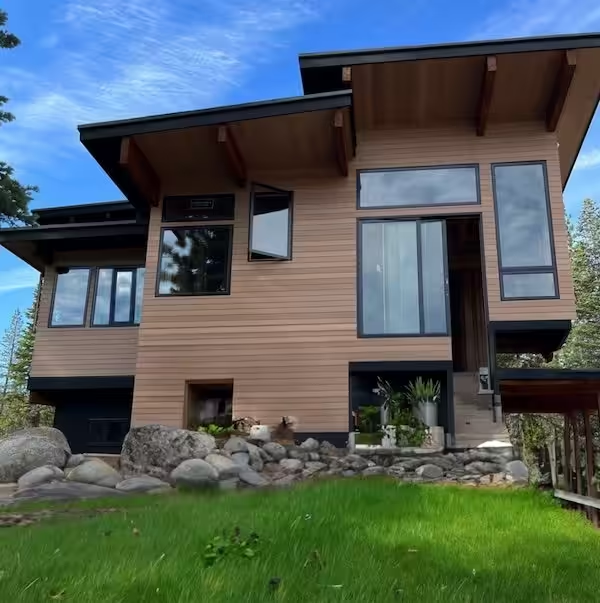
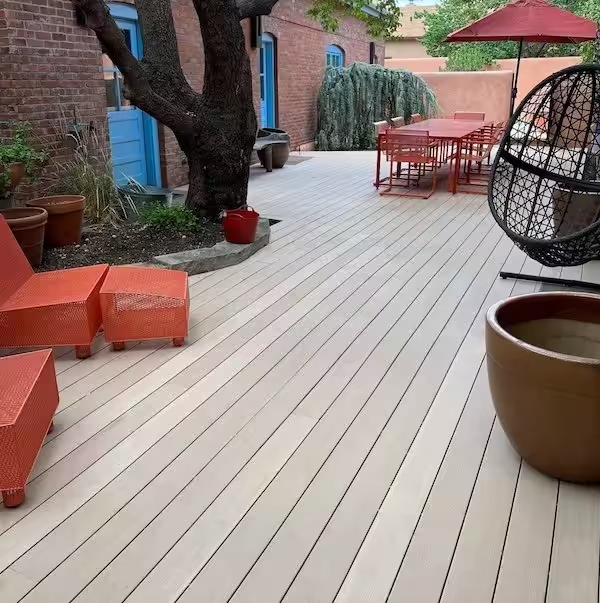
Updated October 2026Real wood has natural color variation. No two boards look alike, and architects and homeowners choose it for exactly that. That’s why we developed ACRE using rice hulls, a natural material that gives that same kind of inherent variation, and would otherwise end up in a landfill.
All of our ACRE profiles are made from start to finish in the USA, from over 50% upcycled rice hulls by volume in place of virgin plastic. The hulls are an agricultural byproduct, and they carry their own natural color, so every board that leaves our Mississippi mill has a slightly different tone. Plan your finish and layout with that in mind, and the variation reads as depth across the whole wall.
Where ACRE’s Color Comes From
There are over 120,000 varieties of rice grown around the world, and their hulls range from white to tan to gold. That mix shows up even within a single production batch. ACRE’s warmth and color come from the material itself: real rice-hull fiber, not a coat of paint. It’s the same way real wood gets its look.
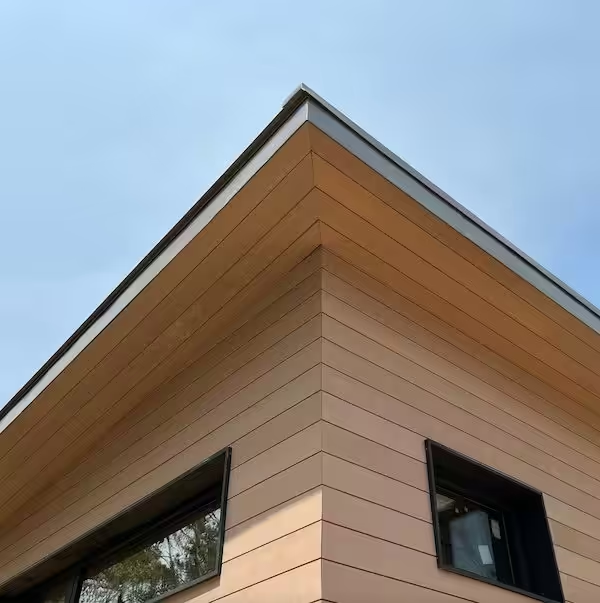
The result is genuine natural variation, and it’s subtle. One board sits a little warmer or lighter than its neighbor, the way boards from the same species of tree do. You’ll see it on bare ACRE, and it still shows after staining. Check out our field coating requirements for more details on staining ACRE.
You get that warmth without knots, splinters or tannins, so the variation you see is tone and grain, with no sap lines or knot holes. And no tree is cut down to make it.
Built-In Color vs. Printed Color
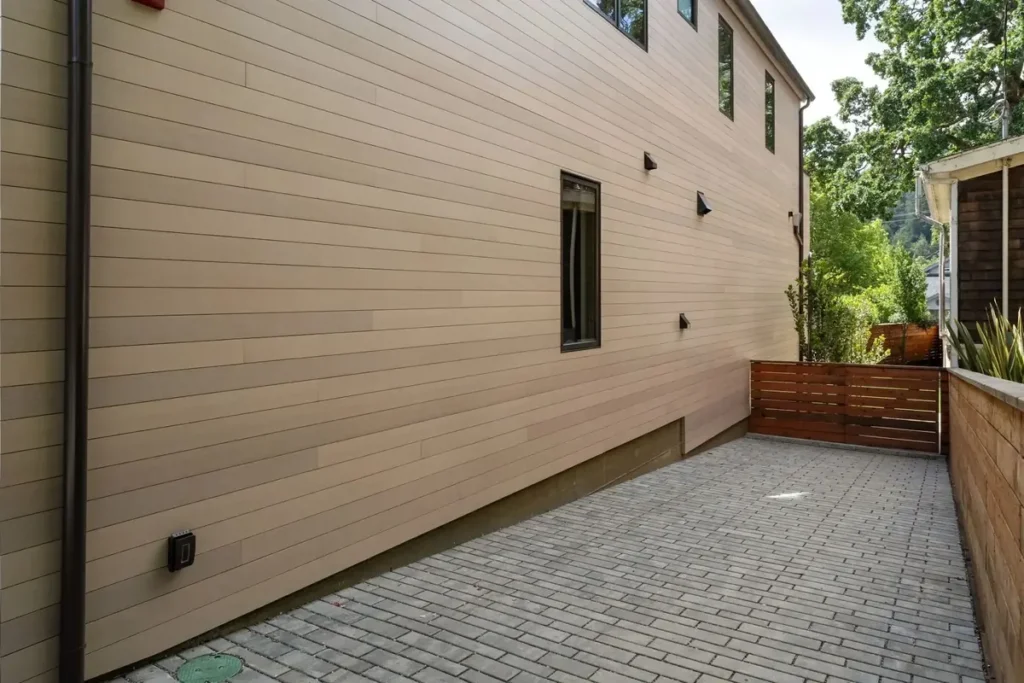
Many wood-look sidings get their color from the surface: paint applied in the field or the factory, or a printed cap on a shaped plastic or cement board. Some use an engineered, repeatable printed pattern to simulate board-to-board variation.
ACRE has no cap. Its color and grain come from the rice-hull material itself and run all the way through the board. That’s why ACRE sits in the same authentic wood tier as premium hardwood, not alongside painted composite lookalikes. Going without a cap is also what lets ACRE take water-based stain or paint directly, with no primer.
How Your Finish Changes What You See
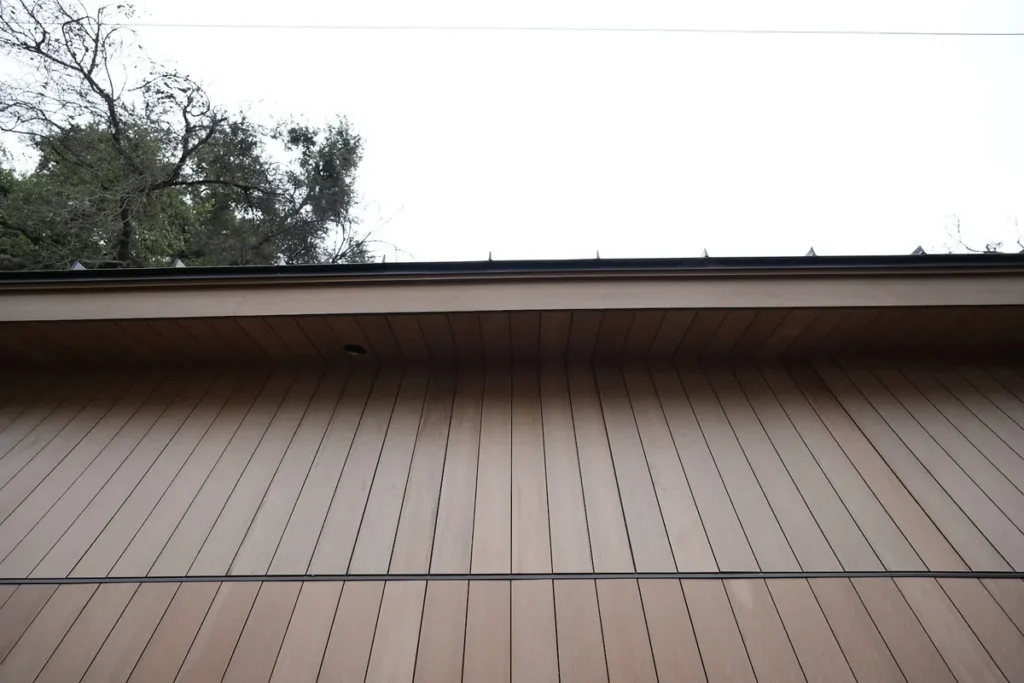
Your finish decides how much of that natural variation shows. A clear coat or semi-transparent stain keeps it in view. While paint gives the most uniform color across the wall.
ACRE takes a finish evenly, as our guide to color customization in composite materials explains, while each board keeps its own tone underneath.
| Finish | How the variation reads | What we specify |
|---|---|---|
| ACRE Raw (unfinished) | The full natural range of tone and grain | Ships in its natural color, ready to stain or paint. We strongly recommend a water-based protective finish to resist dirt, stains and UV fading. |
| Clear coat | Tone and grain stay visible. A clear coat can slightly darken the look. | Approved water-based clear sealers, tested on a sample area first |
| Semi-transparent stain | Grain shows through and some board-to-board variation stays | Our seven Signature Stain Collection shades in PPG Proluxe, factory-finished or special-ordered. Laurel is our pick for the most natural look. |
| Paint | The most uniform color across boards | Water-based (100% acrylic latex) colors from our approved lists, or with an LRV of 55 or greater |
A few rules apply whichever finish you choose:
- Use approved coatings. ACRE is PVC-based, so field coatings must be water-based (100% acrylic latex for exterior paints). Choose colors from our approved color lists or with an LRV of 55 or greater, and contact us for approval before going below 55. The rule protects ACRE from excess heat and board movement, and following it is a condition of warranty protection.
- Skip custom tinting. Custom-tinting a color at your local paint store can cause performance issues and void warranty coverage.
- Finish before installation. Factory-finished ACRE is our first recommendation. If you’re coating on site, coat boards on a smooth, flat surface. Staining after installation is not recommended, since it can leave an uneven appearance.
- Mind the working time. The longer the board, the less time you have before the stain cures, so test on a sample piece first.
Want to skip the jobsite coating step? Factory-finished ACRE comes in all seven Signature Stain Collection shades, applied in a controlled environment for a consistent finish. Each board’s natural grain still shows through.
How ACRE Ages
Because ACRE’s color runs all the way through the board, it weathers gracefully as a whole material, the way real wood does, and not the way a plastic surface looks over time. Like any exterior material, its color may fade over time with UV exposure, and a UV-resistant clear coat helps it resist fading and makes cleaning easier. Our product expectations page covers the details.
You also get all the durability people love about composite. ACRE is an advanced PVC composite with no organic wood fiber, so it won’t rot, swell, warp or delaminate, and it gives insects nothing to feed on. Cedar needs refinishing every 2 to 7 years to hold up long term. ACRE doesn’t need a refinishing cycle just to survive, so a protective finish is about keeping it looking its best. Two things help with that:
- Sun exposure differs by wall. A south-facing wall gets far more sun than one under a deep porch roof, so it may change sooner. A UV-resistant finish on every elevation helps the whole house age evenly.
- Keep it clean. Our care guide calls for washing ACRE down with water at least every 6 to 12 months, using a gentle all-purpose cleaner and a natural fiber brush. Skip traditional composite cleaners, since products containing chemicals may alter ACRE’s appearance.
How to Plan Your Install
How evenly the variation reads comes down to how you sort boards before they go up. Wood floor installers do the same thing: the National Wood Flooring Association tells them to work from multiple bundles to balance color across a floor. The habit works just as well for ACRE siding and trim.
- Choose your finish from physical samples. Judge real boards in daylight (more on that below).
- Order the full quantity at once, plus a few extra boards. Having every board on site gives you the widest mix to blend from.
- Store boards covered and out of direct sunlight. Keep the factory pallet covers on, re-cover any pallet you open, and let ACRE acclimate before installation.
- Finish before installation. Use factory-finished ACRE or follow the coating rules above.
- Open several pallets at once where possible. Pull boards from different pallets and from different points in each stack.
- Lay out before you fasten. Set full-length boards out on a flat, shaded surface and spread the warmer and lighter tones across the wall so they don’t bunch up in one course, at one corner or around a single window. Cut each piece only when you’re ready to fasten it.
- Check each board as it goes up. Confirm it’s the profile and finish you want.
- Keep spares and record the finish. Set aside a few full boards, and note the finish manufacturer, product, sheen and color name, as our jobsite checklist asks.
If a contractor is installing your siding, share this plan before the first board goes up.
Choose Your Finish from Physical Samples
A screen can’t show ACRE accurately. Colors online can look different from the real product because of display settings and the natural grain of the material, so base your final choice on physical samples.
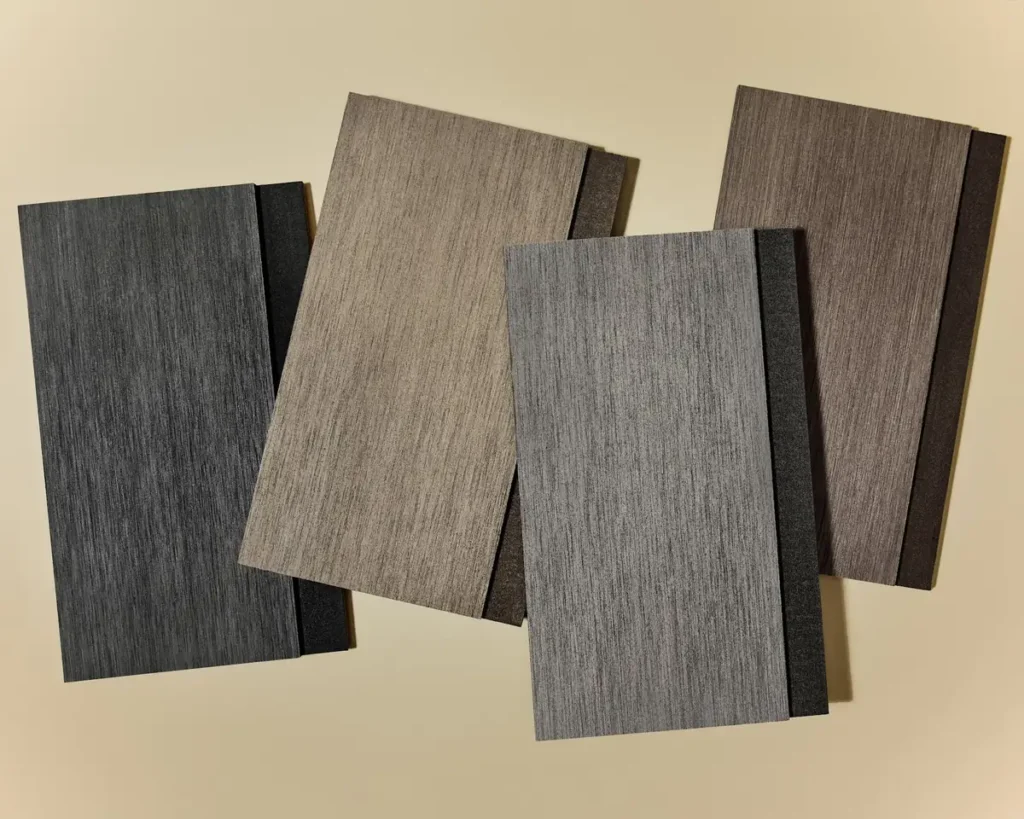
Samples of natural ACRE and all seven Signature Stain shades are representative. Treat them as a guide to the finish, since a full wall shows a wider range of tone, and a color can read lighter across a large wall than on a small sample. To get a truer read:
- Order more than one sample of the finish you like
- Look at samples outdoors, in daylight, against the house
- Confirm your final choice with your Modern Mill rep
Planning for Future Additions
Every exterior material changes a little after years outdoors, so a new board can read slightly different next to boards that have weathered. The spare boards and finish notes from step 8 are your best reference, though they can’t guarantee an exact match. Before you order for an addition, ask your Modern Mill rep about current finish options.
See the variation for yourself. Order ACRE samples in the finish you’re considering, and ask your Modern Mill rep or dealer how to lay out boards for your wall.
Frequently Asked Questions
Is Color Variation Normal in Composite Siding Like ACRE?
Yes. Real wood has natural color variation, and so does ACRE. We built it around rice hulls because they vary naturally the way wood does, so no two boards are alike, before or after staining. Mixing boards from several pallets spreads it evenly across the wall.
How Does ACRE Weather Over Time?
Gracefully. ACRE’s color runs all the way through the board, so it weathers as a whole material, the way real wood does. Like any exterior material, its color may fade with UV exposure over time, and a UV-resistant clear coat helps it resist fading.
Does Composite Siding Need to Be Painted?
ACRE doesn’t. It takes an approved water-based clear coat, semi-transparent stain or paint, with no primer. We strongly recommend a protective finish to resist dirt, stains and UV fading, and Laurel is our pick for the most natural look.
Does Factory-Finished ACRE Still Show Color Variation?
Yes, to a degree. The factory finish is consistent, and each board’s natural grain shows through it, so some board-to-board variation remains. Mix factory-finished boards from several pallets too.
Ready to Experience the
Difference?
Ask for ACRE at your local lumber yard or order samples to see for yourself why builders are making the switch.