Do Sustainable Building Materials Help Save Costs?
February 2026Sustainable building materials have a reputation for being expensive and on paper, that reputation isn’t wrong with green buildings costing 6.5% more on average to deliver. But that number only tells half the story. The real question isn’t what you pay on day one, it’s what you pay over the next 10, 20, or 30 years. When you factor in maintenance, operating costs, and resale value, the math on sustainable materials looks very different. For homeowners, builders, and architects making long-term decisions, the upfront premium is often the smallest part of the equation.
Upfront Price vs. Long-Term Cost: What the Numbers Actually Show
Conventional materials like lower end wood siding, wood decking, and standard trim have lower price tags at the point of purchase. What they don’t advertise is the ongoing cost of keeping them functional. Wood siding requires painting or sealing every three to five years, regular inspections for rot, and pest treatments over time. Those costs accumulate fast and they rarely show up in the original project budget.
Composite and fiber cement alternatives require significantly less upkeep by comparison. According to data compiled by Angi, wood maintenance costs can run hundreds of dollars per year, while composite alternatives need little maintenance and occasional cleanings. Over a 25-year period, the difference in cumulative maintenance spend between wood and composite can reach thousands of dollars depending on the scope of the project.
This is the core argument for sustainable materials that most competitors in the building products space fail to make clearly: the sticker price is not the total cost. A material that costs more per square foot but holds its finish, resists moisture, and never needs repainting is a fundamentally different financial proposition than one that requires ongoing intervention. Durability, longevity, and low maintenance are financial advantages, not just aesthetic or environmental ones. Builders and architects who understand this are better positioned to help clients make informed decisions, justifying material specifications that might look more expensive on an initial bid. For a deeper look at what separates a truly sustainable material from a conventionally marketed one, this breakdown is worth a read.
How Sustainable Materials Reduce Operating Costs Over Time
The cost savings from sustainable materials extend beyond maintenance. Buildings constructed or renovated with high-performance, sustainable materials consistently demonstrate lower operating costs over time and the data behind this is substantial.
According to the U.S. Green Building Council (USGBC), LEED-certified buildings report nearly 20% lower maintenance costs than typical buildings, and green building retrofits have been shown to decrease operating costs by nearly 10% in just one year. To put that in context: for a builder managing multiple properties or a homeowner planning a long-term renovation, a 10% reduction in operating costs in year one is not a small number.
For builders and contractors, there are direct financial incentives tied to these outcomes as well. Eligible contractors who build or substantially reconstruct qualified energy-efficient homes can earn federal tax credits of up to $5,000 per home, according to the IRS. Knowing this going into a project spec gives builders a concrete way to frame the value of sustainable material choices to clients.
Do Sustainable Homes Command Higher Resale Value?
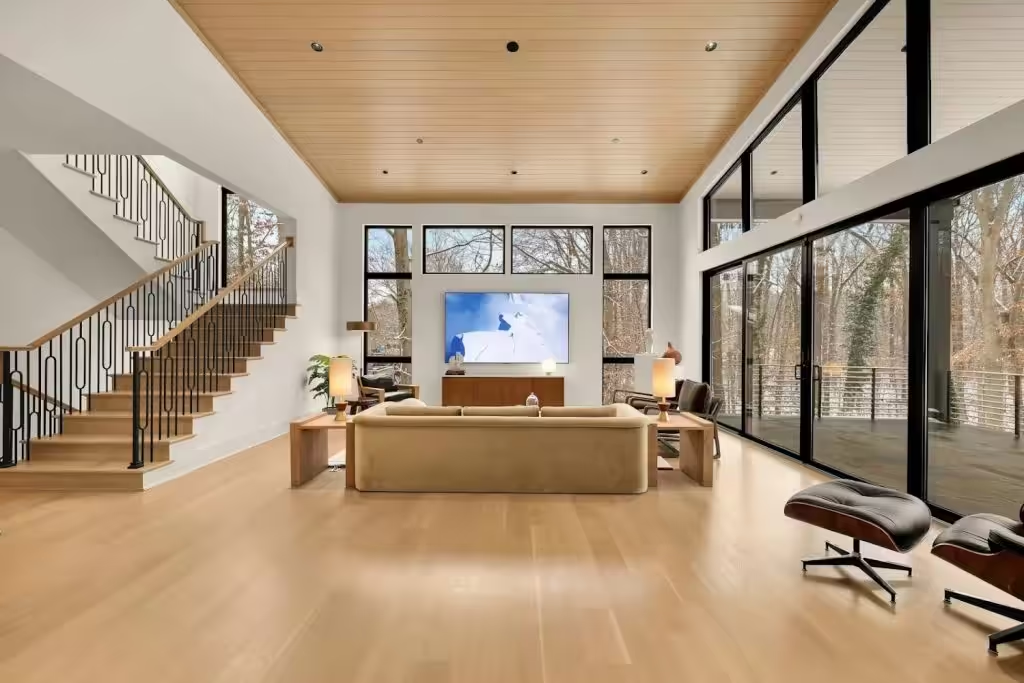
Beyond what sustainable materials save in operating costs, they are also demonstrating measurable impact on property values. Energy-efficient homes command a 3–5% premium at resale. LEED-certified buildings have consistently achieved higher rents than non-certified counterparts, averaging 11.1% — or $4.13 per square foot — above market rate, according to a Cushman & Wakefield study cited by USGBC. For anyone evaluating a building project as a long-term investment, that premium matters.
The demand side of this equation is worth paying attention to as well. According to NAHB and Dodge Data & Analytics’ 2024 SmartMarket Brief, “Building Sustainably: Green & Resilient Single-Family Homes,” half of builders surveyed cited increased homebuyer demand for green homes as a primary driver of their engagement with sustainable building practices. NAHB’s “What Home Buyers Really Want” study found that the average buyer is willing to pay $9,292 more upfront for a home that saves $1,000 annually on utility costs. That stat is telling: buyers are already doing the lifetime cost math, even if the materials conversation doesn’t always reflect it. The market is pricing in long-term value whether or not a project spec accounts for it.
For architects and builders, this means specifying sustainable materials is increasingly a competitive advantage. Clients are asking for it, the resale data supports it, and the incentive structures are catching up.
What Long-Term Cost Savings Look Like in Real Projects
In Modern Mill’s experience working with builders and architects on projects across the country, the conversation around material costs has shifted noticeably. Building pros obviously have a budget and need to stick to the costs they have planned for their clients, but more of them are asking about the long-term costs of their products. That shift in framing changes the entire project conversation.
When a material holds its finish, resists moisture and pests, and doesn’t require repainting every few seasons, the savings show up in fewer callbacks, less upkeep, and happy return clients.
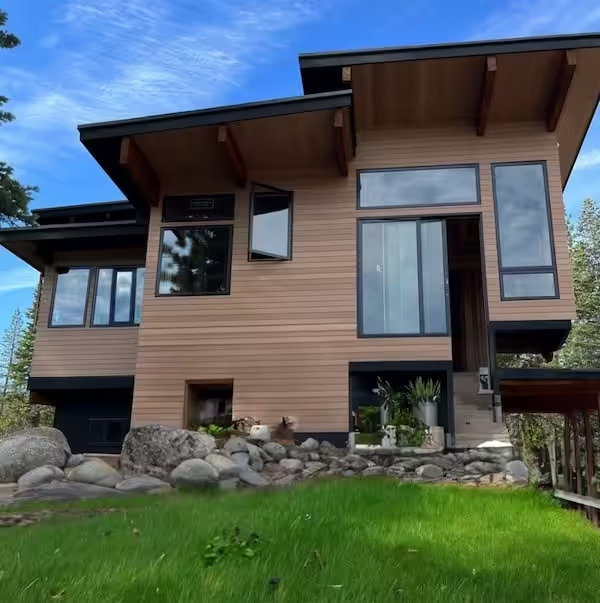
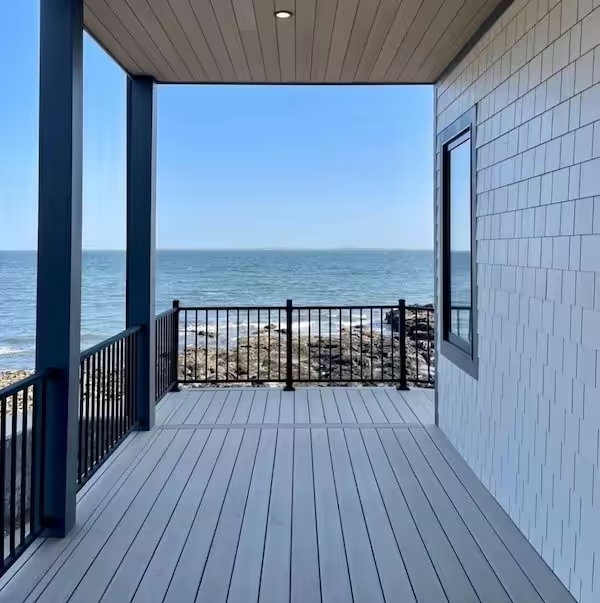
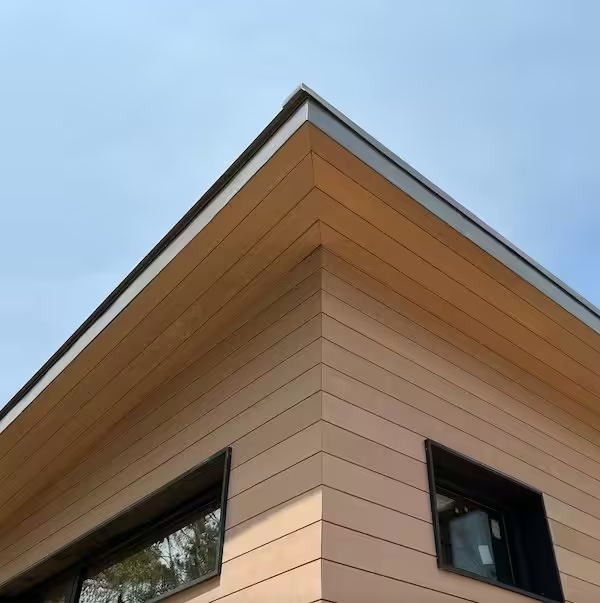
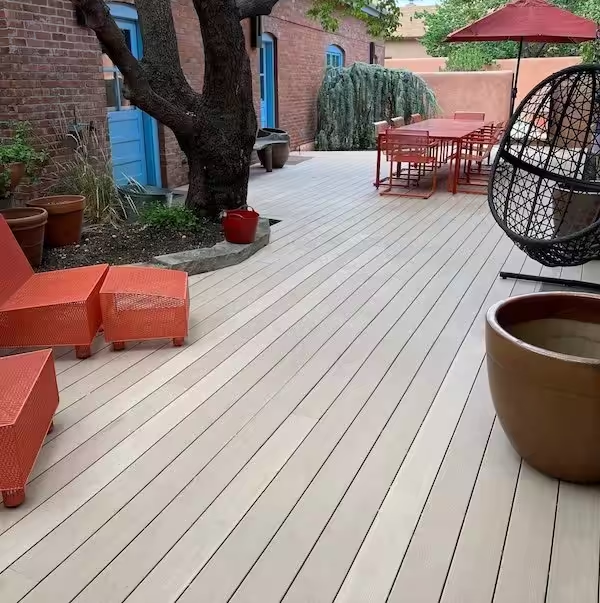
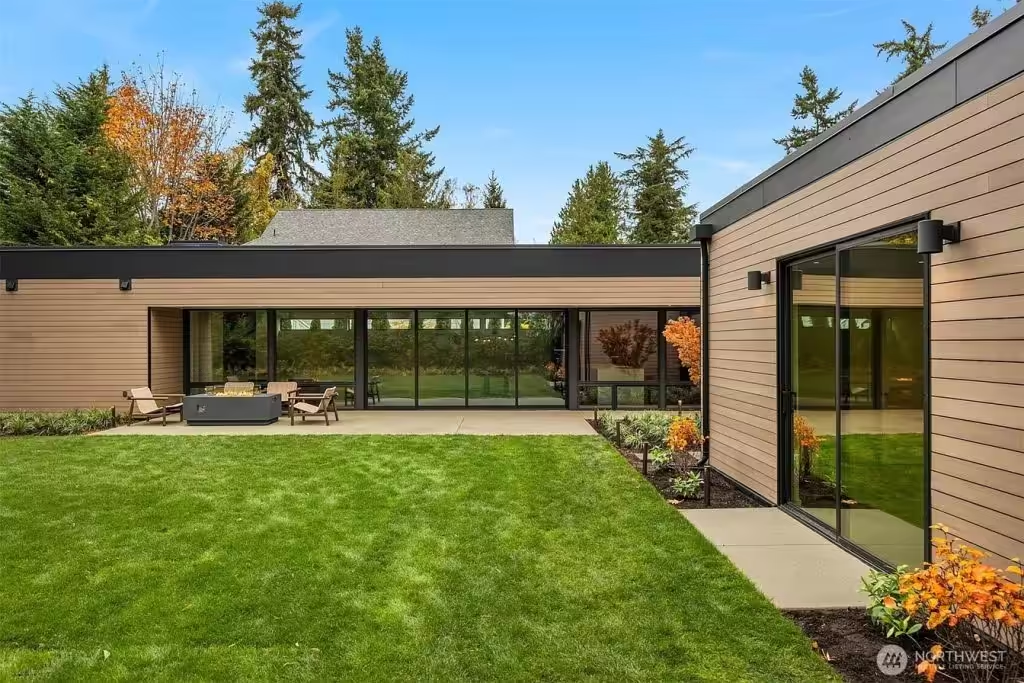
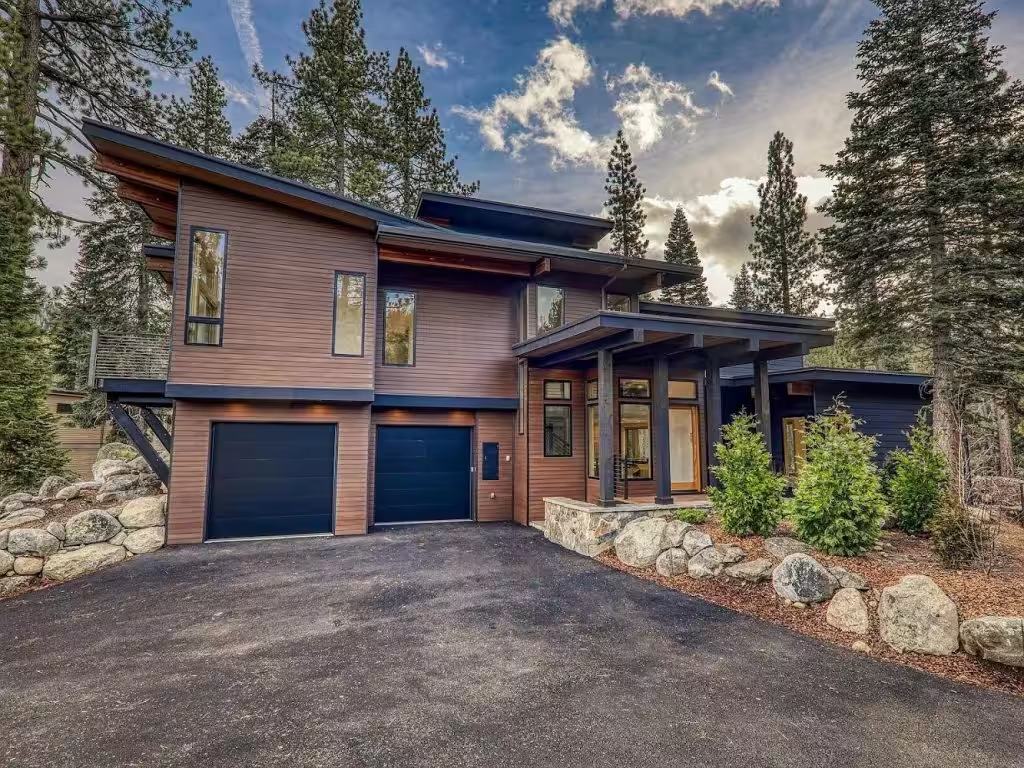
At Modern Mill, we are looking to address the maintenance problem altogether with our wood alternative ACRE™, a tree-free composite made from upcycled rice hulls. As Forbes reported, ACRE captures the strengths of wood without the ongoing maintenance burden. The material looks like wood, cuts like wood, but has the low-maintenance performance of composites that significantly reduces repair needs and costs. It’s available across a range of profiles including shiplap siding, nickel gap siding, decking, and trim boards, and comes factory finished to reduce field labor costs at installation. See how builders and architects are using it in real projects here.
Do Sustainable Building Materials Actually Save Money?
The framing of sustainable materials as the expensive option is outdated. As Architect Magazine noted, wood is no longer the sustainable default and the financial case is a big reason why. When you account for maintenance costs, operating savings, and resale premiums, data consistently points in the same direction: conventional materials are often the more expensive choice over time, just spread across a longer timeline and harder to see on day one.
The builders, architects, and homeowners who factor in the full cost of ownership are making better financial decisions and building structures that hold their value. The upfront premium on sustainable materials is real, and so is the return.
If you’re planning a sustainable project, get inspired by some of our completed projects here.
Ready to Experience the
Difference?
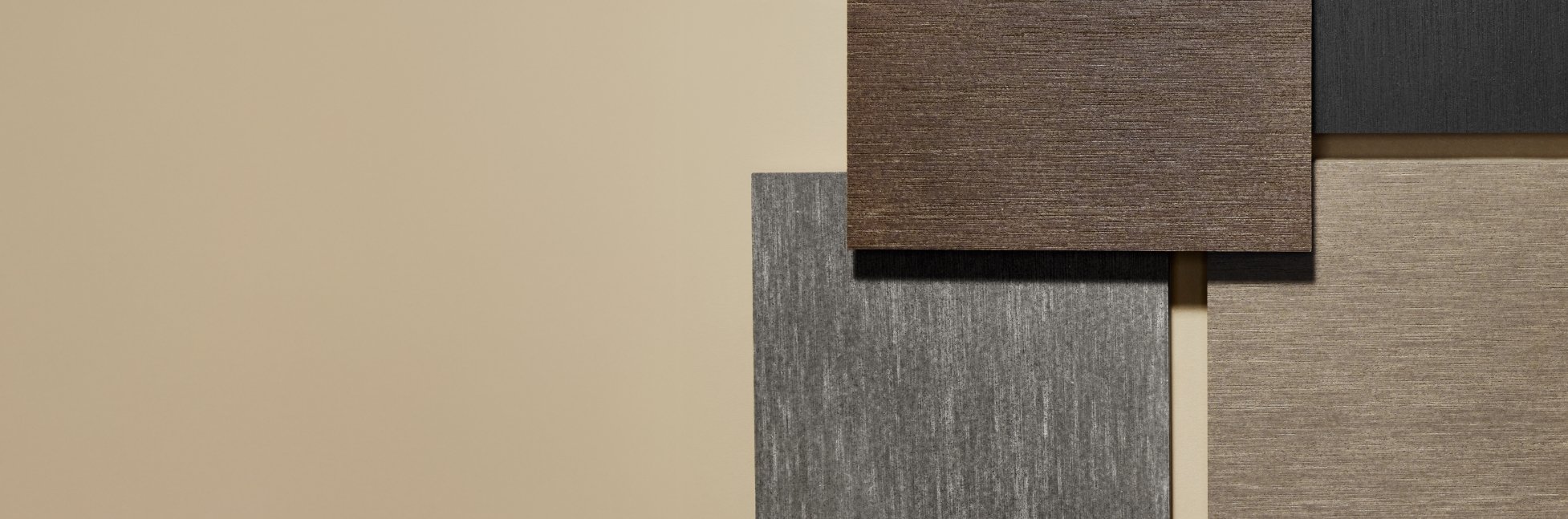
Ask for ACRE at your local lumber yard or order samples to see for yourself why builders are making the switch.