Flat Crown Moulding: Profile, Material, and Where It Works
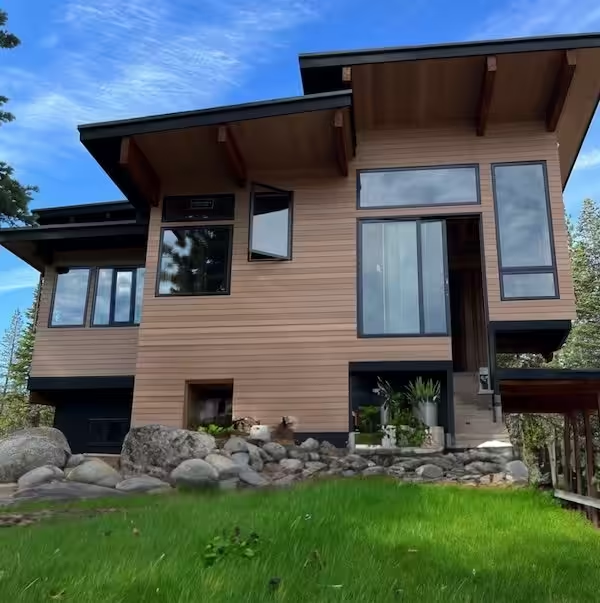
May 2026Crown moulding has been a finish carpentry staple since the Greeks first used it on column capitals. Flat crown is the contemporary evolution of that detail: the same clean wall-to-ceiling transition, without the cove, the curves, or the compound miter work that traditional profiles require. It shows up in new construction, above kitchen cabinets, on exterior eaves, and in covered porch ceilings where a finished architectural line is the goal and wood-look aesthetics matter. This guide covers profile sizing, material options, cost ranges, durability, and color customization so you have what you need to spec it right.
What Is Flat Crown Moulding?
Flat crown moulding traces its origins to neoclassical architecture, where simplified cornice profiles defined the wall-to-ceiling transition without the ornamental carving of earlier periods. The profile was a deliberate restraint, favoring clean geometry over decorative complexity. That logic holds today, which is why flat crown has become the dominant trim specification for contemporary residential and commercial construction.
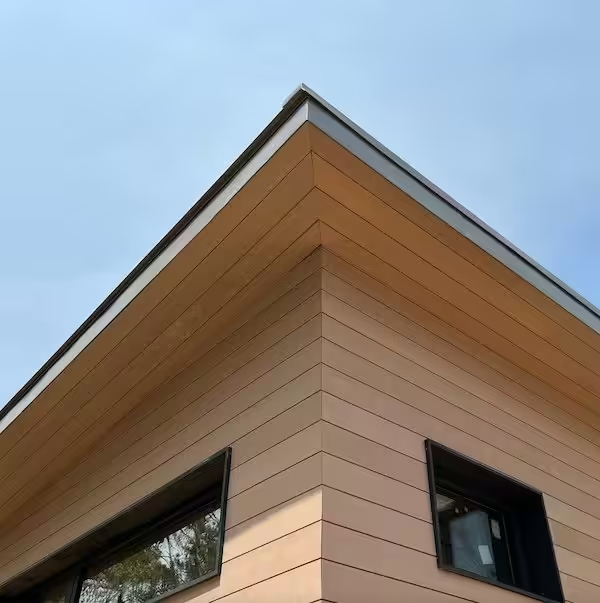
The profile consists of a flat face that installs flush against both the wall and ceiling surfaces, with a shallower spring angle than traditional coved profiles and no cove. Traditional crown bridges the junction at an angle, nesting against each surface through a compound miter cut that requires precise setup. Flat crown simplifies that process considerably. It installs with fewer compound angle adjustments at corners, which reduces installation error without sacrificing the architectural finish at the ceiling line.
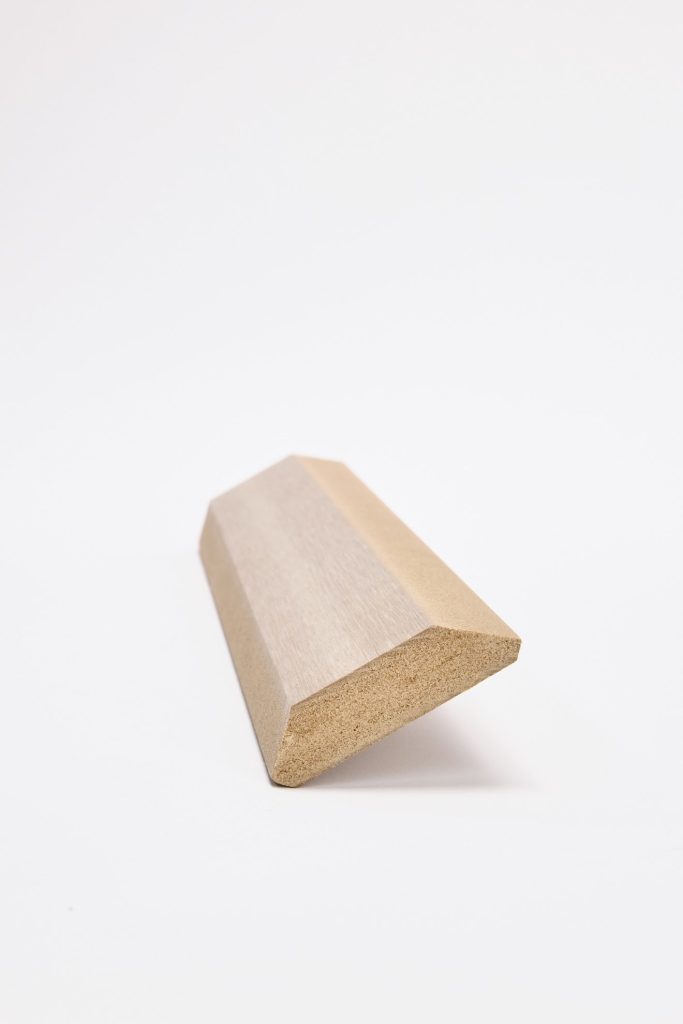
In practical terms, flat crown is faster to install, more forgiving on out-of-square walls, and a cleaner visual fit in rooms where an ornate profile would compete with the architecture rather than complete it.
Is Flat Crown Moulding in Style for 2026?
Crown moulding is actively being specified in new construction that skipped it during the minimalist boom, and designers are using it to give rooms the proportion, hierarchy, and finished quality that bare drywall cannot deliver. For contemporary interiors, flat profiles are the right specification. Ornate coved crown reads as formal in rooms built around clean lines, open sightlines, and minimal cabinetry. A flat, linear profile delivers the same architectural finish at the ceiling line without pulling the aesthetic toward something more traditional.
Two applications are growing in particular: monochromatic installs, where the crown is painted to match the wall and ceiling so the profile reads as pure form rather than added decoration, and proportionally scaled installations in rooms with high ceilings, where a 6-inch flat profile creates the visual weight a narrow profile cannot.
Crown moulding also contributes to selling appeal. A living room upgrade can carry a return on investment of up to 53%, and crown moulding contributes to that figure, according to Angi. It is a finishing detail buyers consistently notice, particularly in markets where builders have largely stopped including it to cut costs.
How Does Flat Crown Moulding Compare to Traditional Profiles?
The clearest difference is visual. Traditional crown profiles, particularly coved and dentil styles, are built around ornamental detail: curved faces, layered geometry, and carved elements drawn from classical architecture. That detail reads correctly in formal rooms, historic homes, and spaces with high-relief millwork throughout. In a contemporary interior with clean sightlines and minimal cabinetry, the same profile competes with the architecture rather than framing it. Flat crown reads as intentional in those spaces because the profile itself is the detail, not the ornamentation on it.
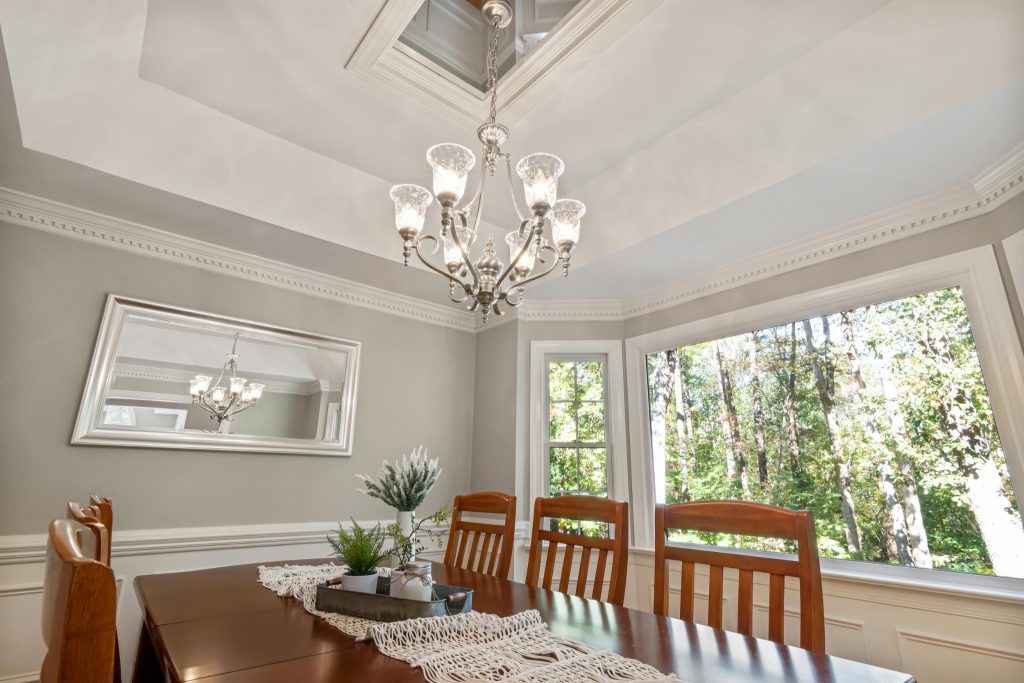
Installation is also more straightforward. Traditional ornate profiles require careful attention at inside and outside corners, where both the miter and bevel angles have to be set precisely and compound cuts adjusted for any wall that is even slightly out of square. Flat crown simplifies that process. Corner cuts require fewer compound angle adjustments, and the clean profile is more forgiving where walls meet ceiling at imperfect angles. For contractors installing at volume, and for architects specifying in complex multi-unit or renovation contexts, that translates to fewer callbacks and cleaner results.
Sizing follows the room and the ceiling height. For standard 8- to 9-foot ceilings, a 3- to 4-inch profile is proportionally correct. High ceilings need more visual weight: a 5- to 6-inch flat profile scales correctly where a narrow one would disappear. Above kitchen cabinets, a narrower profile in the 2- to 3-inch range fills the gap between cabinet face and ceiling without overpowering the cabinetry below. Browse flat crown moulding profiles and sizing specs to see what scales correctly for your application. The rule across all of these is proportion. The profile should read as part of the room, not an addition to it.
What Material to Choose for Flat Crown Moulding?
Material determines your finish options, your maintenance exposure, and whether the profile can go outdoors. It is worth getting this right before the spec is locked.
Wood accepts stain, has natural grain variation, and works with standard carpentry tools. The tradeoffs are moisture absorption, vulnerability to seasonal movement, and periodic painting or stain maintenance to hold its finish. Most wood crown moulding is limited to interior applications.
MDF is cost-effective and paints cleanly, but accepts stain poorly because the compressed fiber surface does not absorb finish the way wood does. It is also heavier than most alternatives and has no moisture tolerance. Interior-only, with no margin for error if moisture gets involved during install or after.
PVC and polyurethane profiles resist moisture and are lightweight enough for some applications. Stain compatibility is limited, so paint is typically the only viable finish. In close-up views, they read as synthetic, which matters in finish-conscious interiors.
For projects where exterior rating and a stained wood appearance are both requirements, composite materials close the gap. ACRE Flat Crown Moulding, manufactured from upcycled rice hulls, is 100% tree-free with no rot, no pests, and no VOCs. It accepts stain without primer the way wood does, works with standard woodworking tools, and is rated for interior and exterior applications. It removes the tradeoff between how a material looks and how long it lasts.
Specifying Flat Crown Moulding for Your Project
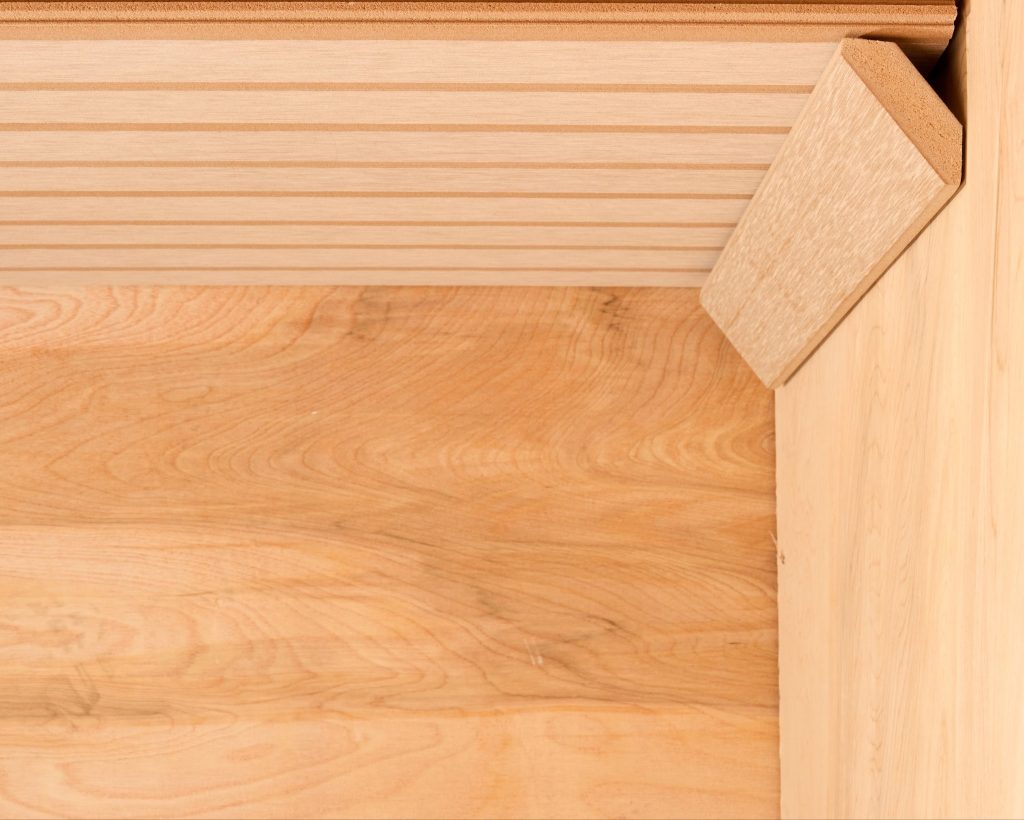
The right specification starts with three questions. Where is the profile going, what finish does the design call for, and what is the maintenance tolerance over the life of the building? Those three answers narrow the material decision considerably before you ever pull a sample.
Interior-only applications with a painted finish open up the full material range. Wood and MDF both perform well in controlled interior conditions, and the cost difference between them is meaningful at scale. Where stain is part of the design intent, wood is the only traditional option that delivers it, which is why composite alternatives have gained ground in finish-conscious specifications.
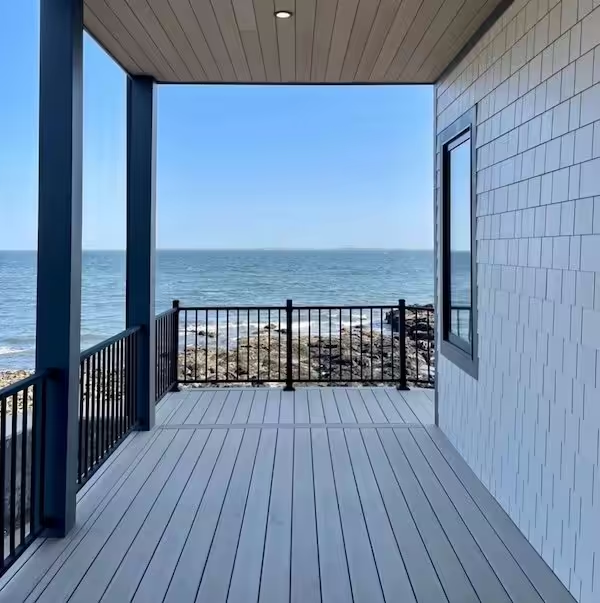
Exterior applications narrow the field further. Covered porch ceilings, eave lines, and above-door headers all expose trim to humidity, temperature swing, and indirect moisture. MDF fails on first contact. Wood requires a maintenance commitment most owners underestimate at the spec stage. PVC performs but reads as painted-only. For exterior installations where a stained wood appearance is part of the design, material selection is the decision that has to happen before the profile is chosen. As our founder and CEO Chris Guimond put it in a recent LBM Journal feature: “For years, the only way to get a true stained wood look, especially for classic profiles like crown moulding, was to use real wood. ACRE Flat Crown changes that.”
Profile sizing is the other variable worth resolving early. Ceiling height sets the range, but the broader trim package sets the proportion. A flat crown that reads correctly on its own can feel undersized next to wide baseboards or heavy door casing. Pull the full trim spec together before locking in the profile width, and confirm sizing in the actual space rather than from the plan.
The Detail That Finishes the Room
A finished contemporary room has a quality that is hard to name until you notice the ceiling line. That clean break where the wall meets ceiling, defined by a flat-profiled trim running the perimeter, gives the space a sense of intention. It does not compete with the architecture. It completes it.
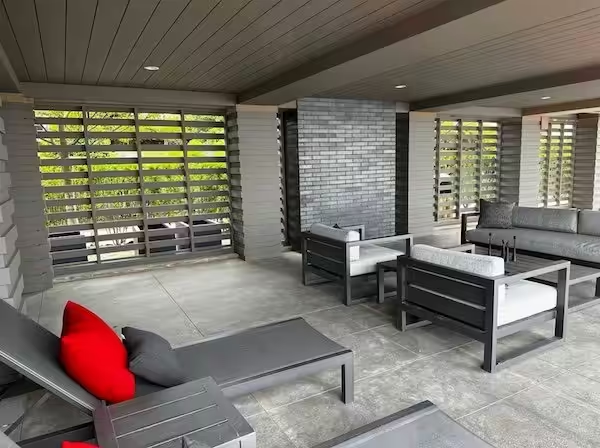
Flat crown moulding earns that result across a wider range of applications than most trim profiles: contemporary interiors, exterior eave lines, above-cabinet installations, and covered outdoor spaces where a finished architectural line matters and material performance is non-negotiable. The profile decision and the material decision work together, and getting both right at the spec stage is what separates a clean install from one that needs attention five years later.
Get inspired for your next project or browse the full trim collection to start planning.

Ready to Experience the
Difference?
Ask for ACRE at your local lumber yard or order samples to see for yourself why builders are making the switch.