Cedar Siding Maintenance: What to Expect
April 2026Cedar siding goes up looking exceptional. The maintenance schedule that follows is a commitment many clients don’t fully account for until a few years in. By then, the builder or architect who specified the material is often the first call.
Cedar installation runs $6 to $16 per square foot before ongoing maintenance is factored in. According to Angi’s 2026 cost report, the average cost to restain cedar siding is $3,300, with a range of $400 to $11,000 depending on home size and condition. That cost repeats on a three-to-seven-year cycle for the life of the exterior. Understanding the full maintenance calendar before specifying cedar is what separates a smooth client relationship from a difficult one.
What Does Cedar Siding Maintenance Actually Involve?
Cedar maintenance is an ongoing cycle of cleaning, inspection, and surface refinishing. The wood requires an annual or biannual walkthrough to check for cracking, loose boards, gaps at joints, and early signs of moisture damage. Every penetration point (caulk joints at windows and doors, end cuts at trim intersections) needs resealing before moisture infiltrates the grain.
The primary maintenance task is restaining or repainting. It protects the cedar oils from UV degradation and keeps moisture out of the wood. The interval ranges from two to seven years depending on climate, finish type, and UV exposure. In temperate inland markets, well-maintained cedar can reach the longer end. In coastal and high-humidity environments, the interval compresses.
Annual cleaning is also part of the schedule. Regular power washing removes mold, mildew, and surface debris that accelerates breakdown if left untreated, particularly in humid markets where biological growth on the surface moves fast.
How Much Does Cedar Siding Maintenance Cost Over Time?
The installation price is only part of the picture. What catches clients off guard isn’t any single cost, it’s the compounding. Restaining, cleaning, caulk replacement, and periodic board repairs each feel manageable in isolation. Across a 20-year exterior, particularly in a coastal or humid market, they add up to a number that often surprises homeowners who were only shown the upfront quote.
Rot repairs are part of that picture too. On a well-maintained exterior they’re infrequent, but on any home where a maintenance cycle gets skipped or delayed, localized rot is a predictable outcome rather than a worst-case one. Board replacement is not cheap, and by the time it’s visible from the outside, the damage has usually already spread further than it looks.
For a detailed breakdown of how cedar compares to composite on lifecycle cost, cedar vs. pre-finished composite siding covers the full picture. If you want the shingle look without the restaining cycle, see our guide to low-maintenance composite shingle siding.
Where Does Cedar Siding Fail First?
Cedar doesn’t fail evenly across the envelope. Failure concentrates at predictable locations: horizontal ledges where water pools, end cuts that weren’t properly sealed at installation, trim intersections at windows and doors, and anywhere the siding runs close to grade. These are the points where moisture penetration begins, and where rot establishes before it becomes visible on the surface.
Once moisture breaches the finish coat at any of these locations, it infiltrates the grain and degrades the wood from within. The visible signal (surface checking, paint blistering, board discoloration) typically appears well after the structural damage has started. By the time a homeowner calls about it, the affected boards often require full replacement rather than refinishing.
Insect damage follows a similar pattern. Cedar’s natural oils provide some initial resistance to insects, but that resistance diminishes as the wood ages and the oils deplete. Termites, ants, and wood-boring beetles target vulnerable sections, particularly grade-level boards and areas with persistent moisture from irrigation or drainage.
How Does Cedar Siding Maintenance Change in Coastal and Humid Climates?
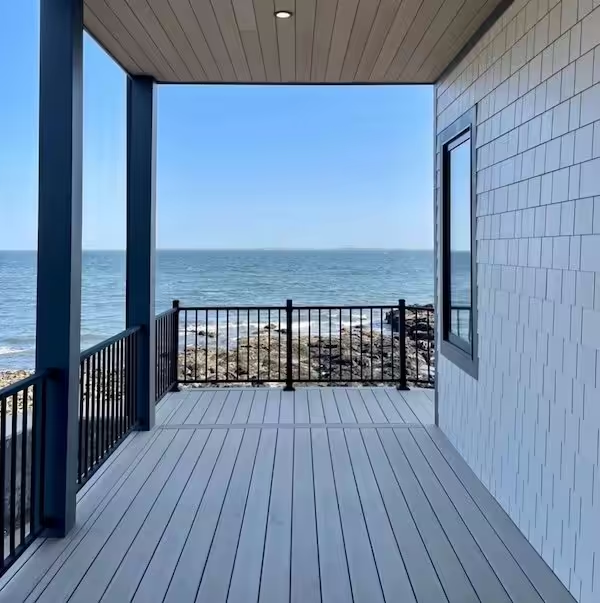
In coastal markets, the standard maintenance schedule compresses and becomes less forgiving. Salt exposure accelerates finish degradation, persistent humidity creates moisture conditions at the surface even between rain events, and UV intensity in southern-facing markets pushes the restain interval toward the lower end of the range.
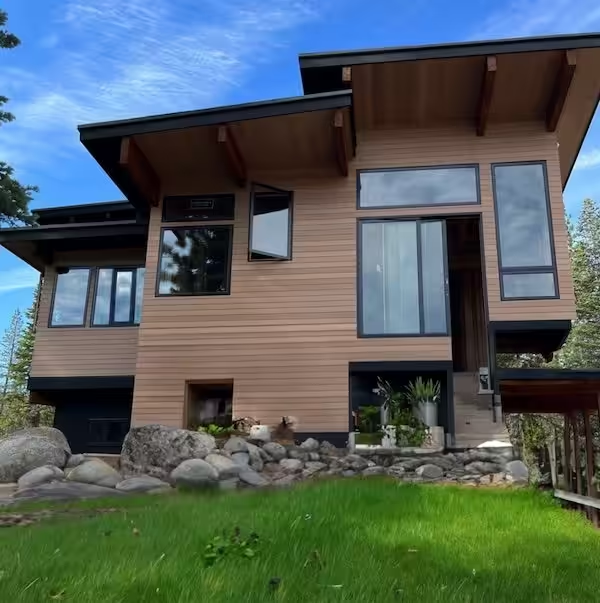
New Jersey based architect Chaser Gaffney, who specified composite siding on a bayfront renovation in Brigantine, New Jersey, described the dynamic directly: “I love the look of real wood on a house, but along the New Jersey coast it fades to gray very quickly. On some projects that can be a great look, but when you’re aiming for a modern, fresh wood aesthetic and want it to stay that way, ACRE™ by Modern Mill is an excellent option.”
In practice, coastal cedar that isn’t restained on a tight schedule doesn’t just look weathered. It begins failing structurally. Salt-laden wind works behind loose finish coats, moisture sits in horizontal grain joints, and wood that would last 30 years in an inland climate can reach failure in half that time on an exposed coast.
When Does Cedar Siding Maintenance Justify Switching Materials?
The decision point varies by project, but it comes up consistently in two scenarios: coastal or high-humidity markets where the maintenance cycle runs every two to three years, and clients who want the cedar aesthetic without the ongoing refinishing commitment.
In Montauk, New York, contractor Ian Pedersen faced this directly. The home’s original cedar siding was, as the homeowner described, no longer feasible to upkeep. Pedersen, an experienced Norwegian woodworker, was initially skeptical of wood alternatives. He tested ACRE under extreme conditions before committing to the specification. “I tried hard to disprove it,” he said. “I put it out under direct sunlight, buried it, froze it in snow, and even tied it to a rock and sank it in the bottom of a lake for six weeks. After that lake test, when I saw that it looked the same as when I first received it, I knew ACRE was right for this project.”
For builders and architects evaluating the decision, the relevant question isn’t whether cedar is a good material, but whether the maintenance obligations it creates are ones your clients are equipped to manage over the full lifespan. For a deeper look at what materials are replacing cedar on current projects, top alternatives to cedar siding covers composite and engineered wood options with spec-level detail on maintenance requirements and cost.
What to Know Before Specifying Cedar Siding
Cedar delivers warmth and grain depth that remains difficult to replicate. It also requires consistent maintenance to perform as expected: annual inspections, regular cleaning, restaining every two to seven years, and targeted rot repair as needed. On a humid or coastal project, that schedule runs for the life of the exterior and adds tens of thousands of dollars to the total cost of ownership. For lower-upkeep options, see our guide to low-maintenance siding alternatives.
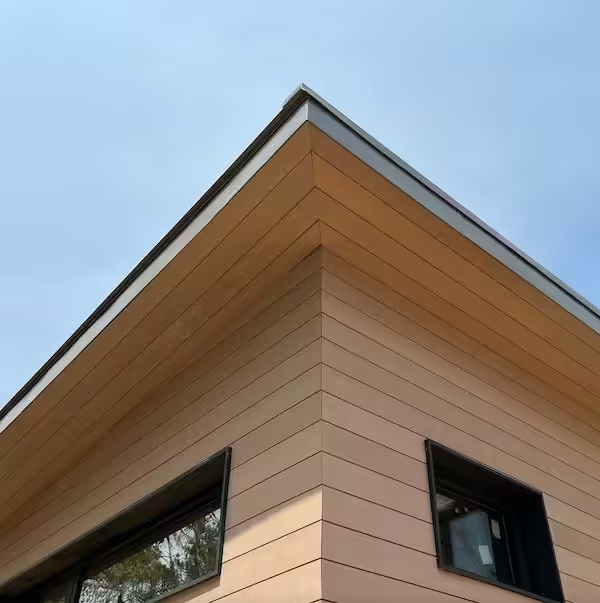
Understanding the full picture before handoff is the starting point for an honest client conversation. For projects where the aesthetic matters but the maintenance cycle doesn’t fit, composite siding options that deliver the cedar look without the refinishing schedule are worth evaluating alongside the original cedar spec.
Ready to Experience the
Difference?
Ask for ACRE at your local lumber yard or order samples to see for yourself why builders are making the switch.