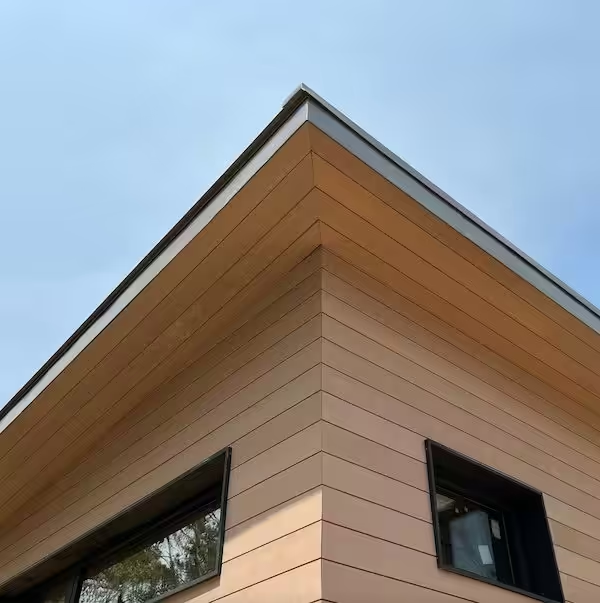
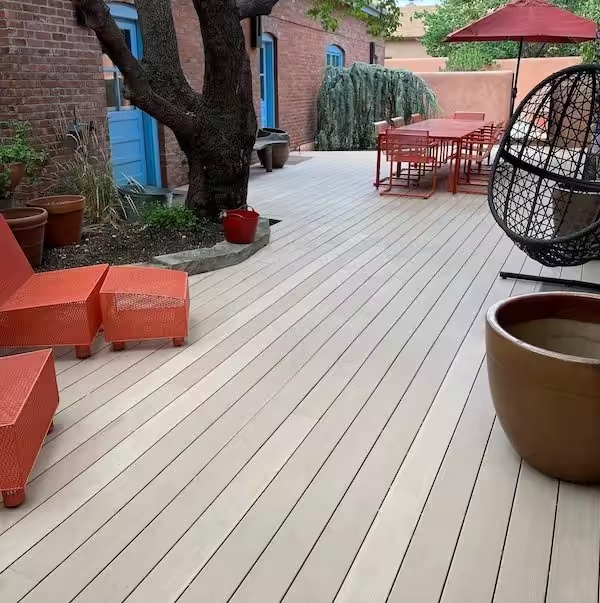
Low-Maintenance Siding: Best Materials That Require Less Care (2026 Buyer’s Guide)
June 2026Low-maintenance siding is one of the most-searched siding topics for a reason. Nobody wants to spend their weekends scraping, sanding, and repainting a house. The trouble is that “low maintenance” gets stamped on nearly every product, and the materials behind that label don’t all mean the same thing. This guide ranks the common siding materials by how much care they actually need, how long they last, and what they cost to own over time, so you can match a material to the upkeep you are realistically willing to do. The short version: some siding needs far less than others, and none of it needs nothing.
What “Low-Maintenance Siding” Actually Means (and Why “Maintenance-Free” Is a Myth)
Low-maintenance siding is cladding that protects your home with minimal, simple upkeep. The kind you can do in an afternoon with a garden hose, not a weekend with a ladder and a paint sprayer. It’s not the same as no maintenance.
Every exterior material on the market gets some care. The questions are how often, how hard, and how expensive. Three tasks show up across all of them:
- Washing. Dirt, pollen, algae, and mildew collect on any surface. Most low-maintenance siding needs a rinse once or twice a year.
- Inspection and small repairs. Caulk at joints and trim ages, fasteners loosen, and impact damage happens. A look-over every spring catches problems while they are cheap.
- Refinishing (for some materials). This is the dividing line. Wood and engineered wood need repainting or restaining on a schedule. Vinyl, steel, and quality composites do not.
So when a product is sold as ‘maintenance-free,’ read it as ‘no repainting,’ not ‘nothing ever.’ Every exterior material needs some level of care. As This Old House notes in their roundup of low-maintenance exterior materials, the goal is durability with minimal upkeep, not zero upkeep. The real question is how much, how often, and how expensive. The gap between materials is wider than most buyers expect.
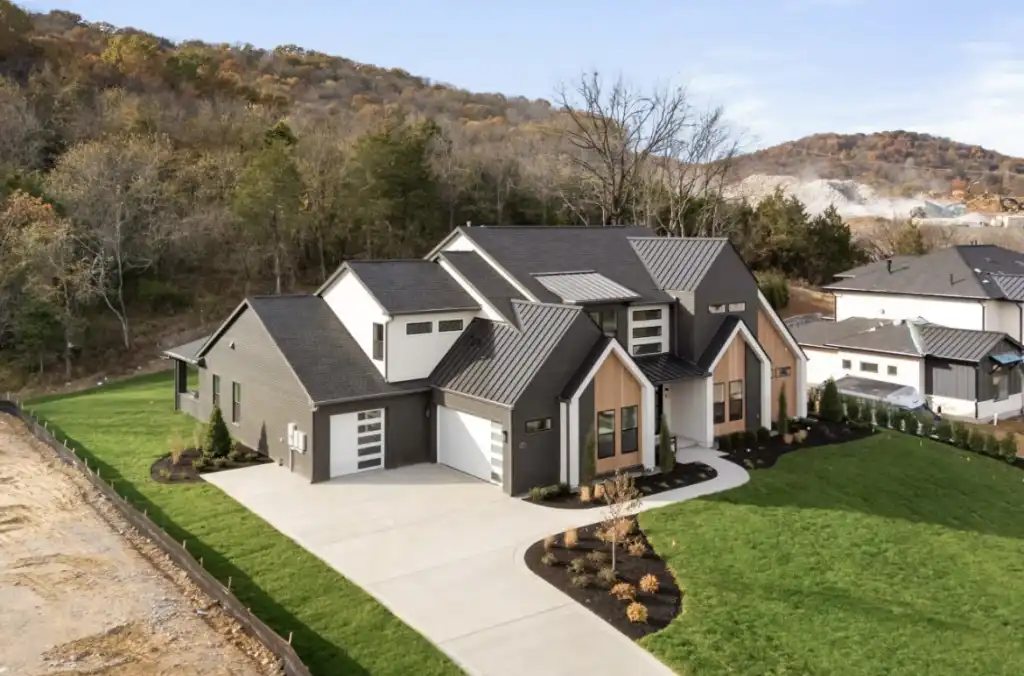
That is good news, actually. Once you accept that the real choice is “a little upkeep” versus “a lot,” you can match a material to the amount of work you will genuinely do, instead of chasing a fantasy that does not exist. The rest of this guide ranks the common options by exactly that: how much care each one needs, how long it lasts, and what it costs to own over time.
Low-Maintenance Siding Materials, Compared
Here is an overview of common siding materials, including what each one needs in terms of upkeep, how long it typically lasts, and what it costs installed:
- Vinyl — Typical lifespan: 20–40 years. Upkeep: wash 1–2x/year; no paint or stain required. Aesthetic: embossed wood look. Installed cost: $4–12/sq ft.
- Steel — Typical lifespan: 40–70+ years. Upkeep: wash yearly; no paint or seal required. Aesthetic: some profiles offer a wood look. Installed cost: $7–16/sq ft.
- Composite siding — Typical lifespan: 30–50 years. Upkeep: wash and inspect; factory-finished options need no field finish. Aesthetic: wood grain. Installed cost: $6–15/sq ft.
- Fiber cement — Typical lifespan: 30–50 years. Upkeep: wash yearly; repaint every 10–15 years if site-finished. Aesthetic: wood grain. Installed cost: $6–15/sq ft.
- Aluminum — Typical lifespan: 20–40 years. Upkeep: wash yearly; dents and finish can chalk over time. Aesthetic: some profiles. Installed cost: $6–12/sq ft.
- Engineered wood — Typical lifespan: 30–50 years. Upkeep: wash yearly; repaint or reseal every 5–10 years. Aesthetic: real wood fiber texture. Installed cost: $7–12/sq ft.
- Stucco — Typical lifespan: 50–80 years. Upkeep: reseal or repaint every 5–10 years; patch cracks as needed. Aesthetic: no wood look. Installed cost: $7–14/sq ft.
- Cedar and natural wood — Typical lifespan: 20–40 years. Upkeep: stain or paint every 3–5 years; inspect for rot. Aesthetic: natural wood. Installed cost: $5–15/sq ft.
The upkeep column is where most buyers focus, but lifespan and installed cost tell the rest of the story. A material that needs repainting every five years carries a very different 20-year cost than one that only needs an annual wash, even if the boards cost the same on day one.
How Much Maintenance Does Each Type of Siding Really Need?
Here is what each material actually requires day to day, and where the trade-offs tend to show up.
Vinyl Siding
Vinyl is the lowest-effort, lowest-cost option, which is why it covers more existing American homes than any other siding. The color runs through the panel rather than sitting on top, so it never needs paint or stain, and routine cleaning with mild soap and water is all it typically needs. Expect 20 to 40 years of service.
The catch is cosmetic and climate-related. Vinyl can grow brittle and crack in hard freezes, and strong, constant sun fades it over time. Because you cannot repaint it convincingly, a faded wall usually means replacement, and color-matching a single damaged panel years later is hard. It can also read as low-end up close. For a tight budget or a rental, those trade-offs are easy to accept.
Fiber Cement Siding
Fiber cement, a blend of cement, sand, and cellulose fiber, is the durability favorite. It resists fire, rot, insects, and moisture, and it holds a wood-grain look for 30 to 50 years or more. The maintenance asterisk is paint: site-finished fiber cement needs repainting roughly every 10 to 15 years. This Old House notes you should also wash it about twice a year and inspect the caulking, with a future repaint running around $2.50 per square foot.
Factory-finished products push that repaint window out much further, which is worth asking about. The other trade-off is install: fiber cement is heavy, calls for specialty cutting and dust control, and every cut end must be sealed. Choosing a factory finish from an approved coatings program is the simplest way to cut its long-term upkeep.
Engineered Wood Siding
Engineered wood combines wood fibers with resins and a borate treatment that fends off rot and termites. It gives you a genuine wood texture, installs with standard carpentry tools, and lasts 30 to 50 years. Plan to repaint or reseal every 5 to 10 years and wash it annually. If the real-wood look matters but the cedar cycle does not, it is a reasonable option, and we cover the trade-offs in depth in our guide to synthetic wood siding.
Steel and Metal Siding
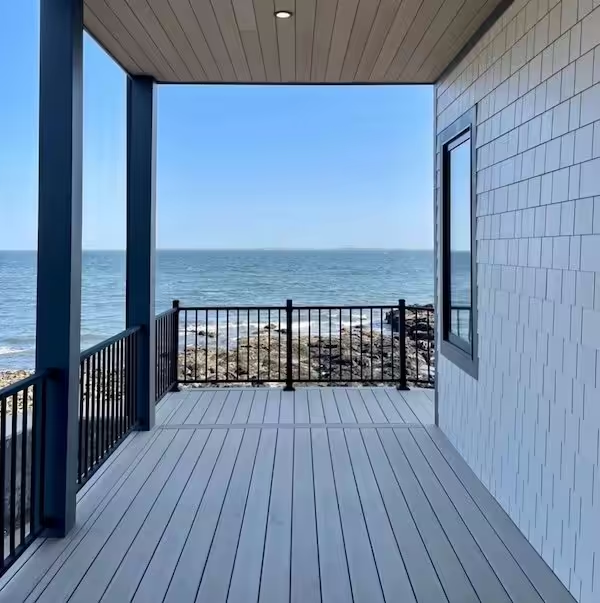
Steel is the closest the market comes to genuinely hands-off. It lasts 40 to 70 years or more, shrugs off rot and insects, and generally needs no paint, seal, or winterizing, just an annual wash. Two caveats matter. In coastal salt air, galvanized steel can corrode and fall well short of that range, and aluminum or a quality composite often holds up better there. The surface can also dent under hail or a stray ladder, and it costs more and reads modern, which does not suit every home. For an inland contemporary build where “never think about it again” is the priority, steel earns its premium.
Aluminum Siding
Aluminum predates vinyl as the original low-maintenance metal, and it still delivers on the basics: it will not rot, burn, or feed insects, and an annual wash keeps it clean. Service life runs 20 to 40 years. What pushed it out of favor is durability of appearance rather than structure. It dents easily, and the painted finish chalks and oxidizes as it ages, so older installations sometimes do need repainting after all. For most new projects, steel or vinyl now does the same job with fewer compromises, though aluminum still earns its place on the coast, where it resists salt corrosion better than steel.
Cedar and Natural Wood Siding
Cedar is the material everyone points to for warmth and character, and the one whose upkeep buyers most often underestimate. To keep it from graying, splitting, and rotting, you need to stain or repaint cedar every 3 to 5 years and inspect it regularly for moisture damage and insects. Cedar typically lasts 20 to 40 years. Only a faithfully kept finish pushes it toward the upper end or beyond. Neglected, it fails far sooner. That word “faithfully” is exactly where the regret comes from, because few owners sustain a 3-to-5-year repaint cycle for decades. Kept up, cedar still delivers the natural warmth and character that draws people to it in the first place.
If you love the look but not the labor, two of our guides are worth a read: what to expect from cedar siding maintenance, and the lower-upkeep alternatives to cedar siding that copy the grain without the cadence.
Stucco
Stucco is a regional standout with a long life (50 to 80 years) when it is installed and maintained well. It is not a no-upkeep surface, though. It needs resealing or repainting roughly every 5 to 10 years, and any cracks should be patched promptly so moisture cannot get behind it. In the right climate it is durable and quiet; in a wet, freeze-thaw one it can be a maintenance headache.
Composite Siding
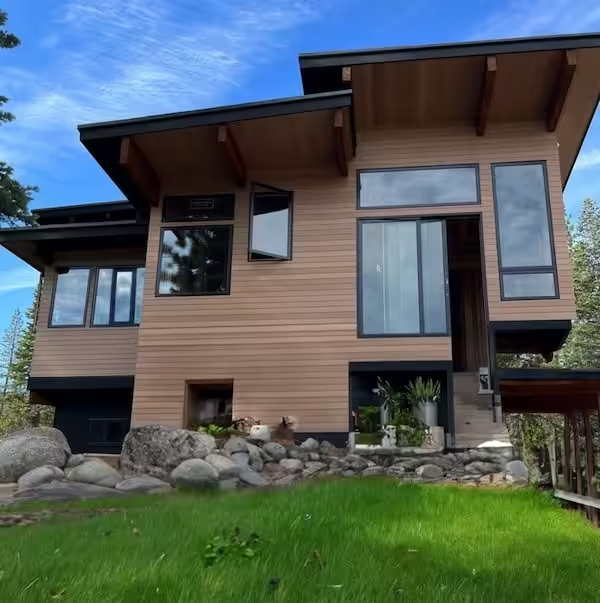
Composite siding was built specifically to close the gap between the wood look and the wood maintenance burden. Quality composites pair a real grain surface with no required repaint or seal cycle, especially when ordered factory-finished. Lifespans run 30 to 50 years, and routine care comes down to washing and inspection. For anyone who wants cedar’s warmth without cedar’s calendar, composite is where the category has landed.
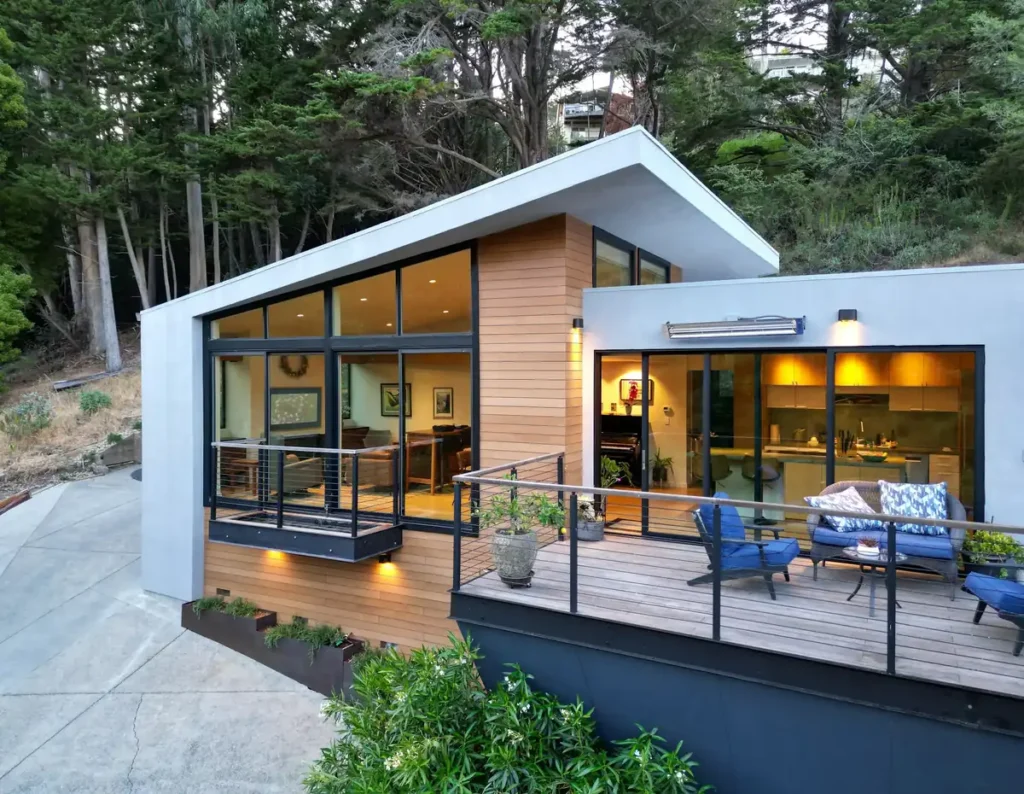
A standout among composites is Modern Mill’s ACRE™ is made from upcycled rice hulls rather than trees, which means no added formaldehyde, no VOCs, and no virgin wood fiber in the supply chain. It resists rot, weather, and pests, cleans with soap and water, and carries no required stain or repaint cycle. Where most composites are paint-only, ACRE is the only stainable option on the market, which means you get a genuine wood-grain finish rather than a painted surface. As Home Living Handbook reported, it stands apart from other composites for exactly this reason: weather-resistant performance without the aesthetic compromise.
ACRE is also certified for California’s wildland-urban interface (State Fire Marshal listing 8140-2385:0001), tested for moderate, high, and very high fire-hazard zones. The Weather Channel noted that while the sustainability story draws attention, builders and homeowners quickly find ACRE is easier to work with than traditional wood.
What About Brick, Stone Veneer, and Insulated Vinyl?
Three options sit just outside this lineup but deserve a mention. Brick and stone veneer are arguably the lowest-maintenance claddings of all, since they need no paint and little beyond occasional mortar repointing, and can last the life of the house, but they cost more and read as masonry rather than siding, so most siding shoppers rule them out on look or budget. Insulated vinyl is standard vinyl backed with rigid foam: it keeps vinyl’s no-paint upkeep while adding insulation value and a sturdier feel, at a higher price. If your only goal is the least possible upkeep, regardless of category, keep brick and stone on your list.
What Changes How Much Maintenance Your Siding Needs
Two homes with identical siding can land in very different places on the upkeep scale. Before you commit to a material, weigh the four factors that move the needle most.
Climate. Sun is a big factor since constant UV fades every material faster, vinyl and dark colors especially. Coastal salt air accelerates corrosion on metals and pits finishes, freeze-thaw cycles stress rigid materials and open up cracks in stucco, and steady humidity feeds the rot and mildew that wood and fiber cement have to be protected against. A cabin that sits empty for months is the hard case: it gets no casual upkeep, so it rewards a material that needs none. In wildfire-prone regions, fire behavior is its own factor: untreated wood is the worst performer, and a cladding tested for the wildland-urban interface (WUI) carries a real advantage.
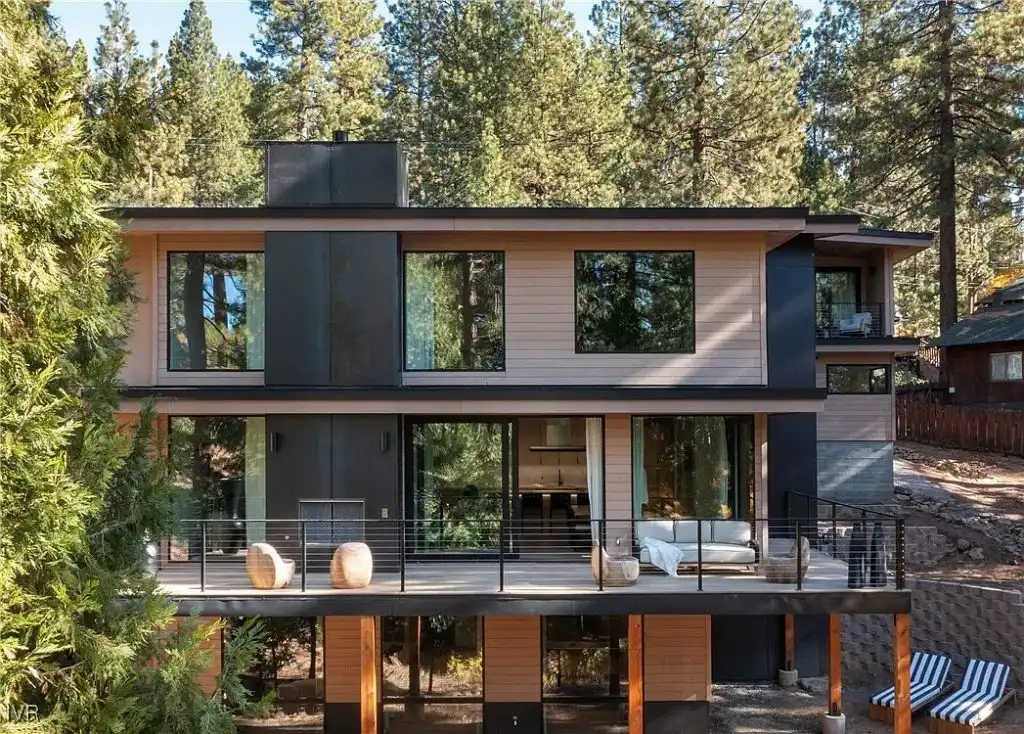
Color. Darker finishes fade more visibly and run hotter in the sun, which stresses the panel and any coating on it. If you want a dark, dramatic exterior, factor a slightly shorter finish life into the decision, or choose a material engineered and warranted for dark colors.
Finish. A factory-applied finish is cured under controlled conditions and lasts far longer than a coat brushed on at the jobsite. Choosing a prefinished product is one of the simplest ways to push a repaint window out by years.
Install quality. None of this matters if the siding goes on wrong. Bad flashing, missed clearances, or skipped sealing at cut ends will cause early failure in even the most durable material. Hire for the install, not just the product.
The Real Cost of Low-Maintenance Siding
The cheapest siding to buy is rarely the cheapest to own. Sticker price is a one-time number, but refinishing is a recurring bill, and over a 20-year stretch that bill is what separates a genuinely low-maintenance material from one that just looks affordable on day one.
Cedar makes the point cleanly. Each repaint or restain runs roughly $2 to $3 per square foot (This Old House pegs a fiber cement repaint at about $2.50), so at four to six cycles over two decades, cedar can spend more on refinishing than its boards cost up front. Today’s Homeowner is direct about it: repainting and staining make cedar more expensive over time than synthetic alternatives. Fiber cement carries one repaint in that window. Vinyl, steel, aluminum, and a factory-finished composite carry none.
Worth noting on that last point: vinyl and aluminum can fade or chalk badly enough that the real fix is replacement rather than refinishing, so their long-term cost is not truly zero, just deferred. A material’s lifespan is also not the same as its warranty term, so read the fine print on both before committing.
The honest way to compare prices is to add the refinishing to the sticker. A material that costs a little more up front and needs no scheduled repaint often wins the 20-year total by a wide margin, and saves you the weekends along the way.
A few questions come up consistently when buyers are working through this decision:
What is the lowest maintenance siding?
The lowest maintenance options are generally the ones that skip the refinishing cycle entirely: vinyl, steel, fiber cement, and composite siding all require significantly less upkeep than natural wood. Each has its own trade-offs in terms of climate performance, aesthetics, and longevity, and none is truly maintenance-free, but as a category they represent a meaningful step down in long-term labor and cost compared to wood-based materials.
Is there anything better than vinyl siding?
It depends on what “better” means to you. Vinyl wins on price and requires no painting. If you want a more convincing wood look, a longer service life, or a more premium finish, fiber cement, composite, and engineered wood are all worth considering, at a higher upfront cost. Vinyl’s weak spots are fading in strong sun and a look that can read as low-end at close range.
What is the most durable low-maintenance siding?
Durability varies by material and climate, and no single option leads in every condition. Steel, fiber cement, and quality composite siding all offer long service lives in the right environments, while natural wood requires consistent maintenance to reach its potential lifespan. The most durable choice for a given project depends on local climate, exposure, and how much upkeep will realistically be done over time.
What siding should you avoid if you want low maintenance?
Unfinished natural wood, including cedar, looks beautiful but is the one to think twice about for low maintenance, since it needs staining or painting every 3 to 5 years for its whole life. The cheapest, thinnest vinyl is also worth avoiding, because it fades and cracks faster and color-matches poorly when you repair it.
What are people replacing vinyl siding with?
The common upgrades are fiber cement, composite, and engineered wood, chosen for a more authentic wood look and a longer service life without adding much upkeep. Homeowners drawn to the cedar look specifically tend to move to a composite that delivers the grain without the repaint cycle.
Which Low-Maintenance Siding Is Right for You?
The right material depends on which trade-off you are most willing to make. Budget, aesthetic, climate, and how much upkeep you will realistically keep up with over decades are all part of that equation, and no single material wins on every front. For durability specifically, see our breakdown of the longest-lasting siding options.
For anyone drawn to the wood look but reluctant to take on a refinishing schedule, our guide to synthetic wood siding covers how the alternatives compare on both appearance and upkeep.
Our product ACRE is designed for projects where a genuine wood-grain finish and a low maintenance commitment both matter. If that combination fits what you are specifying, the ACRE siding page is a good place to start.
The best low-maintenance siding is the one whose upkeep you will actually follow through on. Choose for the next twenty years, not just the day it goes on the wall.
Ready to Experience the
Difference?
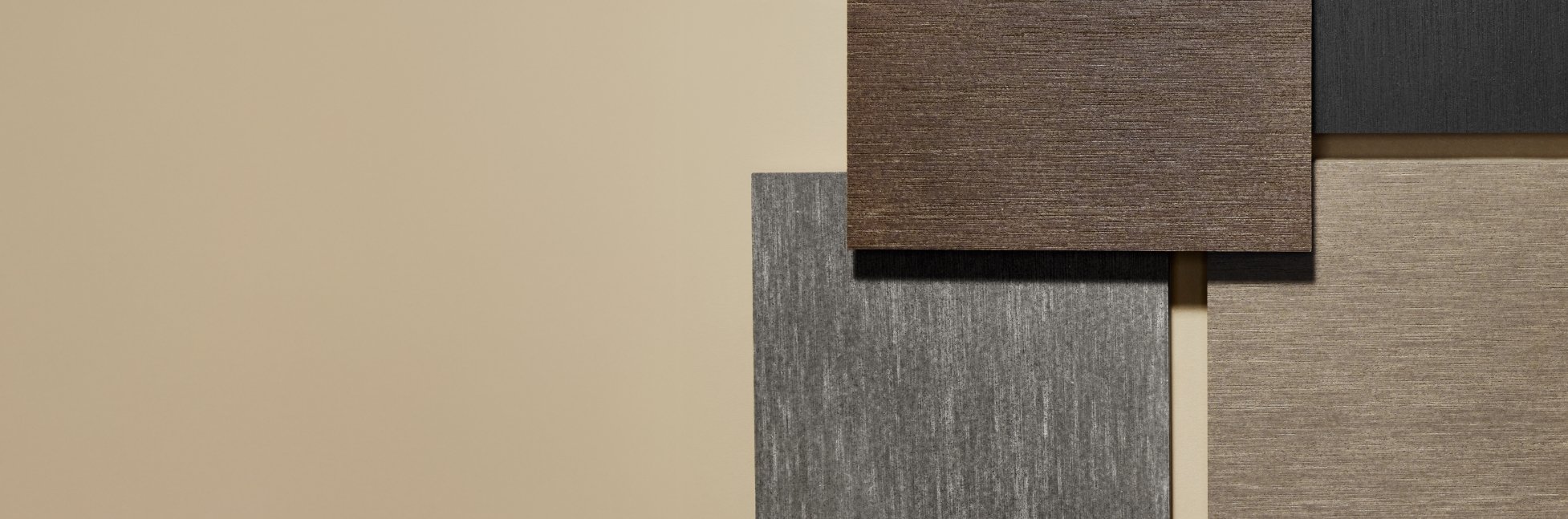
Ask for ACRE at your local lumber yard or order samples to see for yourself why builders are making the switch.