Synthetic Wood Siding: What to Know Before Specifying
May 2026For decades, cedar and redwood were the default answers for exterior siding on any project where aesthetics mattered. They looked the part, worked well with standard tools, and carried a natural warmth that architects and homeowners trusted. The problem showed up later, around year four or five, when the maintenance cycle started and never really stopped. Repainting, restaining, board replacement in high-moisture areas. For builders and property managers running the numbers over a ten or twenty year window, the math on natural wood gets uncomfortable fast.
That’s what’s been driving the conversation around synthetic wood siding. Not a compromise, but a genuine alternative that’s caught up visually and pulled ahead on performance. The best products in the category today offer the grain, the stainability, and the feel on the saw, with none of the maintenance cycle that made wood such a costly long-term commitment.
Knowing which products actually deliver on that promise starts with understanding what’s underneath the grain pattern.
What Is Synthetic Wood Siding?
Synthetic wood siding is an umbrella term for exterior cladding products engineered to replicate the appearance of natural wood without using solid-sawn timber. The category is broad, and that breadth is where some builder confusion usually starts.
The substrate is what actually matters because it drives weight, installation requirements, fire performance, and moisture behavior. There are a lot of different synthetic wood alternatives out there but here are the most common.
- WPC (wood-plastic composites) are a blend of wood flour and polymer pressed into boards that replicate wood grain and profile. The polymer content makes them more resistant to moisture and rot than solid wood, while the wood flour gives a warmer, more natural appearance than straight PVC. Available in a wide range of profiles and common in mid-range residential projects.
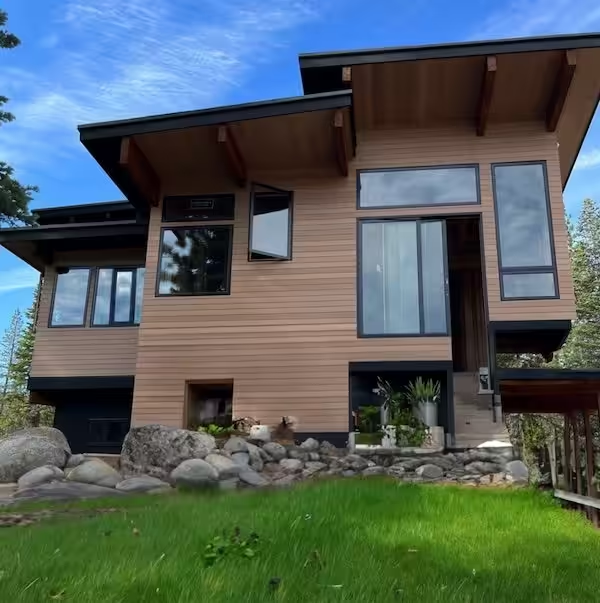
- Sustainably engineered composites take the category further by replacing virgin timber or wood fiber entirely with reclaimed or agricultural byproducts. ACRE by Modern Mill is a well-known example: built from upcycled rice hulls, completely tree-free, with no VOCs or forever chemicals. It accepts stain and paint the way real wood does and is rated for both interior and exterior applications. This segment is growing fastest on green building projects and in coastal climates where both moisture performance and sustainability credentials are part of the specification conversation.
- Fiber cement is a mix of Portland cement, sand, and cellulose fiber formed into boards that replicate wood siding profiles. Dimensionally stable, moisture resistant, and non-combustible, which makes it a common specification in fire-prone regions. Heavier than most alternatives and typically requires specialized cutting equipment on larger installs.
- Fly ash composites repurpose the fine powder byproduct of coal combustion into a dense, durable cladding material. They resist moisture, rot, and pests, and their inorganic composition means no wood fiber for insects to feed on. Less common than the other categories but gaining ground in sustainable construction where diverting industrial waste is part of the project’s environmental story.
What draws builders to all of them is the same thing. The promise of lower long-term maintenance without giving up the exterior aesthetic that clients expect. How well each delivers on that promise depends on the material type and authenticity.
How Does Synthetic Wood Siding Hold Up Over Time?
Across the board, synthetic wood siding outperforms natural wood on the durability factors that matter most over a long ownership window.
Wood is porous by nature. Moisture penetrates, the substrate swells and contracts seasonally, and biological breakdown follows over time. Most synthetic siding options are non-porous or semi-porous by design, which interrupts that process at the material level. Products with low or no organic content don’t give rot a substrate to take hold in, and because termites and wood-boring insects feed on cellulose, composites with inorganic or low-organic compositions remove that food source entirely. That’s a meaningful advantage in humid climates where pest pressure is a real spec consideration.
Finish retention follows the same logic. On wood, paint and stain adhesion degrades as the substrate moves with seasonal moisture changes. On a dimensionally stable composite, the finish experiences less movement over time, which translates to more consistent performance across the envelope and longer intervals between maintenance.
Fire performance varies significantly across the category. Natural wood is combustible by definition, and synthetic siding materials generally achieve better fire ratings because of their inorganic or low-organic composition. Fiber cement is non-combustible.WPC and composite alternatives typically perform better than wood under standardized flame spread testing, though ratings vary by product. If the project is in a wildfire-prone region or WUI zone, pull the specific product’s fire test documentation before making a selection.
Wind load ratings are product-specific and depend on installation method, fastener pattern, and substrate. Most synthetic siding manufacturers publish wind load test data, and it’s worth reviewing that documentation before specifying on high-exposure facades or in hurricane-prone markets.
Is Synthetic Wood Siding Worth the Upfront Cost?
On day one, the installed cost of composite siding is comparable to mid-grade natural wood. WPC composites sit at the lower end of the range, while fiber cement and higher-performance composites trend slightly higher depending on the product and profile.
Where the math shifts is the carrying cost. Wood siding needs repainting or restaining on a recurring cycle, and those cycles add up faster than most clients anticipate at the point of purchase. According to Angi’s 2026 cost data, exterior repainting on a typical home starts around $3,000 and scales quickly on larger facades or multi-family projects. Factor in scaffolding, labor, and the disruption cost of maintaining an occupied building, and the upfront price comparison looks different by year ten. For a closer look at what cedar maintenance actually costs over time, that breakdown covers the full ownership window.
The builders who are most satisfied with composite long term are the ones who put total cost of ownership in front of clients before the material decision locked, not after the first repaint bill arrived.
How Does It Hold Up on Sustainability?
Sustainability in building materials is more nuanced than whether something came from a forest. The full picture includes what the material is made from, how it’s manufactured, how long it lasts, and what happens at the end of its life.
On raw materials, synthetic siding products generally put less pressure on timber resources than natural wood. Fiber cement uses cement, sand, and a small amount of cellulose fiber. WPC composites blend wood flour with polymer, reducing virgin timber content significantly. The most innovative products in the category go further, using agricultural or industrial byproducts that would otherwise end up as waste, giving new life to materials while reducing pressure on old-growth forests.
Lifespan is one of the strongest sustainability arguments for synthetic siding. A product that lasts decades with minimal maintenance consumes fewer resources over time than one that requires repainting every five to six years, periodic board replacement, and eventual full removal and disposal. Fewer maintenance cycles means fewer paint products applied, less labor mobilized, and less material sent to a landfill.

Manufacturing process matters too. Some manufacturers operate zero-waste facilities, source materials regionally, and produce materials free of VOCs, formaldehyde, and forever chemicals. Modern Mill is a good example of what this looks like in practice.
ACRE is built from upcycled rice hulls that would otherwise go to waste, is manufactured in a zero-waste facility, and is 100% tree-free. Green Builder Magazine named it 2025 Sustainable Product of the Year for the second time, recognizing its material composition and manufacturing process.
Not all synthetic materials are created equal on sustainability. Before specifying, look for Environmental Product Declarations, which provide verified, third-party data on a material’s environmental impact across its lifecycle. Check whether the product qualifies for LEED point contributions. Ask if it carries a Clean Air Gold certificate or equivalent indoor air quality credentials. Those are the boxes worth checking before sustainability becomes a selling point on a project.
What Builders Need to Know Before Specifying Synthetic Wood Siding
Synthetic wood siding covers a wide range of products, and the right choice depends on details that go beyond aesthetics. Knowing what questions to ask upfront is what separates a smooth install from one that creates problems down the road. Here is what to consider before making a selection.
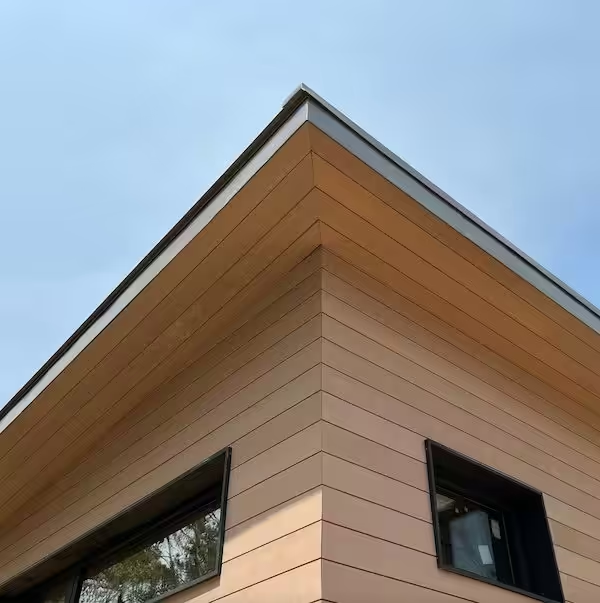
Every substrate behaves differently on the job. Cement-based, WPC, and other composites each have their own weight, cutting requirements, fastener patterns, and expansion tolerances, so confirming the specific product details before installation ensures the approach matches what’s actually going up on the wall. Profile availability is part of that conversation too. Synthetic wood siding comes in shiplap, nickel gap, board and batten, and a range of other profiles, but not all products offer equal workability. Some composites require specialized cutting tools while others cut with standard framing equipment. For a deeper look at how profiles compare, why more builders are specifying composite siding covers the workability question directly.

The finishing approach is the third thing worth locking down early. Factory-finished product arrives job-ready, reducing on-site labor and delivering consistent color across the full installation. Builder Magazine highlighted factory-finished ACRE as a product that extends the building season by removing weather-dependent finishing from the schedule. Most composites arrive factory-finished with paint, so it’s worth confirming finish options with the manufacturer before the project’s color decisions are locked in.
Is Synthetic Wood Siding Right for Your Next Project?
The conversation around synthetic wood siding has changed. A category that was once easy to dismiss is now producing materials that bring building and design professionals’ visions to life. The technology has caught up, and in some cases surpassed, what natural wood can reliably deliver on an exterior over a 20 or 30-year window.
That said, not every product gets you there. Understanding the substrate, the sustainability story, the real cost over time, and what the finishing options actually are will get you to the right decision faster than a price comparison at the point of purchase. If you’re exploring synthetic wood siding for an upcoming project, browse completed projects to see how different materials and profiles read in real conditions, and reach out if you want to talk through what fits your next build.
Ready to Experience the
Difference?
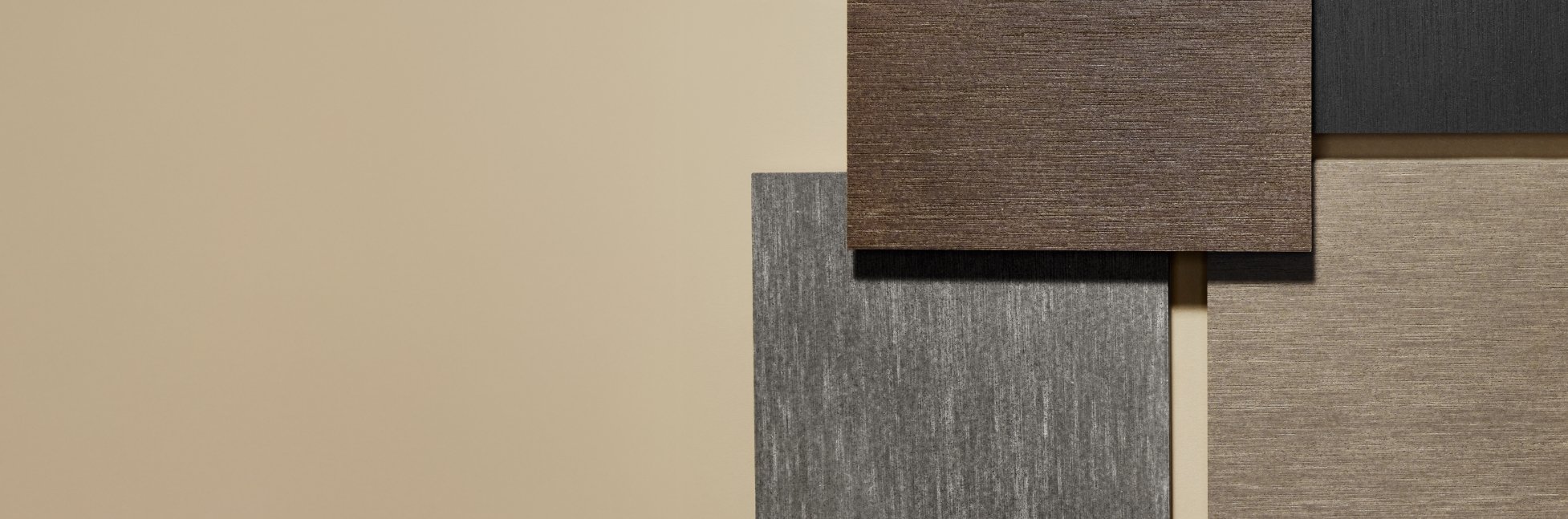
Ask for ACRE at your local lumber yard or order samples to see for yourself why builders are making the switch.