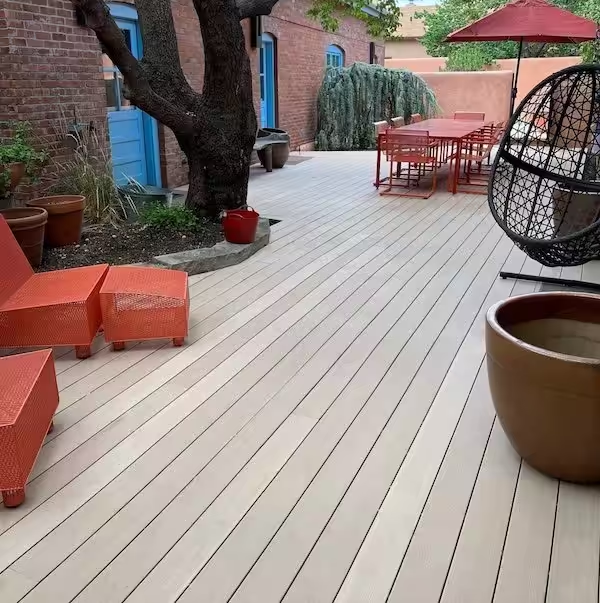
Waterproof and Water-Resistant Building Materials: Costs, Lifespans, and How to Choose
January 2025Choosing waterproof and water-resistant building materials is one of the highest-return decisions in any exterior project, because water is what quietly destroys siding, decking, trim, and framing over time. The catch is that most materials sold as “waterproof” are really water-resistant, and the difference changes how you should build. This guide explains that distinction, compares the common materials on cost and lifespan, and shows which ones fit humid, coastal, flood-prone, and high-exposure conditions, so you can pick with confidence and keep what you build from rotting.

Waterproof vs. Water-Resistant: What’s the Difference?
Water-resistant means a material slows and limits water; waterproof means it stops water entirely. The distinction matters because a wall built as if it were sealed is how moisture gets trapped inside, with nowhere to drain or dry.
Think of it as a spectrum. A water-resistant material sheds rain and tolerates humidity but will eventually let moisture through under standing water or constant saturation. A waterproof material blocks liquid water completely, which is what you want from a below-grade membrane or a flat-roof coating, not necessarily from siding.
Here is the part most guides skip: no exterior cladding waterproofs a wall on its own. Siding, trim, and panels are the outer layer of a system. Behind them sits a water-resistive barrier (house wrap or building paper), flashing at every window, door, and transition, and often a rainscreen gap that lets the assembly drain and dry. The cladding sheds the bulk of the water. The barrier and flashing catch what gets past it.
That is why a “waterproof” board over a poorly flashed wall still leads to rot: water finds the gap, sits against the sheathing, and has nowhere to go. A genuinely water-resistant material paired with correct detailing beats a “waterproof” board installed as if the wall could never leak.
So read “water-resistant” as the realistic goal for anything exposed to weather. The question is not “is it waterproof,” but “how well does it resist moisture, and how long does it last when it gets wet.”
Why Water Resistance Matters (and How Water Damage Starts)
Water is one of the most destructive forces a building faces. Left unmanaged, it rots framing, warps and swells boards, feeds mold and mildew, corrodes fasteners, and opens the door to insects. Traditional wood is the most vulnerable common material, since it absorbs moisture, then cups, splits, and decays through repeated wet-dry cycles.
Most people do not shop for water-resistant materials while planning a new build. They start looking after something is already failing. A trim board has gone soft near the ground, paint is peeling in sheets, or there is a musty smell in a room that shares a wall with the outdoors. Those are late-stage signals that water has been sitting somewhere it should not.
The early warning signs are worth knowing because they tell you where to act. Dark blotches on siding or trim usually mean mold or mildew has a steady moisture source. Spongy or discolored boards point to decay that has already reached the wood fiber. Peeling finish and rust streaks around nail heads mean water is getting behind the surface, not just running off it.
The material you choose sets the ceiling on how much of this you can prevent. A moisture-tolerant cladding, decking, or trim shrugs off the wet-dry cycles that destroy untreated wood, so the upgrade usually pays for itself in fewer repairs and repaints. It does not remove the need for good detailing, but it removes the material as the weak link.
Water-Resistant Building Materials Compared
A list of materials is only useful if you can weigh them against each other. The table below compares the common water-resistant options on the factors that actually drive a decision: how well each resists moisture, how long it lasts, what upkeep it needs, roughly what it costs, and where it fits best. The fiber cement lifespan draws on This Old House; the other ranges follow widely published category norms, and real-world results vary with climate and install quality.
| Material | Water resistance | Typical lifespan | Maintenance | Relative cost | Best exterior use |
|---|---|---|---|---|---|
| Rice-hull composite (ACRE) | High; resists water, rot, and pests without treatment | Long-term; rot-resistant | Low; no sealing required | $$$ | Siding, trim, decking, millwork |
| Fiber cement | High; rot- and fire-resistant, not fully waterproof | 50+ years | Medium; repaint periodically | $$ | Siding, panels |
| Cellular PVC / capped composite | High; sheds water at the surface | 25 to 50+ years | Low | $$$ | Trim, decking |
| Vinyl | Moderate; non-porous surface, relies on the barrier behind it | 20 to 40 years | Low | $ | Siding |
| Metal (aluminum, steel) | High; needs corrosion protection near salt | 20 to 50 (siding), 40 to 80 (roofing) | Low to medium | $$ | Siding, roofing |
| Brick, stone, concrete | Masonry sheds water but is porous | 50 to 100+ years | Low | $$$$ | Walls, foundations, flood zones |
| Treated or marine-grade wood | Moderate to high; still an organic material | 15 to 40 years | High; seal and stain | $ to $$ | Decking, framing, sheathing |
A couple of patterns stand out. Most low-maintenance materials (composite, PVC, masonry) cost more up front, while the cheapest wood option, pressure-treated lumber, asks for the most ongoing care. Vinyl is the exception that breaks the rule: it is both inexpensive and low-maintenance, and it leans on the barrier behind it for real protection. Beyond that, no single row wins on every column, so the right choice depends on which factor matters most for your project and climate.
A note on cost: relative bands reflect availability more than markup. Specialty materials often cost more because fewer manufacturers make them, not because the category is inherently expensive.
The Materials, One by One
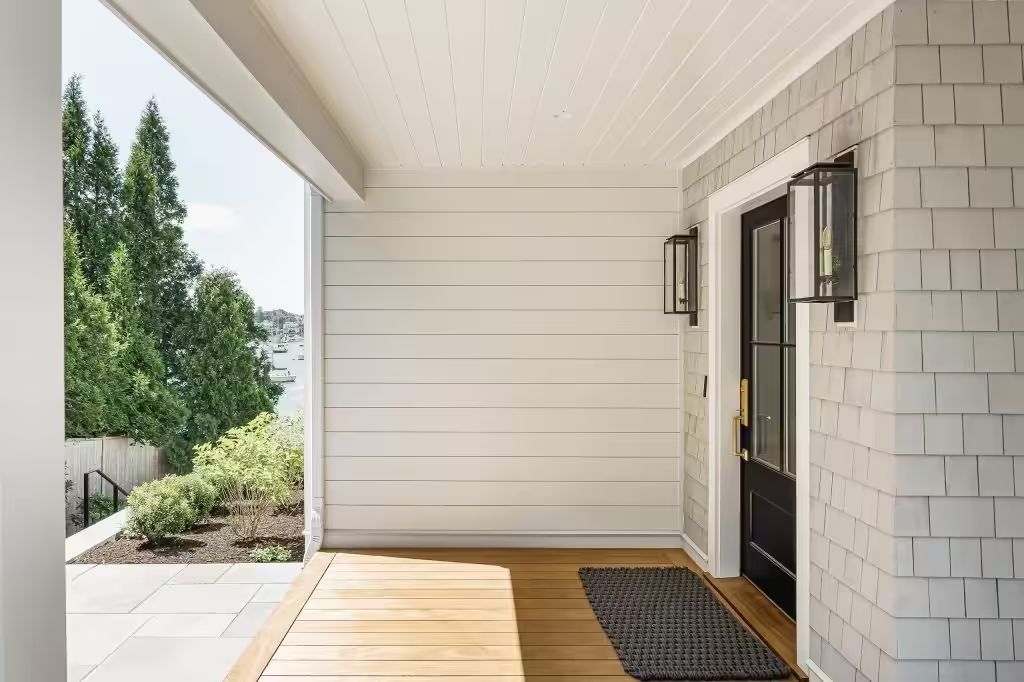
Rice-Hull Composite (ACRE by Modern Mill)
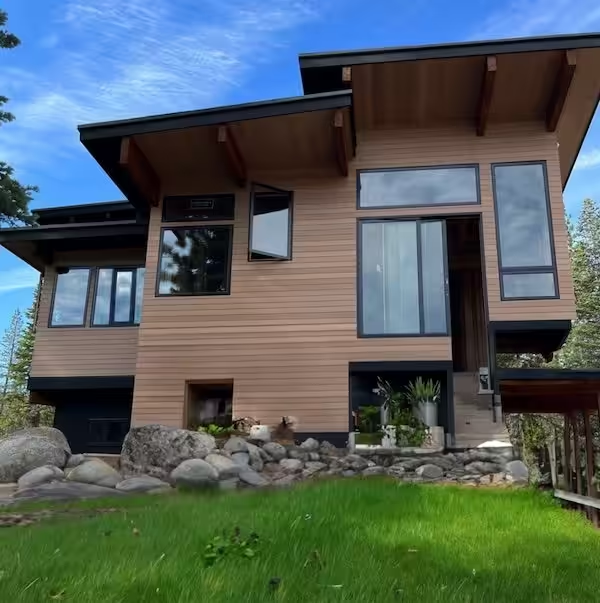
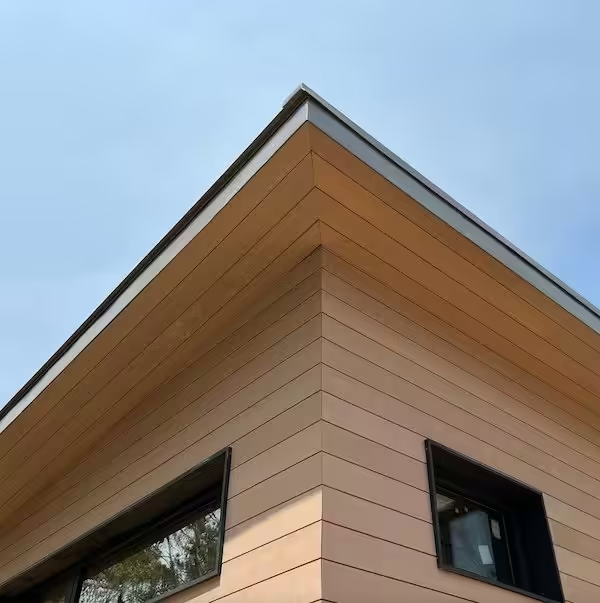
Rice-hull composite is a newer category built from an agricultural byproduct that would otherwise be discarded. ACRE by Modern Mill is made from 60% upcycled rice hulls and 40% rigid PVC resin, the split documented in its California State Fire Marshal listing, and it resists water, weather, rot, and pests without chemical treatment. Because it works with standard woodworking tools and takes paint and stain from Modern Mill’s approved range (coatings with a light reflective value of 55 or greater), it suits siding, trim, decking, and millwork where builders want the look of wood without the maintenance.
Like fiber cement, vinyl, and PVC, ACRE is a finish material rather than framing, so it clads and trims instead of carrying loads. For those jobs it skips the sand-and-repaint cycle wood demands in wet climates.
Fiber Cement
Fiber cement blends cement with cellulose fibers, which makes it hard, dimensionally stable, and resistant to rot, moisture, and fire. It holds paint well and carries a long service life, commonly cited at 50 years or more, which is why it is a default choice for exterior siding.
Its drawbacks are practical rather than performance-based. The boards are heavy, cutting them generates respirable crystalline silica that calls for proper dust controls, and the finish needs periodic repainting. None of that undercuts the material; it just means fiber cement rewards a crew that installs it correctly. For a closer look, see how ACRE compares with fiber cement siding.
Cellular PVC and Capped Composite
Cellular PVC is a favorite for exterior trim because it is inert plastic with no wood fiber for water to rot. Capped composite, common in decking, wraps a wood-plastic core in a protective polymer shell that repels moisture and resists fading and stains. Both need far less routine upkeep than wood. For a head-to-head on trim specifically, see PVC trim vs composite trim.
The nuance is that a capped composite is only as protected as its cap; a deep gouge can expose the core, and PVC expands and contracts with temperature, so it needs correct fastening and gapping. Installed to spec, both are among the most water-tolerant options available, and Modern Mill’s own guidance on keeping composites from warping covers the details.
Vinyl
Vinyl siding is inexpensive, widely available, and non-porous, so the material itself does not absorb water. That combination keeps it popular for budget-conscious exteriors, and damaged panels are cheap and easy to swap.
Vinyl’s limits are worth planning around. It is a rainscreen, not a seal, so it relies entirely on the house wrap behind it to keep the wall dry, and it can crack in hard cold or warp near intense heat. Used where those conditions are mild, and installed over a proper barrier, it delivers real water resistance for the price.
Metal (Aluminum and Steel)
Metal cladding and roofing are non-combustible, throw off water, and last a long time, with metal roofs commonly rated at 40 to 80 years. They do not rot, warp, or feed insects, which makes them a strong pick for demanding exposures.
The caveat is corrosion. Bare or poorly coated metal can rust or pit, and salt air accelerates the process, so coastal projects need a corrosion-resistant coating and compatible fasteners. With the right finish, metal delivers decades of low-effort service and a clean, modern look.
Brick, Stone, and Concrete
Masonry is the heavyweight of water resistance. Brick, stone, and concrete do not rot or burn, hold up to repeated wetting, and can last the life of a building, often 100 years or more with little upkeep. FEMA lists masonry with waterproof mortar among the materials rated acceptable below the base flood elevation, which is about as strong an endorsement as flood resilience gets.
The trade-off is that masonry is porous, so it absorbs and holds water at the surface and needs a sealant, a drainage cavity, or a waterproof membrane to keep moisture from migrating inward. It is also the priciest category to install. For a foundation, a flood-prone wall, or a project where permanence is the goal, that cost buys durability nothing else matches.
Wood Done Right (Treated, Marine-Grade, and Acetylated)
Wood can hold up outdoors when it is the right wood. Naturally durable species like cedar, redwood, and cypress resist decay on their own, though they weather to gray and need periodic sealing to keep their color. Pressure-treated lumber resists decay and insects for framing and decking, marine-grade plywood uses a waterproof-bond adhesive and high-grade veneers for demanding sheathing, and acetylated woods are chemically modified for dimensional stability. All keep the natural material that many projects want.
A few practical notes. Treated wood is still an organic material, so it needs sealing and periodic upkeep and can warp if it dries unevenly, and pressure-treated lumber calls for gloves during handling.
Materials to Avoid Outdoors
Some materials fail fast once they get wet, and knowing the list saves a callback. Standard MDF and untreated particleboard swell and crumble, cork and linoleum break down under saturation, wallpaper and paper-faced products feed mold, and ordinary fiberglass batt insulation loses its value when soaked. In wet or flood-prone areas, these belong nowhere near the water path.
Best Materials by Climate and Application
The right material depends as much on your climate as on the material itself.
Humid climates. Where the air stays wet, the enemy is slow, constant moisture rather than a single storm. Moisture-resistant cladding such as fiber cement, PVC, and exterior-rated composites resists the mold and mildew that thrive in humidity, and closed-cell or rigid foam insulation holds up far better than fiberglass batt when it gets damp. A wall that can dry matters as much as one that blocks water.
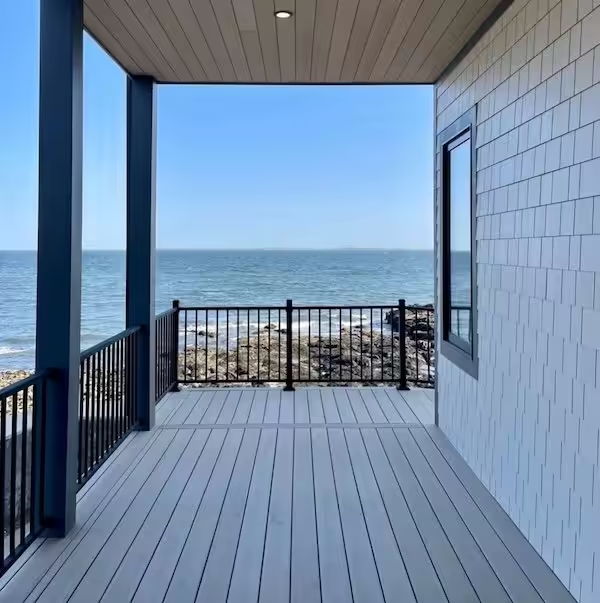
Coastal and saltwater exposure. Salt accelerates corrosion and works into every gap. Here, stainless or hot-dip-galvanized fasteners, corrosion-coated metal, and non-porous cladding justify their higher cost. Rice-hull composite and other rot- and pest-resistant materials suit the salt-and-humidity mix well, which is why they show up in coastal building projects.
Flood-prone areas. For anything that could sit in water, follow FEMA’s lead. Its flood damage-resistant materials guidance rates materials as acceptable or unacceptable for use below the base flood elevation, and the acceptable list includes concrete, masonry with waterproof mortar, decay-resistant or pressure-treated wood, and closed-cell foam. Use corrosion-resistant fasteners such as hot-dip-galvanized nails, which hold up far better than plain steel after flood exposure.
Extreme weather. Wind-driven rain, hail, and wide temperature swings punish weak details first. Impact- and UV-tolerant materials with room to expand and contract hold up best in areas that see repeated storm exposure.
Interior moisture areas. Water resistance is not only an exterior concern. In bathrooms, kitchens, mudrooms, and basements, moisture-resistant wall board, tile, and PVC or composite trim prevent the mold and swelling that plague standard drywall and wood in those rooms.
How to Make Water-Resistant Materials Last
Even the best material fails if the wall around it cannot manage water, so a few install habits protect the whole system.
Start behind the cladding. A continuous water-resistive barrier, flashing at every window, door, and penetration, and a rainscreen gap that lets the assembly drain and dry are what actually keep a wall sound. The cladding turns away most of the rain; those layers handle the rest.
Then protect the material itself. Where the product’s instructions call for it, seal or back-prime cut ends and exposed edges, since that is where water gets a foothold. Follow the manufacturer’s ground-clearance requirements and keep drainage clear, because standing soil contact wicks moisture into many materials. Use corrosion-rated fasteners so the connections outlast the boards, and give water somewhere to go with proper slope and drainage.
This is where a material that stands up to water, rot, and pests on its own does the most good. Modern Mill’s ACRE is built for exactly these conditions, but pairing it, or any water-resistant product, with sound detailing is what turns a good material into a wall that lasts.
Choosing the Right Material for Your Project
The best water-resistant material is the one that matches your climate, your budget, and how much maintenance you are willing to do. Match the material to the exposure first: masonry and metal for the harshest conditions, composite and PVC for low upkeep, fiber cement for a painted look that lasts, and pressure-treated wood when budget leads. Then build the wall as a system, because the right material over sound flashing and a water-resistive barrier is what keeps water out for decades.
If you want the warmth of wood without the wet-weather maintenance, rice-hull composite is worth a look. ACRE by Modern Mill shrugs off water, weather, rot, and pests without chemical treatment, and it comes in siding, trim, decking, and millwork for exterior projects in humid, coastal, and high-exposure settings. You can order ACRE samples to see how it handles in person, or reach out through our contact form if you want help matching a material to your project.
Ready to Experience the
Difference?
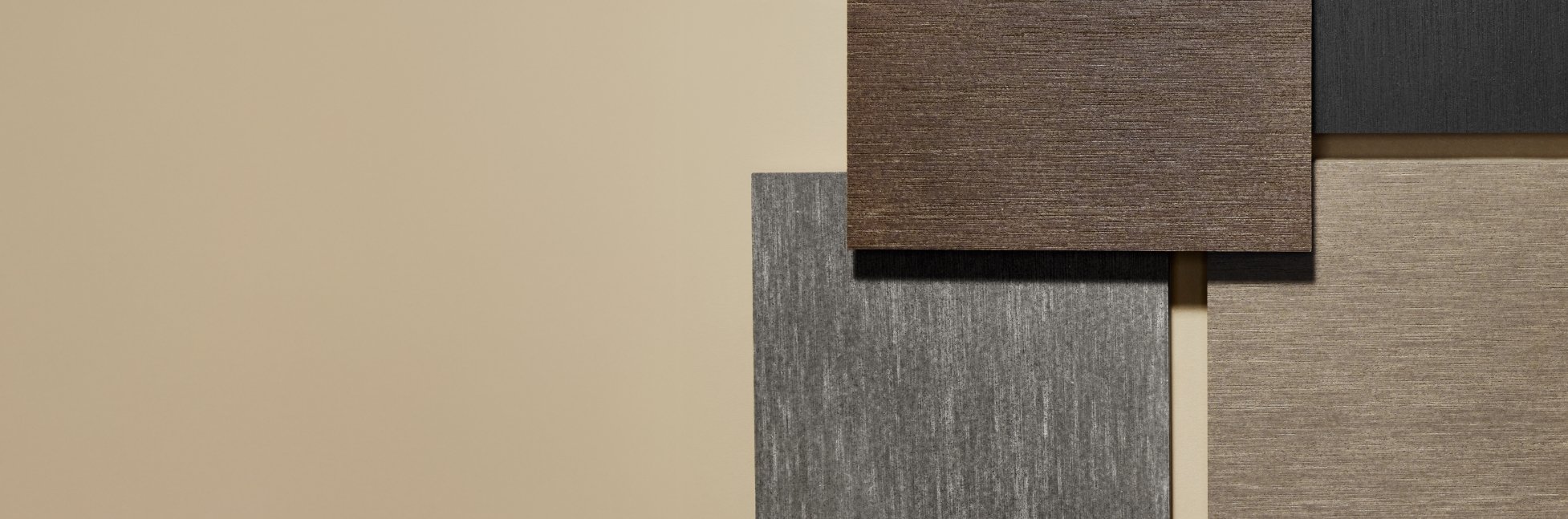
Ask for ACRE at your local lumber yard or order samples to see for yourself why builders are making the switch.
Frequently Asked Questions
What is the most water-resistant building material?
For exterior use, metal, cellular PVC, and masonry with waterproof mortar top the list because they resist rot and hold up to repeated wetting. No cladding is truly waterproof on its own, though; the wall stays dry through the combination of a water-resistant material and a proper barrier behind it.
What materials will mold not grow on?
Mold needs moisture and an organic food source, so materials like metal, concrete, glass, and PVC do not feed it directly. The EPA’s mold guidance notes that mold grows on organic materials such as wood, paper, and dust, so it can still take hold on the surface dust or dirt that collects on any material, which is why coatings are tested for mold resistance under standards such as ASTM D3273. Keeping surfaces clean matters even on mold-resistant materials.
Can MDF be used outside?
No. Standard MDF is not rated for exterior use and swells and crumbles when it gets wet, even with paint. For an outdoor version of that smooth, paintable look, use cellular PVC, fiber cement, marine-grade plywood, or a rice-hull composite instead.
What is the cheapest water-resistant wood?
Pressure-treated pine is the least expensive wood that resists decay and insects, which makes it common for framing and deck substructures. It still needs sealing and periodic maintenance, so a low-maintenance composite or PVC can cost less over the full life of the project.
Is any building material 100% waterproof?
A few materials, like a below-grade membrane or a rigid PVC sheet, block water at the material level. But no exterior wall is waterproof from the cladding alone. Every durable assembly relies on layers, the cladding plus a water-resistive barrier and flashing, to shed and drain water together.
Which material lasts longest with the least maintenance?
Masonry and cellular PVC offer the longest low-maintenance service, often decades with little more than occasional cleaning. Rice-hull composite and fiber cement also last a long time with minimal upkeep, though fiber cement needs periodic repainting.