Most Common Myths About Sustainable Building Materials
March 2026Most builders and architects hear the same objections before the material conversation even starts. Sustainable options cost too much. They won’t hold up the way conventional materials do. They limit what you can design.
The problem is that most of these objections reflect how sustainable building materials performed a decade ago, not today. The global green building materials market reached $532.54 billion in 2025, according to Fortune Business Insights, on its way to $1.51 trillion by 2034. A large share of the industry has already run the numbers and moved on. The objections, though, tend to linger, particularly in residential and light commercial specs where conventional materials are still the default. Here are six of the most persistent ones, and what the evidence shows.
Myth 1: Natural Materials Are Always the Most Sustainable Choice
Natural origin is not the same as low environmental impact over time. A material sourced from a forest, quarry, or agricultural byproduct still has to perform after installation. If it requires frequent refinishing, periodic replacement, or significant ongoing intervention to stay functional, that environmental cost accumulates regardless of where the raw material started.
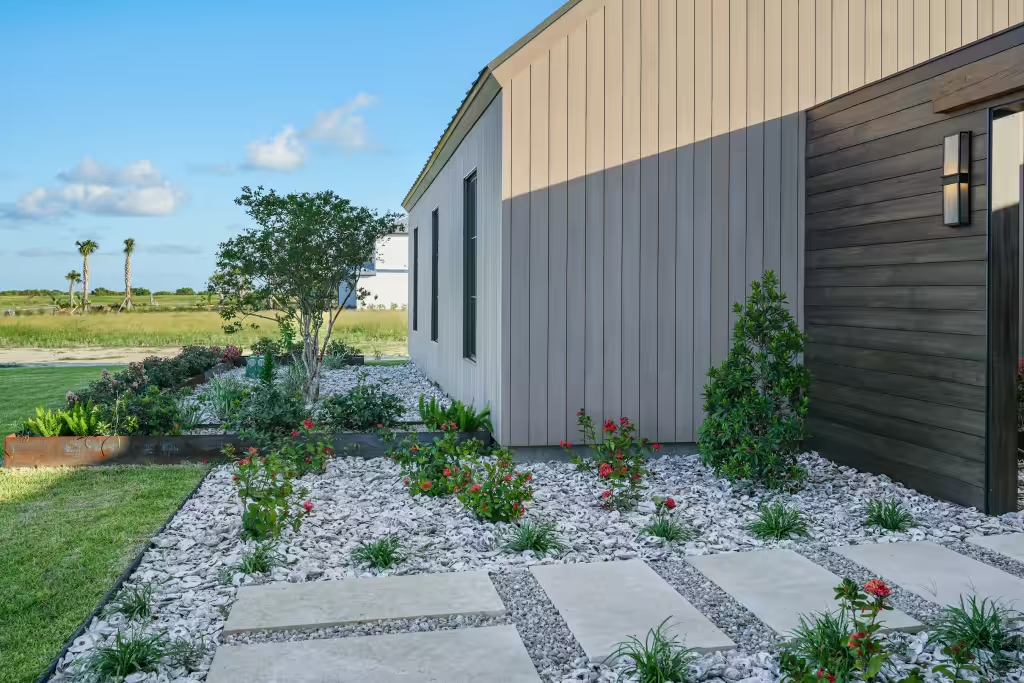
Exterior assemblies are where this plays out most clearly. Wood siding that requires sealing or repainting every three to five years is not just a maintenance budget line. Each refinishing cycle generates coatings waste, labor emissions, and material consumption that compound over the life of the assembly.
This is the core logic behind lifecycle thinking in rating systems like LEED. The USGBC’s Building Life-Cycle Impact Reduction credit is designed to reduce total impact across a building’s full lifespan. A material that stays stable, holds its finish, and avoids replacement cycles can outperform a naturally sourced alternative on that measure.
Myth 2: Sustainable Building Materials Always Cost More
Upfront cost is easy to see on a bid. Long-term cost is where the financial case for sustainable materials usually gets made.
When a material lasts longer, needs fewer coatings, and avoids premature replacement, total cost of ownership shifts. For exterior categories where refinishing requires scaffolding, skilled labor, and owner disruption, the gap between a lower-cost material with a high maintenance burden and a higher-cost one with a lower burden often closes in under a decade.
Energy performance follows the same pattern. The U.S. Department of Energy estimates homeowners can save up to 20% on heating and cooling costs through better insulation and air sealing alone, savings that compound from year one. For builders tracking callbacks and return visits, the long-term math tends to be clearer than what appears on the original bid. Our breakdown of whether sustainable building materials save costs walks through that analysis in more detail.
Myth 3: Recycled Content Is the Main Sustainability Metric
Recycled content is one input. It is not a reliable proxy for performance or long-term environmental impact.
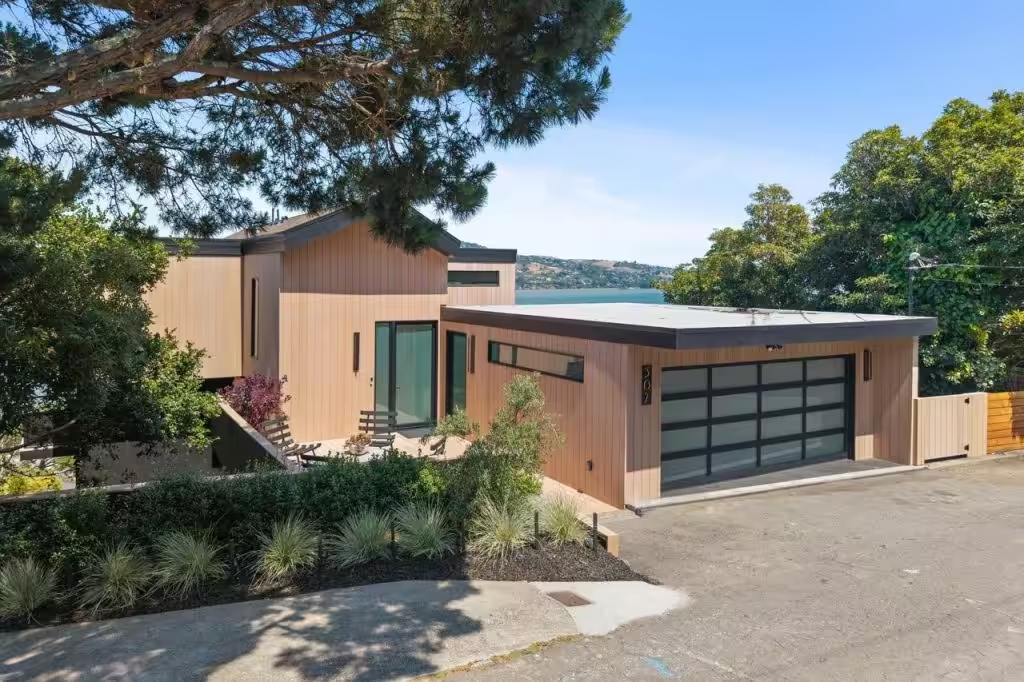
A material with high recycled content that fails early can produce more total waste than a material with lower recycled content that lasts three times as long. The more useful question is not what went into the product but how it behaves after installation: moisture resistance, dimensional stability, finish longevity, and how often it forces replacement cycles.
For exterior cladding, those questions point toward real-world performance under exposure. Our guide to the best sustainable construction materials walks through how those performance factors compare across product categories.
Myth 4: Sustainable Materials Require Constant Upkeep
While some sustainable materials do require constant upkeep, the ones specified for their sustainability credentials tend to be chosen precisely because they reduce it.
Maintenance carries an environmental cost that accumulates with every refinishing cycle: coatings waste, labor emissions, and for many systems, VOC off-gassing into the spaces people occupy. When maintenance gets deferred, the debt typically ends in early repair or replacement, which carries higher impact than the maintenance cycle it was meant to avoid.
In our experience across composite siding projects around the country, the refinishing callbacks and material failures we hear about consistently involve conventionally finished wood, not composite or rice hull siding alternatives. A material that holds its factory finish through a full weather cycle without recoating eliminates a maintenance cycle, reduces coating waste, and removes a round of field labor from the schedule. That is the efficiency argument and the environmental argument at the same time.
Myth 5: Indoor Air Quality Is a Separate Conversation From Sustainability
For the people living in a finished building, indoor air quality is often the most immediate way sustainability shows up in daily experience.
Paints, sealants, and topcoats affect what occupants breathe. A material that requires recoating every four years is not just a maintenance schedule. It is a recurring introduction of coatings into a lived environment, each cycle with its own off-gassing period and ventilation requirement.
According to the EPA’s guidance on volatile organic compounds and indoor air quality, VOC concentrations indoors are consistently 2 to 5 times higher than outdoors — and that exposure profile shifts significantly based on how often finishes are applied and refreshed.
Myth 6: Sustainable Exterior Materials Can’t Match the Look of Real Wood
The design objection traces back to a real previous problem. Earlier composite and engineered materials often looked plasticky and felt nothing like the wood they were meant to replace, leading those early experiences to stick.
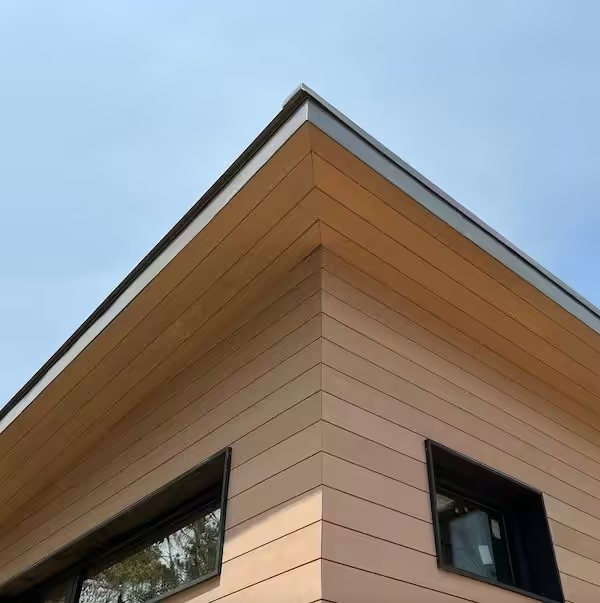
Writing in LA Times Spaces, Modern Mill’s Architectural Specialist Mary Lynn Hadix addressed exactly this: “When clients insist on ‘real wood,’ they’re often thinking back about earlier alternatives that fell short of expectations…that perception is outdated. Today’s high-quality materials are designed with a clear attention to detail, with textures and finishes that authentically replicate what they are trying to mimic.”
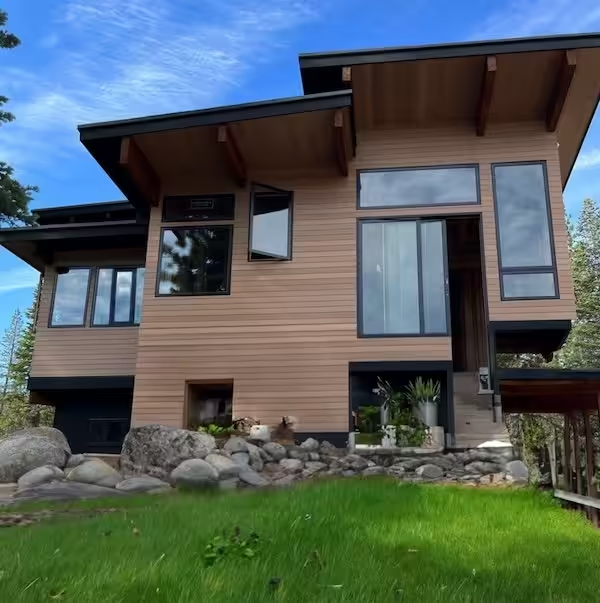
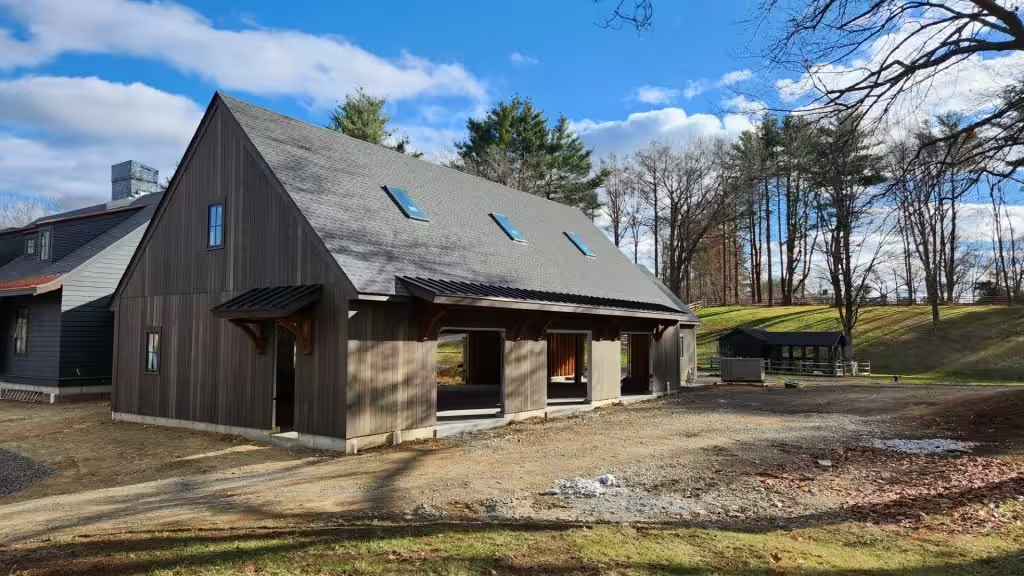
The product range reflects that. Faux wood siding products are typically available in every major exterior profile — shiplap, nickel gap, board and batten, and v-groove. Some are also offered factory-finished that ship ready to install. For architects working with biophilic design principles, the aesthetic gap that existed a decade ago has largely closed. The constraint today is more often familiarity than availability.
How to Evaluate Sustainable Building Materials Past the Label
The myths above tend to reduce sustainability to a single attribute: natural origin, recycled content, upfront cost, or certification status. None of those reliably predict how a material performs after installation.
The more practical questions are durability-focused. How stable is the material in the climate it is going into? How often will it need refinishing or repair? Does the sourcing reduce pressure on harvested resources or divert existing waste? Does it support healthier indoor air across the full maintenance cycle? When those questions have good answers, the cost case and the environmental case tend to land in the same place.
Explore how modern sustainable building materials hold up against those questions on our sustainability page, and get inspired for where they might fit into your next project.