Rice Hull Siding: Cost, Pros and Cons, and How It Performs
May 2025Rice hull siding is a wood-look composite made mostly from upcycled rice hulls. It resists rot, moisture, and termites without sealing, takes stain like lumber, and runs about $10 to $12 per square foot for the material, more than vinyl but with less upkeep than cedar. The catch most write-ups skip is that it moves with temperature rather than moisture, so a crew that installs it like wood can end up with gaps. Full disclosure before we get into it: this is Modern Mill’s blog and we make ACRE, the main product in this category, so we’ll cite outside sources where the numbers matter and show the trade-offs, not just the wins.
What Is Rice Hull Siding?
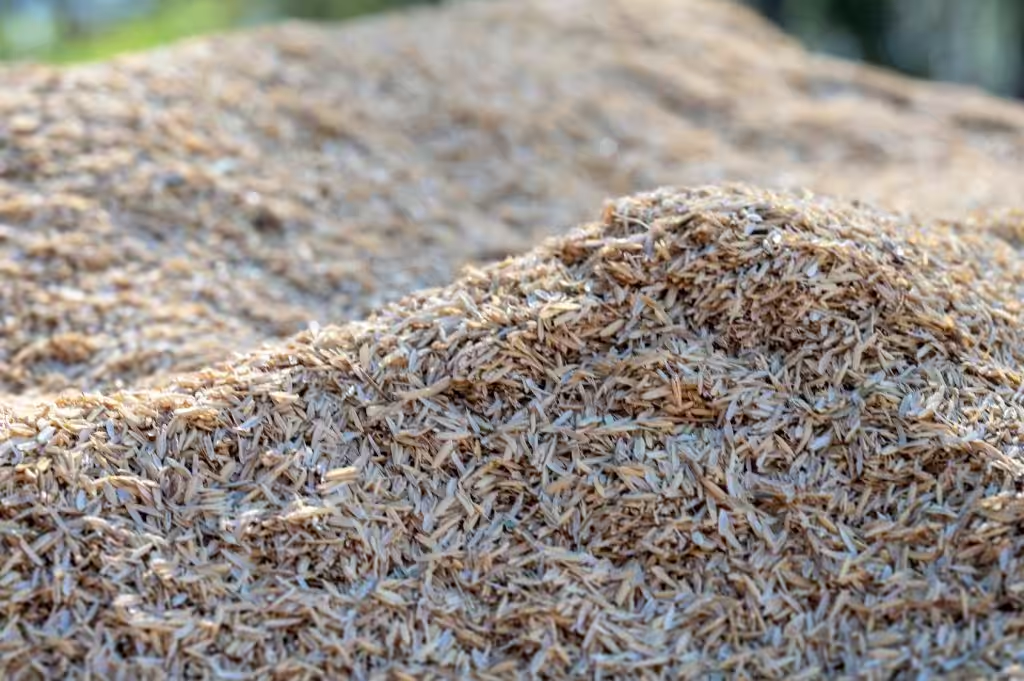
Rice hull siding is an exterior cladding made from rice hulls, the hard outer shells left behind when rice is milled. Those hulls are an agricultural byproduct that mills used to burn or send to the landfill. You’ll also see it called rice husk siding, same product, two names.
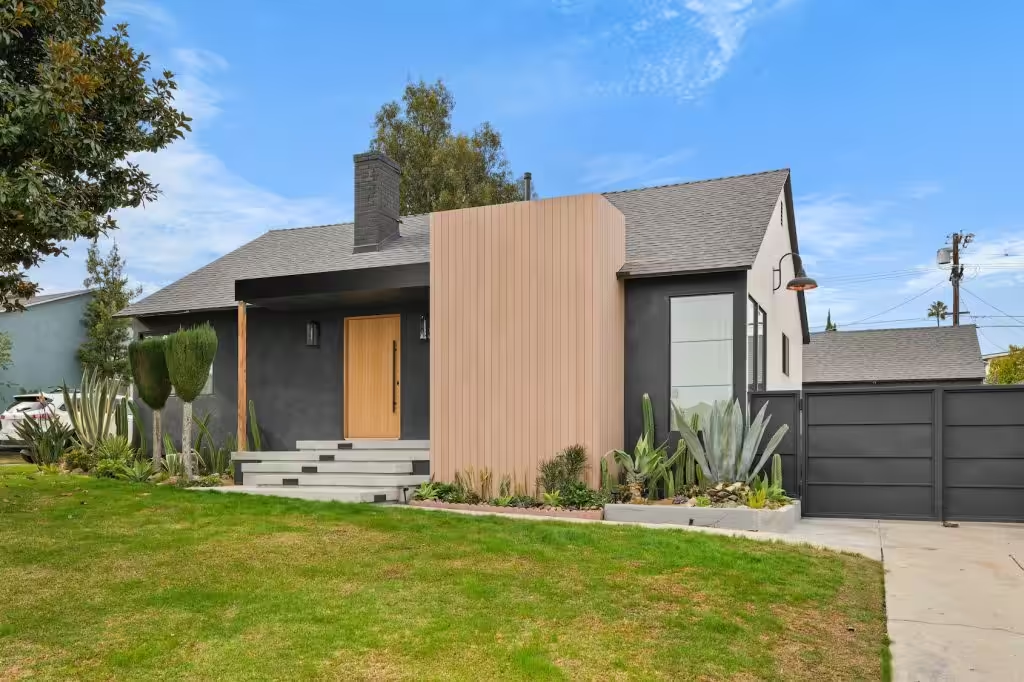
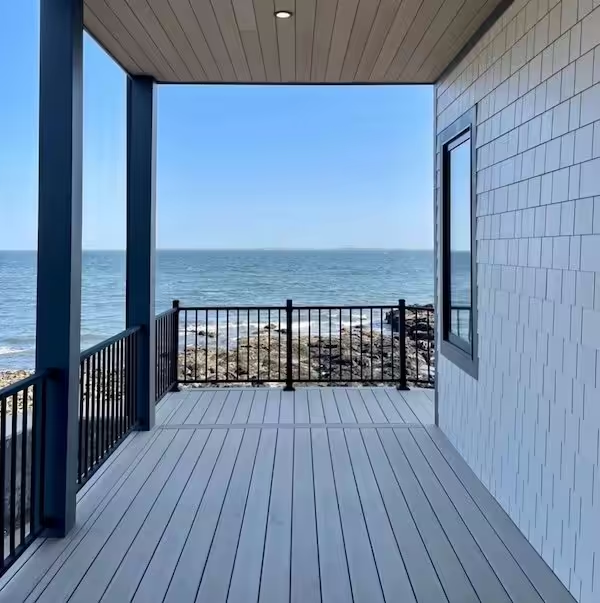
It isn’t a solid shell pressed flat into a board. Rice hull siding is a composite: upcycled rice hulls bound with a PVC resin and then shaped to look and work like real wood. That mix is what lets it resist moisture, rot, and insects the way a synthetic board does while keeping the grain and warmth of a wood plank.
The main product in this category is ACRE by Modern Mill. We make ACRE rice hull composite siding in shiplap, V-groove, board and batten, and nickel gap profiles, along with matching trim, sheets, and decking. A $5 sample is the quickest way to see the grain in person.
How Rice Hull Siding Is Made
Production starts with hulls left over from rice milling. They’re blended with a proprietary PVC resin, run through a continuous extrusion process into sheets and boards, then sanded to bring out a wood-like grain. The finished board cuts, stains, paints, and fastens like lumber.
The mix is worth being precise about. Modern Mill puts the blend at more than 50% upcycled rice hulls by volume, and a builder quoted in GreenBuildingAdvisor’s coverage was told it works out to roughly 53% rice husk to 47% PVC. Either way, this is a composite, not a pure plant product, and the rice hulls do real work in it.
Two natural properties of the hull explain the performance. They’re high in silica, a mineral that makes the material difficult for termites to consume. They also contain lignin, the same organic polymer that gives wood its strength, which is part of why rice hulls behave more like wood than a typical filler. U.S. farmers harvested more than 20 billion pounds of rice in the 2024 crop year, so the supply of hulls is steady and domestic.
Pros of Rice Hull Siding
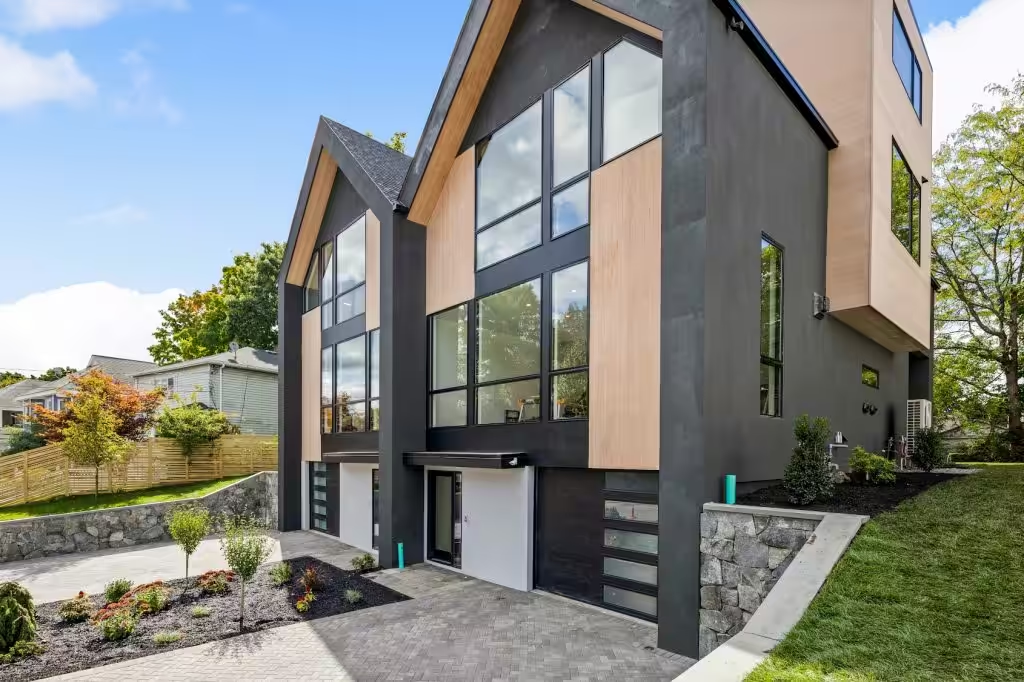
The case for rice hull siding comes down to one trade: you get the look of wood without most of wood’s failure modes.
Durability and pest resistance. The board resists water, rot, mold, and mildew without a chemical treatment, and the silica in the hulls discourages termites and other pests. It doesn’t splinter, and it holds up in humid, coastal, and freeze-thaw conditions that punish natural wood.
Low maintenance. Because it doesn’t absorb water the way cedar does, it doesn’t need the regular sealing schedule that keeps real wood from rotting. For most homeowners that means an occasional wash and little else.
Workability. This is where it separates from other composites. The boards cut, sand, and fasten with standard woodworking tools, and unlike fiber cement they don’t throw respirable silica dust on the saw. They also accept stain directly, with no primer, so real rice husk siding projects can be color-matched on site instead of ordered in a fixed finish. It can even be heated and bent into curves, a process covered in our guide to thermoformed ACRE.
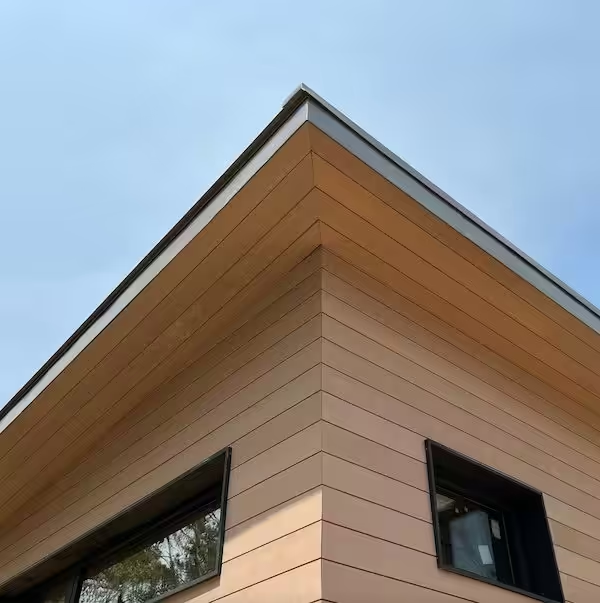
A real wood look. The grain is sanded into the board, so it reads as wood from the curb and up close, in profiles from shiplap to board and batten.
Sustainability with a domestic supply. It’s made in the USA from an upcycled byproduct, with no added formaldehyde, phenol, phthalates, or adhesives. It diverts waste that would otherwise be burned or landfilled and reduces the demand for harvested wood. It’s also tested for fire-prone areas, which we cover below.
Cons and Honest Drawbacks of Rice Hull Siding
No siding is right for every project, and rice hull siding has real trade-offs worth knowing before you commit.
The binder is PVC. The board is a composite, so it isn’t plastic-free, and like other PVC products it isn’t curbside-recyclable at end of life. If a fully bio-based material is your goal, that’s a fair mark against it. The counterpoint is that upcycled hulls make up the majority of the board by volume and divert a byproduct that would otherwise be burned or landfilled.
It costs more upfront than vinyl. Vinyl is the budget option, and rice hull siding sits well above it. The gap narrows once you price in low maintenance and a long service life, but the sticker price is higher, as the next section shows.
It moves with temperature, not moisture. This is the practical one. Wood expands and contracts with humidity; rice hull board expands and contracts with heat, on the order of an eighth of an inch over a 16- to 18-foot run. Boards ship with installation guidance for exactly this reason, and a board run tight on a hot day can gap on the first cool one if it wasn’t spaced and fastened for movement. In our experience, the installs that disappoint are the ones where the crew treated it like wood and skipped the recommended gapping. Follow the spec and movement is manageable. For the deeper version, here’s how to keep composite siding from warping.
It’s softer than fiber cement. Carpenters who have run it describe it as soft to the touch, and it can dent under a hard impact where fiber cement wouldn’t. That softness is the flip side of how cleanly it works with hand tools, but it’s worth a fastener check: drive screws to the spec rather than over-torquing them, so they hold and the board can still move.
It’s a newer category. Rice hull siding has a shorter field history than cedar or fiber cement. Third-party fire certification and a manufacturer warranty offset some of that, but it’s reasonable to want a longer track record, and you should ask for testing data and warranty terms in writing. The material got a national look when This Old House toured a rice hull siding factory in 2024, but real-world decades are still being logged.
Availability is still growing. Not every lumberyard stocks it, and not every installer has run it, so you may need to order samples and brief your crew.
How Much Does Rice Hull Siding Cost?
Rice hull siding runs roughly $10 to $12 per square foot for the material, according to Good News Network’s 2025 reporting. We don’t publish a single flat price because the number moves with profile, finish, and order size, so a quote or a sample order is the way to get a current figure for your build. Installation labor is on top of the material either way.
Here is what the material and individual pieces run. The per-square-foot figure is the Good News Network number above; the trim and sheet prices are Menards listings cited in a 2023 GreenBuildingAdvisor review, so treat those piece prices as a ballpark rather than today’s shelf price:
| Product | Size | Approximate price |
|---|---|---|
| Rice hull siding (material) | per square foot | $10 to $12 |
| Trim board | 1x6x8 (Menards) | $26.69 |
| Building sheet | 4×8 (Menards) | $62 |
The sheet looks cheap next to the per-square-foot figure for a reason: a flat 4×8 building sheet works out to about $1.94 per square foot, and that is a different product from finished siding profiles like shiplap, which cost more per square foot once they’re milled and tongue-and-grooved.
To scale it up, a typical 2,000-square-foot home has roughly 2,000 to 2,800 square feet of wall, so material alone tends to land around $20,000 to $34,000 before labor. Vinyl and fiber cement cost less upfront; the case for rice hull siding is the real-wood look and low maintenance, not the lowest price.
Rice Hull Siding vs Vinyl, Cedar, and Fiber Cement
The fastest way to place rice hull siding is next to the materials most people choose between.
| Material | Relative cost | Maintenance | Moisture and pest resistance | Look and workability | Fire |
|---|---|---|---|---|---|
| Rice hull composite | Higher | Low, occasional wash | High, resists rot and termites | Real-wood grain, takes stain; softer, and needs spec’d gapping for thermal movement | Fire-resistant (shiplap WUI-certified), but combustible, not Class A |
| Vinyl | Lowest | Low | High, but can crack in cold or on impact | Plastic look, fixed factory colors | Combustible, can melt |
| Cedar wood | Moderate to high | High, needs regular sealing or staining | Low, absorbs water and can rot | Authentic wood, easy to work | Combustible unless treated |
| Fiber cement | Lower upfront | Moderate, periodic repainting | High | Wood-like but heavy; field- or factory-finished | Noncombustible (Class A) |
Each material wins on something — for the full seven-factor framework behind decisions like this one, see this guide to how to choose siding. Vinyl is the cheapest and lightest, but it reads as plastic and gets brittle in the cold, which is the heart of the rice hull siding versus vinyl comparison. Cedar gives you genuine wood, but you pay for that look with a maintenance calendar, the gap rice hull siding is built to close when you compare it with cedar. Fiber cement is tough, fully noncombustible, and usually cheaper upfront, but it’s heavy and releases respirable silica dust on the saw, trade-offs we lay out against fiber cement.
Rice hull siding sits in the middle on purpose: the natural look and workability of wood, durability closer to a composite, and a finish you can stain to match the build.
Durability, Fire Rating, and Installation: What to Know
These are the numbers that drive the decision:
| Property | What to know |
|---|---|
| Composition | More than 50% rice hulls by volume, bound with a PVC resin |
| Thermal expansion | About 25% less than standard vinyl or PVC siding, per Modern Mill |
| Fire | ACRE shiplap is WUI-certified by the California State Fire Marshal for all hazard zones; fire-resistant, not noncombustible |
| Moisture and pests | Resists water, rot, mold, mildew, and termites without chemical treatment |
| Warranty | Limited lifetime warranty covering manufacturing defects, including rot and splintering, under normal use, when installed per Modern Mill guidelines |
| Fastening | Standard woodworking tools; a hidden screw-and-plug system is available |
| Finishing | Takes paint or stain with no primer; vinyl-safe stains for dark colors |
On fire, the honest answer is resistant, not fireproof. ACRE shiplap is WUI-certified by the California State Fire Marshal (listing 8140-2385:0001) for use in all wildland-urban-interface zones, including very high fire hazard severity areas. That’s a meaningful certification for wildfire country. It isn’t the same as a noncombustible Class A material like fiber cement, and we don’t pretend it is.
On installation, plan for the movement. Because the board expands and contracts with temperature, leave the gap the install guide calls for at butt joints and ends, roughly an eighth of an inch over a long run, and fasten so the board can move rather than pinning it tight. A hidden screw-and-plug system, with plugs cut from the same material, keeps fasteners out of sight while allowing that movement. For darker colors, use the vinyl-safe, heat-reflective stains the manufacturer specifies so the surface doesn’t absorb enough heat to distort.
Where to Buy Rice Hull Siding
ACRE is made in the USA at our facility in Mississippi, and you can buy it a few ways, from sustainably engineered shiplap siding to rice hull composite trim. The most direct route is ordering through Modern Mill, including color samples so you can judge the grain and finish before you commit. A growing network of specialty lumberyards and dealers carries it regionally, and select ACRE products are available through The Home Depot and Menards.
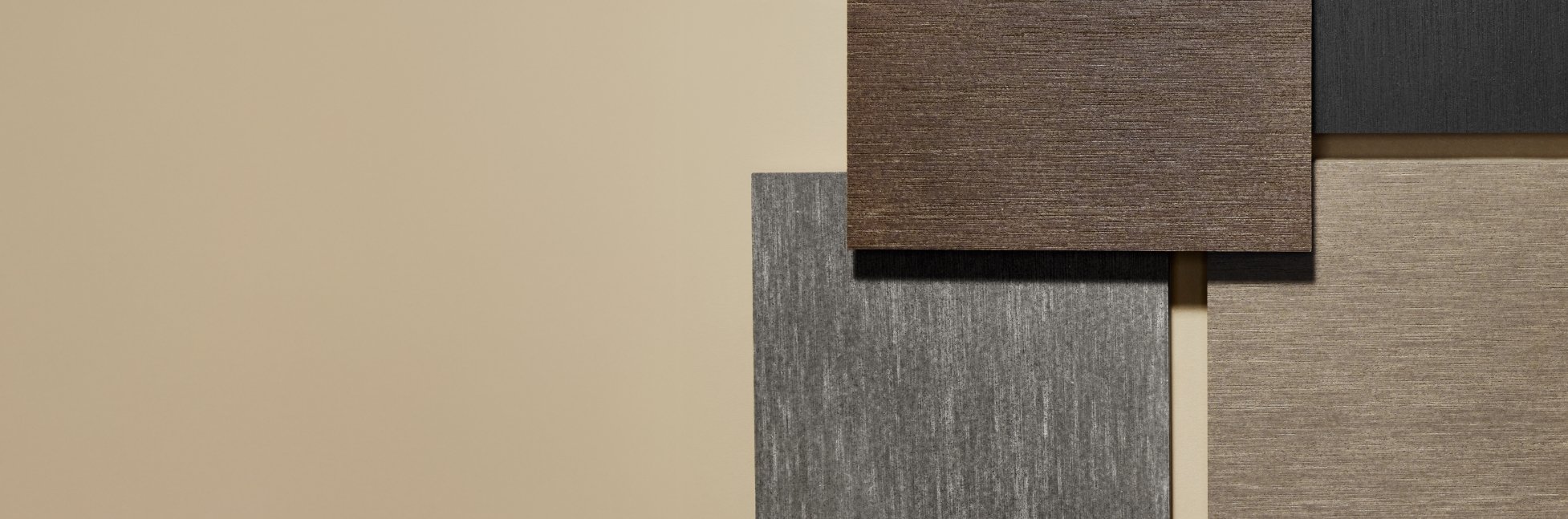
To find a stocking dealer near you, start with our where to buy page. Because availability is still expanding, ordering a sample first is the safest way to confirm color and profile for your project. Samples are $5 each: start with the shiplap siding sample, or browse all available samples, including stain colors.
The Bottom Line on Rice Hull Siding
Rice hull siding earns its spot if you want the look and workability of real wood without wood’s upkeep, and you’re willing to pay more than vinyl to get it. (For a broader look at other options, see our alternatives to vinyl siding.) The two things to get right are the budget and the installation: respect the per-square-foot cost, and treat the temperature movement as a design input rather than an afterthought.
The honest cons, the PVC binder and the shorter track record, are real but manageable, and they shouldn’t scare off a project that fits. The best way to settle the question is to hold a piece in your hand. We make ACRE rice hull siding, trim, and decking, and you can order samples to judge the grain, color, and finish on your own build before you commit to a full order.
Ready to Experience the
Difference?
Ask for ACRE at your local lumber yard or order samples to see for yourself why builders are making the switch.
Frequently Asked Questions
Is rice hull siding the same as rice husk siding?
Yes. Both names describe siding made from the shell around the rice grain. “Hull” and “husk” refer to the same part, so brands and retailers use the terms interchangeably, sometimes on the same product page, which is why the search results for them overlap.
Is rice hull siding fireproof?
No siding is truly fireproof. Rice hull siding is fire-resistant: ACRE shiplap is WUI-certified by the California State Fire Marshal, a test of how a product holds up against the ember and flame exposure of a wildfire, not whether it can burn at all. If you need a noncombustible Class A material, fiber cement is the comparison point.
Do rice hulls attract rodents or termites?
The finished composite doesn’t. Rice hulls are high in silica, which makes the board difficult for termites to eat, and the PVC binder gives pests nothing to feed on. Loose, raw rice hulls used as garden mulch are a different story, but that isn’t what siding is made of.
How much does it cost to side a 2,000-square-foot house with rice hull siding?
Plan on roughly $20,000 to $34,000 in material for a typical 2,000-square-foot home, based on $10 to $12 per square foot across 2,000 to 2,800 square feet of wall, with installation labor on top. The biggest swing factors are the profile you choose and whether you finish on site or order pre-stained.