How to Choose Siding for Your Home: A 2026 Buyer's Framework
August 2026Every guide on how to choose siding hands you the same roster of vinyl, fiber cement, wood, and the rest. The roster is the easy part. The hard part is deciding which material fits your house, your budget, and your climate, and which trade-offs you can accept. This framework is built to make that call clear instead of overwhelming.
Start With Your House, Not the Material
The better place to start is your own house, not a showroom. A few conditions there will rule some materials in or out before cost or looks ever enter the picture.
Check what is behind the old siding first. Installing new siding over old boards traps moisture, hides rot, and voids most manufacturer warranties. A proper job means tearing off the existing material and inspecting the sheathing underneath for soft spots, water stains, or failed fasteners. Some warning signs show up before tear-off even begins: soft spots around windows and doors, bubbling paint on trim, or interior staining on exterior walls. This is also why the per-square-foot number you found online rarely matches your quote: tear-off often uncovers rotted sheathing that was never in the original bid.
Weight and timing matter too. Fiber cement is heavy enough that some walls need reinforced or upgraded sheathing to carry it, which adds cost. If your windows, gutters, fascia, or exterior trim are near the end of their life, handle them before or during the re-side rather than disturbing new material a few years later, since access is never easier than when the walls are already open. The same logic applies to insulation. According to ENERGY STAR guidance on wall insulation, a re-side is the natural moment to add a continuous exterior insulation layer, since the wall is already open.
Then look outward. Your climate will eliminate some materials on durability grounds alone, and your neighborhood sets a resale ceiling: a premium finish on a modest block rarely returns what it costs, while an under-built exterior can drag down a nicer street. Check any HOA restrictions and local permit requirements before you fall in love with a look you cannot legally install.
The Factors That Decide Siding, and How to Weigh Them
- Upfront cost: the installed price today, material plus labor
- Total cost of ownership: upfront cost plus decades of maintenance and any mid-life replacement
- Durability and lifespan: how long it lasts before it needs replacing
- Maintenance tolerance: how much painting, staining, or washing you will realistically do
- Climate fit: how the material handles your moisture, heat, cold, salt, or wildfire risk
- Energy efficiency: how much the wall assembly adds to insulation
- Aesthetics and resale: the look you want and what buyers in your area expect
Sustainability is becoming a genuine eighth factor for many buyers, covering recycled content, embodied carbon, and whether a material can be recycled at end of life. It rarely decides the choice on its own, but it breaks ties.
The method is simple: rank your top two or three factors for your situation, then let the lower-priority ones flex. A budget-driven owner in a mild climate weighs upfront cost and maintenance and can accept a shorter lifespan. Someone in a wildfire zone puts fire resistance first and treats cost as the variable. Trying to optimize all seven at once is what produces the analysis paralysis so common on home forums.
| Factor | The question to ask yourself | Materials that tend to win |
|---|---|---|
| Upfront cost | What can I spend this year? | Vinyl, engineered wood, composite wood |
| Total cost of ownership | What will 30 to 50 years actually cost? | Fiber cement, brick, stone, quality composite |
| Durability | How long before I do this again? | Brick, stone, fiber cement, metal |
| Maintenance | How much upkeep will I really do? | Vinyl, fiber cement, metal, composite |
| Climate fit | What does my weather punish? | Depends on climate (see below) |
| Energy efficiency | Do I need help insulating? | Insulated vinyl, any siding over continuous foam |
| Aesthetics and resale | What do buyers here expect? | Fiber cement, wood, composite, stone accents |
Siding Types Compared: Cost, Lifespan, and Upkeep
Here is where the seven factors meet the actual siding types. The table below gives typical installed ranges; treat them as planning figures, since your real number depends on your region, wall complexity, and how much prep the job needs. Cost figures track the installed calculators at Homewyse and This Old House’s 2026 siding pricing.
| Material | Installed cost per sq ft | Lifespan | Maintenance | Fire resistance | Best climate |
| Vinyl | $3 to $8 | 20 to 40 years | Low | Poor | Mild to cold |
| Fiber cement | $6 to $14 | 40 to 50+ years | Low to medium | Excellent | Most climates |
| Engineered wood | $4 to $9 | 25 to 40 years | Medium | Moderate | Moderate to cold |
| Wood (cedar) | $8 to $14 | 20 to 40 years | High | Poor | Dry |
| Composite (incl. rice hull) | $5 to $16 | 25 to 50 years | Low | Varies by formula | Most climates |
| Steel | $5 to $12 | 40 to 60 years | Low | Excellent | All but coastal |
| Aluminum | $4 to $8 | 30 to 50 years | Low | Good | Coastal, humid |
| Stucco | $6 to $10 | 50 to 80 years | Low to medium | Excellent | Dry, arid |
| Brick / stone veneer | $8 to $30+ | 75 to 100+ years | Very low | Excellent | Most climates |
Vinyl
Vinyl is the cheapest mainstream option and the most common siding on new American homes, leading at 27.7 percent of 2025 single-family starts, ahead of stucco and fiber cement, per the National Association of Home Builders. It never needs paint, resists moisture and insects, and washes clean with a hose. The trade-offs show up at the extremes: thinner panels can look plastic, color fades over 15 to 20 years on darker shades, and standard panels can grow brittle in hard cold or warp near a grill or reflected heat. It is the right pick for a budget-conscious owner in a moderate climate.
Fiber Cement
Fiber cement is the durability benchmark: a blend of cement, sand, and cellulose that resists fire, rot, termites, and impact, with a 40 to 50+ year lifespan. The costs are real, though. It is heavy enough to sometimes require sheathing reinforcement, cutting it releases silica dust that demands proper respiratory protection, and the factory finish still needs repainting roughly every 10 to 20 years. For most owners who can afford professional installation, it delivers the best all-around balance.
Engineered Wood
Engineered wood combines real wood fibers with resins to mimic the look of wood at $4 to $9 per square foot. It is lighter than fiber cement, which makes installation faster and more forgiving, and it resists moisture and insects better than natural wood. The weak point is moisture at edges and cuts, and it is the material’s most common regret. Unsealed board ends and field cuts can wick water and then swell, warp, or rot, especially along bottom courses and around trim, and skipped edge-sealing is a common thread in engineered-wood moisture complaints. Engineered wood rewards careful detailing and a disciplined crew more than almost any other siding, so it is only as reliable as its installation.
Wood and Cedar
Nothing matches the warmth of real cedar or pine, and wood is easy to repair or restain. But it is the highest-maintenance option on the wall. Expect to restain or repaint every three to seven years, and accept that humidity, insects, and fire risk all work against it. Wood makes sense for owners who genuinely enjoy the upkeep and want authentic character. Everyone else should look at the materials that deliver most of the look with a fraction of the work, rounded up in this guide to cedar siding alternatives. If a factory-finished composite is on your shortlist, see how it stacks up against cedar on cost and upkeep.
Composite, Including Rice-Hull Boards
Composite is the category most buyer’s guides skip, and it is worth understanding because it spans a wide range. At the lower end are wood-composite boards made from wood chips and resin, which install easily but can suffer moisture damage at the edges in humid climates. At the upper end are polymer and mineral composites engineered to look like wood without the repaint cycle, priced from roughly $5 to $16 per square foot depending on the formula.
A newer entrant in this category swaps the wood fiber for rice hulls. Modern Mill’s ACRE is one example: a composite of rice hulls and rigid PVC, which gives it a wood-like surface that can be milled into tongue-and-groove profiles while resisting water, weather, rot, and pests. Because rice hulls are an agricultural byproduct, boards like this also bring a recycled-content angle for buyers weighing sustainability. Composites like this tend to cost more than vinyl, largely because they are newer materials made by fewer manufacturers rather than because of any single premium feature. If a wood look without the wood upkeep is your priority, this is the category to study, and rice-hull siding is one of its newer entrants.
Metal: Steel and Aluminum
Steel and aluminum resist fire, rot, and pests, and they suit modern designs. Steel is the tougher of the two at $5 to $12 per square foot and dents less; aluminum resists salt corrosion, which makes it a coastal favorite, but it dents more easily. Neither insulates or soundproofs well on its own, so a busy street or a cold climate may argue for adding a continuous insulation layer behind the panels.
Brick, Stone, and Stucco
Masonry is the longevity tier. Brick and natural stone last 75 to 100+ years with almost no maintenance beyond occasional mortar repointing over the decades. The cost split is worth knowing: full brick runs $10 to $20+ per square foot and natural stone $15 to $30+, while manufactured veneers deliver a similar look for roughly $8 to $15. Stucco, a cement-based plaster at $6 to $10 per square foot, lasts for decades in dry, arid regions but cracks and traps moisture where heavy rain or freeze-thaw cycles are common, so match it carefully to climate.
What Total Cost of Ownership Actually Looks Like
The upfront price is the number everyone compares, and it is the one most likely to mislead. The cheapest siding today can cost more over the life of the house because it needs replacing sooner and repainting more often. Total cost of ownership folds those future costs into the decision.
Consider a hypothetical 2,000-square-foot wall area over a 50-year horizon. These figures are illustrative, not a quote, and each row rests on the assumption stated in it:
| Path over 50 years | Upfront | Repaints / refinishes | Replacements | Rough 50-year total |
|---|---|---|---|---|
| Budget vinyl (20 to 40 year life) | ~$12,000 | None | One (~$12,000) | ~$24,000 |
| Fiber cement (40 to 50+ years) | ~$18,000 | 2 to 3 repaints (~$11,000) | None | ~$29,000 |
| Composite, assuming it reaches 50 years | ~$22,000 | None | None | ~$22,000 |
Change the assumptions and the ranking shifts. A composite that only reaches the low end of its 25-to-50-year range needs a mid-life replacement, which erases its apparent lead. Fiber cement carries the highest running total in this example, because two or three repaints add up over five decades, though a factory finish that stretches the repaint interval narrows that gap.
The point is not to crown a lifetime-cost winner but to show that upfront price is a weak proxy for what a wall really costs: the cheapest siding today can cost the most over time. And lifetime cost is only one of your seven factors. Fiber cement can post a higher fifty-year total and still be the right call for its durability, fire resistance, and looks. Resale reinforces the wider point.
Siding is one of the highest-return exterior projects, recouping roughly 97% to 114% of its cost at resale depending on the material, according to the annual Cost vs. Value data summarized in This Old House’s siding cost breakdown. Treat that as a national average, though, since a premium material in a modest neighborhood may never return its premium.
Best Siding by Climate
Climate is the factor most likely to overrule the others, because a material that thrives in one region fails in another.
Cold and freeze-thaw zones: Insulated vinyl and fiber cement handle expansion and contraction well when installed with proper allowances. Avoid stucco, which cracks under repeated freeze-thaw stress.
Hot, humid, and coastal regions: Aluminum resists salt corrosion better than steel, and fiber cement will not rot or feed mold. Wood is the worst fit here unless you commit to aggressive upkeep, and vinyl can warp under sustained, intense heat. ACRE can also be a great option in these conditions as it resists rot, salty air, and wet climates.
Wildfire-prone areas: Non-combustible materials are the simplest choice in the wildland-urban interface, and the Department of Energy’s Building America guidance on fire-resistant wall assemblies points to stucco, fiber cement, brick, stone, and metal. They aren’t the only route: California’s wildland-urban interface code also accepts ignition-resistant materials and wall assemblies that pass a 10-minute direct-flame test. ACRE Shiplap is listed by the California State Fire Marshal on that tested-assembly path, in its brown color over the listed sheathing. Check what your local building department accepts before you choose. There is a financial angle too: research by the Insurance Institute for Business and Home Safety shows wind-blown embers are a leading cause of home ignition, and non-combustible siding is part of the home-hardening that can reduce that risk and, in some markets, your premium.
Dry and arid regions: This is where stucco earns its long lifespan and masonry shines.
The Maintenance Reality Check
Underestimating upkeep is the most common siding regret, ahead of any complaint about looks. “Low maintenance” and “zero maintenance” are different promises, and the difference catches owners off guard.
Be honest about what each material asks. Vinyl and quality composites are genuinely close to wash-and-forget. Fiber cement is low maintenance on a multi-year cycle rather than never. Wood is high maintenance, full stop, with a restain cycle measured in single-digit years, which is exactly the cycle factory pre-staining is built to break. Choose for the maintenance behavior you will actually follow, not the disciplined version of yourself you imagine on installation day.
A couple of marketing claims deserve scrutiny. Insulated vinyl is often sold as an energy upgrade, but the benefit is modest unless the wall also has a continuous exterior insulation layer, because the air gap behind standard panels limits how much the siding alone contributes. And dark colors, while fashionable, fade and stress more visibly than mid-tones on most materials, which is a frequent source of buyer’s remorse a few years in.
Before You Sign: Vetting the Install and the Warranty
Most siding failures trace to installation, not the material. The best board on the market will trap moisture, void its warranty, and fail early if it goes on wrong, so vetting the installer matters as much as choosing the product.
Look for installers with manufacturer or trade certification and a checkable track record, and read the bid as carefully as the brochure. A complete bid itemizes tear-off and disposal, substrate repair allowances, flashing and moisture-barrier details, exact product names and thickness, the workmanship warranty, and a timeline. Two quotes for the “same” material can differ by thousands precisely because one of them left half of that off the page.
On an older house, ask what is coming off the wall. Siding shingles are among the products where the EPA says asbestos may be found, so have old siding tested before anyone removes or cuts it, and leave any asbestos removal to an accredited professional.
Understand the two warranties in play. The material warranty comes from the manufacturer and often reads “lifetime” but is prorated, paying less as the product ages. The workmanship warranty comes from the installer and covers the labor. Improper installation voids nearly every material warranty, which is one more reason the crew matters more than the brand.
The Bottom Line
There is no single best siding, only the one that matches your weighted priorities, your climate, and the maintenance you will honestly keep up with. Work through your house first, rank the two or three factors that matter most to you, price the decision over decades rather than years, and vet the crew as hard as the material. Do that, and a choice that felt overwhelming resolves into a short list you can defend.
If a wood look without the repaint or restain cycle is high on your list, the composite category is worth a close look, and our ACRE rice-hull siding is one of the newer entrants there. You can order a sample to see how it compares against the other materials on your shortlist before you commit to a whole-house order.
Ready to Experience the
Difference?
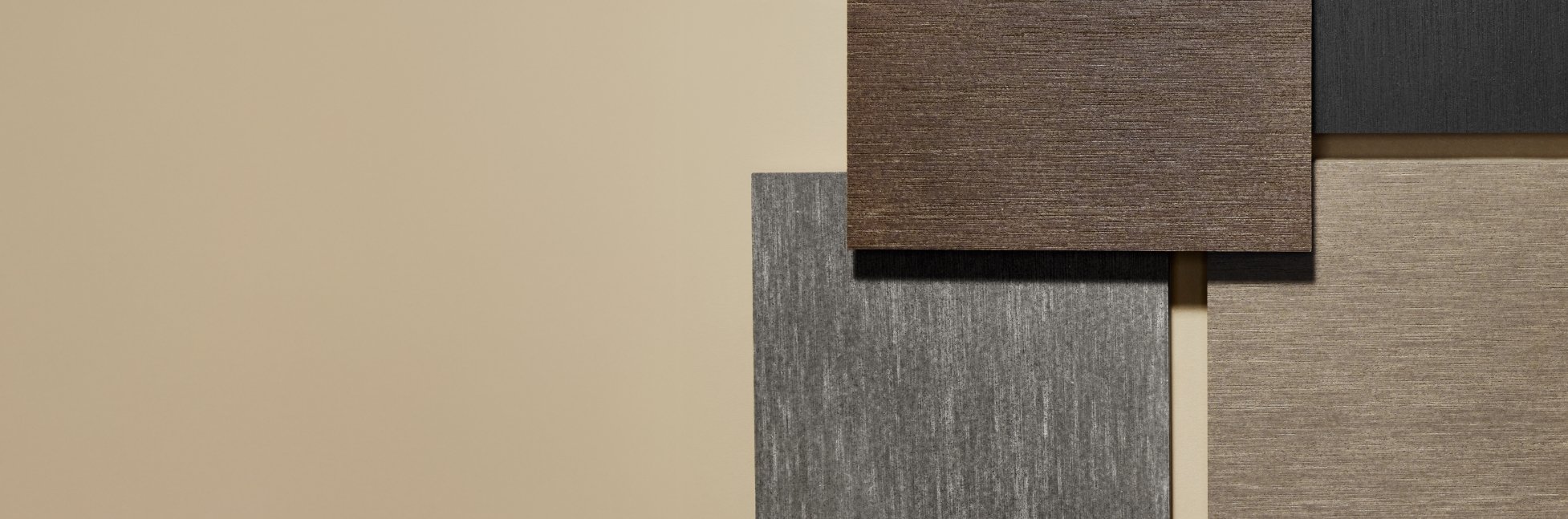
Ask for ACRE at your local lumber yard or order samples to see for yourself why builders are making the switch.
Frequently Asked Questions
How much does it cost to side a 2,000-square-foot house?
Most whole-house siding projects run from about $8,000 to $30,000 depending on material and labor, and a typical vinyl job on a 2,000-square-foot home lands around $12,000. Vinyl sits at the low end; fiber cement, quality composite, and masonry run higher. Tear-off of old siding and any sheathing repair add to the figure, which is why a real quote almost always exceeds the per-square-foot math. To sanity-check a bid yourself, estimate your wall area as perimeter times height, subtract large openings like garage doors and picture windows, and add 10 to 15 percent for waste.
What type of siding lasts the longest?
Brick and stone lead at 75 to 100+ years, followed by stucco in dry climates at 50 to 80 years, then fiber cement at 40 to 50-plus years and steel at 40 to 60. Vinyl and wood typically last 20 to 40 years, and wood only reaches the top of that range with steady upkeep.
What is the best siding for the money?
It depends on your time horizon. Vinyl wins on upfront cost, but over a 30 to 50 year span, fiber cement and low-maintenance composites often match or beat it once you count repaints and any mid-life replacement. Rank upfront cost against total cost of ownership before deciding.
What is the best siding for a cold or snowy climate?
Insulated vinyl and fiber cement both handle freeze-thaw cycles well when installed with proper expansion allowances. Avoid stucco in these regions, since repeated freezing and thawing tends to crack it. For a profile-specific look at how composite shiplap holds up through winter, see this breakdown of shiplap siding in cold-climate installations.