Deck Design Ideas and Trends for 2026
July 2025Deck design in 2026 is less about following a look and more about building an outdoor room you actually use. The best deck design ideas this year pair a smart layout with warm, natural colors and materials chosen for your climate and your patience for upkeep. Below are the trends shaping decks right now, a straight guide to the materials behind them, and the questions worth answering before you build.
From Backyard Add-On to Outdoor Room
The biggest shift in deck design has nothing to do with a single color or board. It is what a deck is for. In 2026, homeowners are building decks as full outdoor rooms, spaces planned around how you actually live day to day, not a plain platform tacked onto the back of the house.
The numbers tell the story. The share of new homes built with a deck fell to an all-time low of 17.4% in 2024, down from a 27% peak in 2007-2008, according to NAHB’s tabulation of the HUD/Census Survey of Construction. Fewer decks are going onto new builds, which points to a market driven by remodels and existing homes, where owners are designing for themselves rather than a future buyer.
That change in mindset drives almost every trend below. When a deck is built for the people living there, it gets zones, better materials, lighting you can use at night, and a layout that earns its space. The 2026 Houzz Outdoor Trends Study found lounge and seating areas now show up in 83% of renovated outdoor spaces, and 71% of homeowners hired a pro for the work, up from 65% in 2024. People are treating the deck like part of the house, and building it that way.
8 Deck Design Ideas and Trends Shaping 2026
These eight keep showing up in 2026 builds, and they earn their place by holding up long after the season you install them.
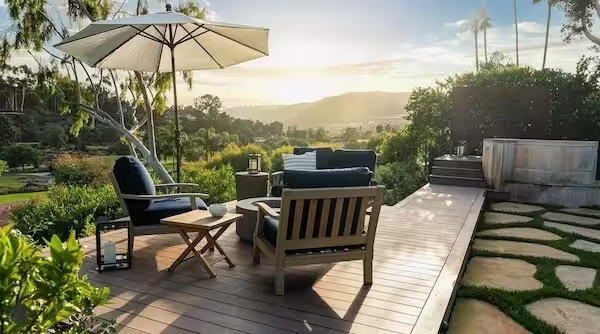
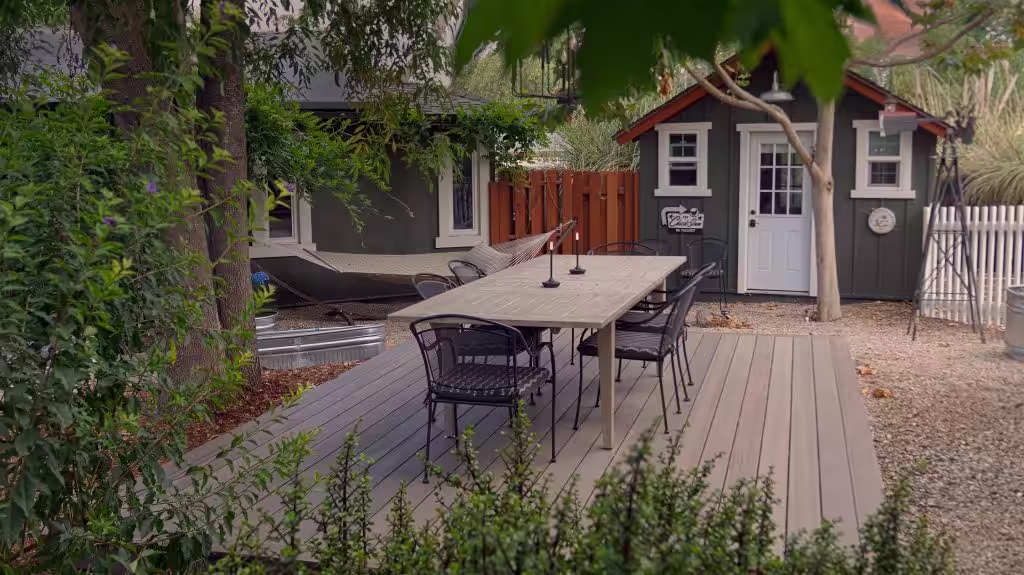
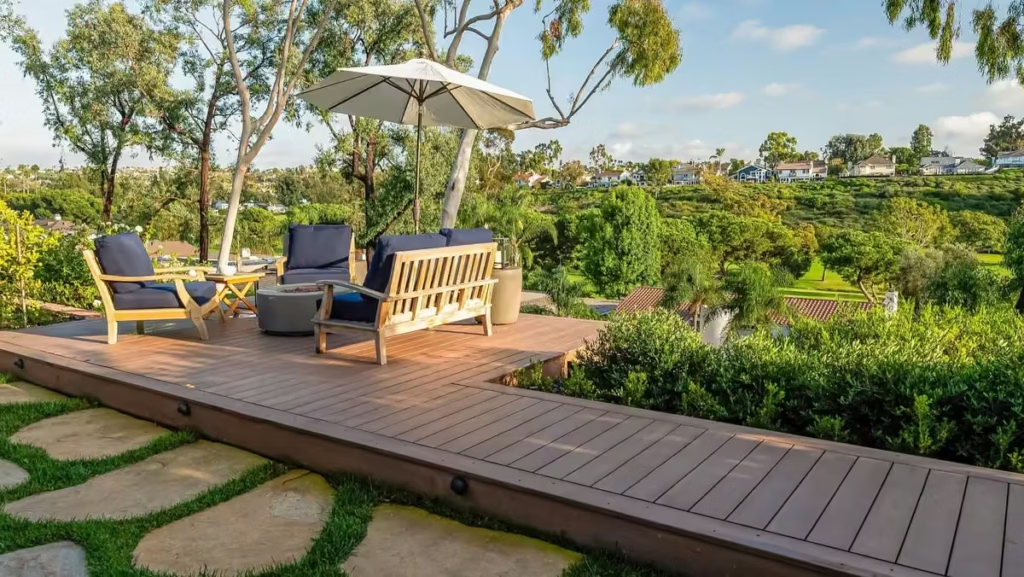
1. Multi-zone outdoor rooms. The single-platform deck is giving way to defined zones: a dining area near the kitchen door, a lounge set for shade or the best view, a spot for the grill, and a fire feature on a stone or concrete pad just off the deck to pull people together after dark. Sketch how you move through the space before you pour a footing. Good flow is what makes a deck usable on a random Tuesday, not just at a party. The strongest versions blur the indoor line too, with wide sliding or folding glass doors and flooring that carries the same tone from the living room out onto the boards. Stepping the levels is another way to separate zones without walls.
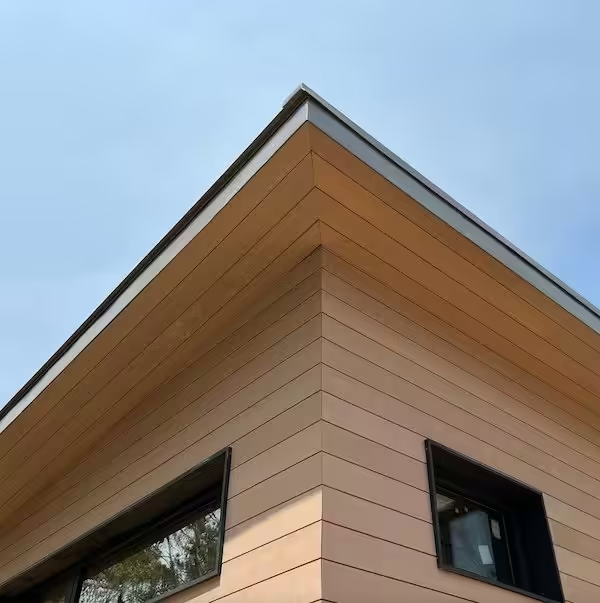
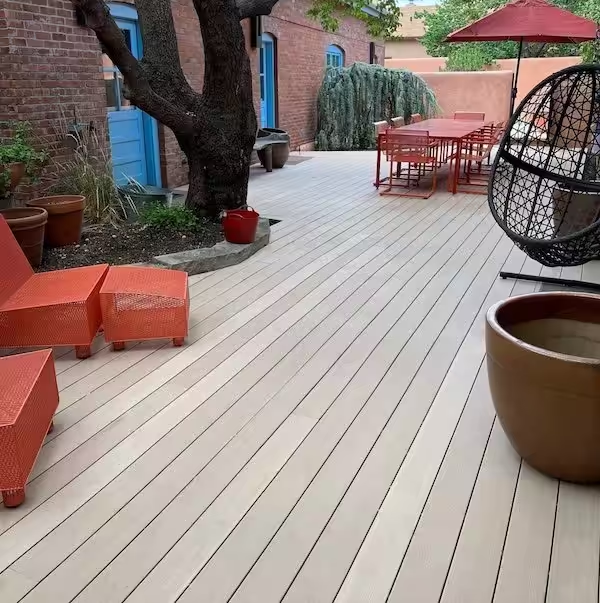
2. Warm, earthy color palettes. Cool blue-grays are fading. The 2026 palette leans warm: greige, soft browns, driftwood, and clay-toned accents that blend with siding, stone, and landscaping instead of fighting them. Gray is not dead, and a nuanced gray still sells, but the momentum is toward warmer, blended tones. If you like to change your mind, a paintable and stainable board covers most of the lighter warm neutrals in its maker’s approved range and leaves room to shift the color later.
3. Matte, textured, variegated boards. The high-gloss, obviously-plastic look is out. Low-sheen finishes with multi-tonal streaking read more like real wood, hide scuffs and pollen better, and the embossed grain adds grip underfoot. A single flat color shows every mark. A varied one ages more gracefully.
4. Picture-framing, borders, and geometric patterns. A picture-frame border, a breaker board, or a diagonal, herringbone, or inlay pattern gives a deck a finished, intentional edge and quietly marks off the different zones. A simple picture-frame border is one of the simplest ways to make a standard rectangle look custom, though patterned and framed layouts add cutting and labor: for ACRE, Modern Mill specifies joists no more than 12 inches on center under diagonal and picture-frame patterns, and that tighter framing is the real cost to price in.
5. Mixed materials and modern railings. Decks in 2026 mix textures on purpose: composite paired with black metal, stone, or wood accents, and slim railing systems in black aluminum, cable, or glass that keep the view open. The mix adds depth without adding upkeep, as long as every material can handle the weather.
6. Integrated lighting and subtle smart tech. Low-voltage LED strips built into stair risers, rail caps, and posts extend the deck into the evening and add a real safety margin on steps. Houzz found outdoor lighting already appears in most lounge areas. App or timer control is nice, but the point is designing the light into the build rather than clipping it on later.
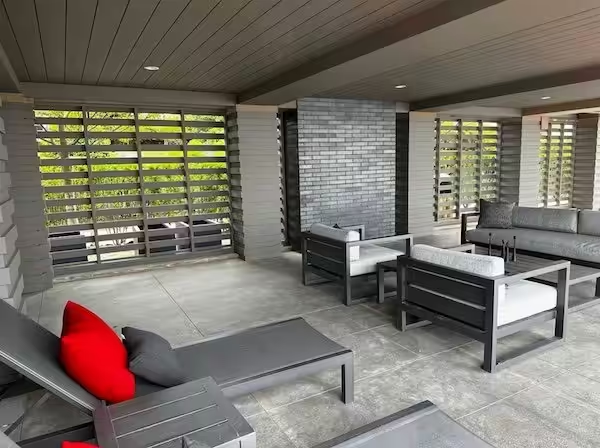
7. Built-in amenities and shade. Built-in benches, planters, and storage, plus outdoor kitchens, shade from a louvered or covered pergola, and a fire feature set safely off the deck, turn a deck into a room you use in more months of the year. Shade structures were one of the fastest-rising outdoor upgrades in the Houzz data. Plan these in early, because most of them need framing or wiring you do not want to retrofit. One placement rule is non-negotiable: keep fire pits and other heat sources off the deck surface itself. Modern Mill’s installation guide prohibits them on top of ACRE decking because the heat can damage the boards, and other composite makers publish similar restrictions, so give the flames a masonry pad beside the deck instead.
8. Biophilic, landscape-integrated design. Biophilic design, the practice of building a stronger connection to nature into a space, is the throughline behind most of the list. Terrapin Bright Green’s 14 Patterns of Biophilic Design ties natural materials, textures, and framed views to measurable gains in stress and focus. On a deck it looks simple: earthy tones, real planting, and a layout that frames the yard instead of blocking it. Our take on how architects implement biophilic design goes deeper on why it works.
Decking Materials in 2026: How to Choose
A trend is only as good as the board it is built on. The material sets your maintenance, your comfort in the sun, how long the deck lasts, and how green it really is. There is no single best pick, only the best fit for your climate, your upkeep tolerance, and the look you want.
Here is how the common 2026 options compare at a glance.
| Material | Look | Maintenance | Heat underfoot | Typical lifespan | Sustainability angle | Main cost driver |
|---|---|---|---|---|---|---|
| Pressure-treated wood | Utility wood, paintable | High: seal or stain every 1-3 years | Moderate | 10-15 years | Renewable wood, but chemically treated | Lowest upfront cost |
| Cedar / redwood | Warm natural grain | High: reseal to hold color | Cooler, stays comfortable | 15-25 years | Renewable; choose FSC-certified | Availability and grade |
| Tropical hardwood (ipe) | Rich, dense, premium | Moderate: oil to keep color | Cooler than composite | 25-50 years | Deforestation risk unless FSC-certified | Import cost and rarity |
| Capped composite | Wood-look, consistent | Low: wash, no refinishing | Warm to hot in dark colors, full sun | 25-30+ years | Recycled content, but plastic and hard to recycle later | Board line and cap quality |
| PVC / cellular | Wood-look, lightest | Low: wash only | Cooler than most composite | 30-50 years | Durable, but all-plastic resin | Fully synthetic material cost |
| Aluminum | Modern, sleek | Low: wash only | Cooler than dark composite | 35-50+ years | Highly recyclable, non-combustible | Specialty product cost |
| Bamboo (modified) | Hardwood-look | Low to moderate | Moderate | 25+ years | Rapidly renewable grass fiber | Newer category, spotty stock |
| Rice-hull composite (ACRE) | Real wood feel, paint or stain | Low: wash; recoat to refresh color or restyle | Depends on finish; light (LRV 55+) colors run cooler | Comparable to composite | Made largely from upcycled rice hulls | Rarity, fewer makers offer it |
A few caveats on that table. Low-maintenance never means zero maintenance, and we come back to that below. Dark boards in full sun get hot no matter the material. And “sustainable” is not automatic: most composite carries recycled content but is difficult to recycle at the end of its life, while genuinely renewable options include FSC-certified wood, bamboo, and bio-based boards made from farm byproducts. Rice hulls, for instance, are the discarded outer shell of the rice grain, an agricultural byproduct increasingly repurposed into building materials instead of going to waste.
One note on cost before you fall for a board: the decking you see is a fraction of the job. Framing, footings, and labor make up a large share of the total, and the framing lumber alone can run a quarter to a third of the lumber you will need, which is why the cheapest board rarely means the cheapest deck. Match the material to your maintenance tolerance and climate first, then price the full system.
That last row is where ACRE fits, and it answers a request that comes up a lot: a board with the look and feel of real wood that resists rot, skips the annual refinishing, and avoids the glossy, printed-grain look of a lot of composite. Modern Mill makes it largely from upcycled rice hulls, and it takes paint or stain in hundreds of approved colors without a primer. Approved is the operative word: because ACRE contains PVC, Modern Mill requires coatings with a light reflective value (LRV) of 55 or greater to manage heat build-up, so run the darkest shades past your rep first. The honest trade-off is availability and price, since fewer manufacturers offer a bio-based board, and like any exterior material its color shifts under years of UV unless you refresh the finish, which here is a recoat rather than a strip-and-restain. If you are weighing wood against composite, our guide to composite decking versus wood decking breaks down the trade-offs, and the full ACRE decking lineup covers the bio-based option.

3 Myths That Trip Up Deck Buyers
Most deck regret traces back to an expectation the material never promised. Three myths cause most of it.
Myth 1: Composite is maintenance-free. It is low-maintenance, not no-maintenance. Composite skips the sand-and-stain cycle that wood demands, which is a real advantage. But it still needs a wash a couple of times a year, it can fade some over the first seasons, and in damp shade it will grow the same mold and mildew any surface does if you never clean it. Plan on a hose, a soft brush, and a mild cleaner, and it will look right for decades. Our guide to caring for an ACRE deck lays out a realistic routine.
Myth 2: A composite deck can’t rot. The boards resist rot. The wood frame underneath them often does not. Water still reaches the joists through the gaps between boards, and a wood substructure without proper flashing, ventilation, or ground clearance can fail years before the surface does. That frame is also the most expensive part to fix. NADRA estimates roughly 30 million decks are past their useful life and need repair or replacement. When a deck fails, it usually starts below, not in the boards on top, so spend on the structure, not just the surface.
Myth 3: All composite is the same, and it always stays cool. Capped, uncapped, PVC, and bio-based boards behave very differently on heat, scratch resistance, and fade. A dark, capped composite in full afternoon sun can get genuinely too hot for bare feet, which is exactly the complaint that ends a summer on a new deck. Lighter colors, PVC, aluminum, and bio-based boards run cooler. If the deck faces west with no shade, color and material choice matter more than the brand on the wrapper.
Designing by Space: Small, Multi-Level, and Awkward Yards
The trends above scale to almost any footprint if you design around the space you have instead of the deck you saw online.
Small decks. Right-sizing is a 2026 theme, and it favors small spaces. Built-in benches and planters give you seating without eating floor area, a single clear zone beats three cramped ones, and lighter board colors make a compact deck feel larger. Skip the oversized furniture and the deck will feel bigger than its square footage.
Multi-level and sloped yards. A grade change is an opportunity, not a problem. Stepping a deck into two or three levels turns a slope into natural zones, one for dining off the kitchen, one lower for lounging. Wide, shallow stairs double as casual seating; note that stairs carry their own framing spec, and Modern Mill requires stair stringers no more than 8 inches on center with solid, ungrooved boards for the treads. On a tall deck, an under-deck drainage system keeps the space below dry and effectively gives you a second outdoor room for storage or shade. Keep the perimeter open as you finish that space: Modern Mill’s installation guide requires unobstructed airflow under at least 50% of the deck perimeter, so screen it rather than boxing it in.
Awkward footprints. Wraparound and L-shaped decks turn a tight side yard into usable space and can chase the sun or the shade around the house through the day. Curved and geometric shapes are a niche 2026 look that can soften a boxy yard, though they cost more to frame and cut. When the yard fights you, let the layout follow the house and the view rather than forcing a rectangle.
The order that prevents most regret is simple: decide how you want to use the space, lay out the zones and furniture, and let size follow function. Coming to a builder with lifestyle goals rather than a fixed square footage almost always produces a better deck. For a deeper walk-through, see our guide to choosing materials for an outdoor living space.
Matching Your Deck to Your Home and Climate
Two questions settle most color and material decisions: what does the house look like, and what does the weather do?
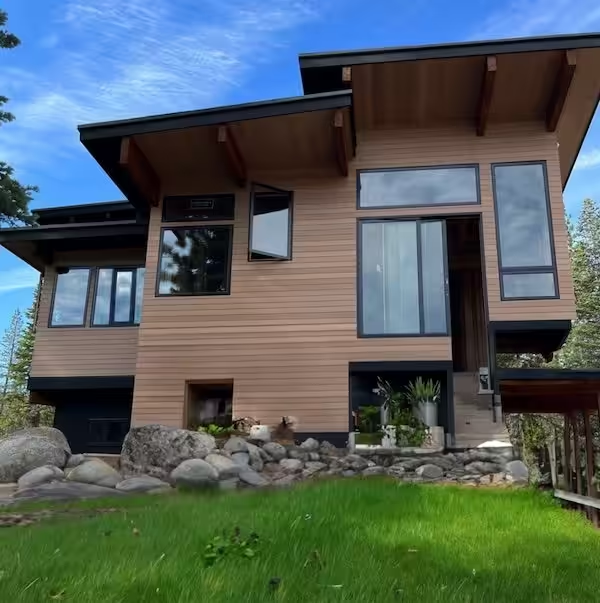
On color, the common question is whether a deck should be lighter or darker than the house. Either works, but they send different signals. A tone close to your siding reads calm and cohesive, which suits the warm, blended palettes trending now. A deck a few shades off creates contrast and definition. The practical tiebreaker is heat and dirt: darker boards run hotter in the sun and can show pollen and dust more, so in a hot, exposed yard a lighter tone usually ages best. Always judge a sample outdoors in real light, not under a showroom bulb. And if the boards are ACRE, check the coating against Modern Mill’s approved range while you choose: coatings need an LRV of 55 or greater, which most of the trending light and mid-light neutrals already meet.
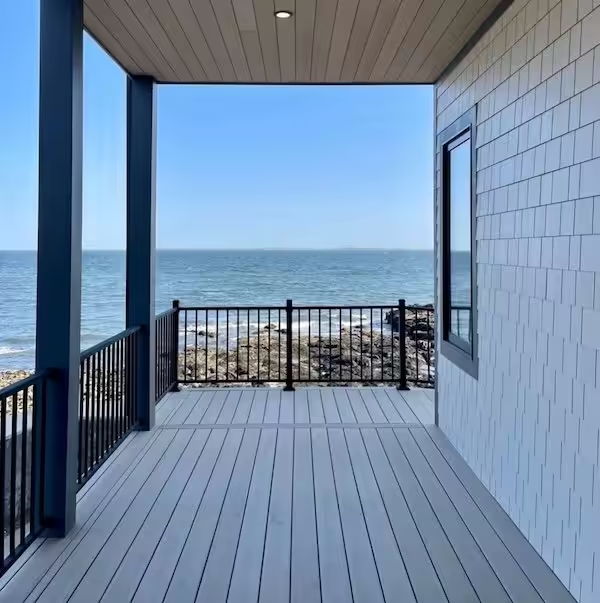
Climate should carry equal weight. In humid and coastal areas, prioritize moisture resistance and airflow under the boards to fight mold and rot. In hot, sunny regions, fade and heat resistance move up the list. And in wildfire-prone areas, building codes increasingly steer you toward fire-resistant materials: California’s wildfire building code requires ignition-resistant or noncombustible exterior materials, decks included, in designated Fire Hazard Severity Zones. Even where it is not yet required, it is worth knowing which way the codes are heading.
If you are moving away from solid wood for the upkeep, a bio-based board like ACRE keeps the real-wood look without the annual refinishing. A rice-hull composite rather than solid lumber, it is a practical middle ground for homeowners who want a natural grain underfoot without a maintenance calendar. One material-specific note: ACRE deck boards have not been evaluated for use in areas regulated under California’s CBC Chapter 7A or CRC Section R337, so in a designated wildfire zone, ask your local building authority which listing your site requires and choose a product that carries it.
Ready to Experience the
Difference?
Ask for ACRE at your local lumber yard or order samples to see for yourself why builders are making the switch.
Frequently Asked Questions
What Is the Most Expensive Part of Building a Deck?
Usually the parts you cannot see: the substructure and the labor to build it. Footings, framing, flashing, and fasteners carry much of the cost, and they determine how long the deck lasts. The surface boards get the attention, but the structure is where the money and the longevity live.
Is Composite Decking Worth It?
For most homeowners who want to spend weekends on the deck rather than maintaining it, yes. Composite costs more upfront than pressure-treated wood but skips the yearly sanding and staining and lasts 25 years or more. If you enjoy refinishing wood or want the lowest possible upfront price, a quality wood deck still makes sense. It comes down to whether you would rather pay in dollars now or in labor later.
Does a Deck Add Resale Value?
Buyers still want one: 79% of recent and prospective home buyers rate a deck as an essential or desirable feature, per NAHB survey data. You rarely recoup the full build cost at sale, so treat a deck as something you build for daily use, with resale as a bonus.
Which Decking Material Stays Coolest Underfoot?
Lighter tones stay coolest, while a dark, capped composite in direct sun gets the hottest. Among materials, PVC, aluminum, and bio-based boards run cooler, so if the deck has little shade and faces the afternoon sun, choose a lighter tone whatever the material.
Will a Gray Deck Look Dated?
A cool blue-gray is the tone most at risk of feeling dated, since the 2026 shift is toward warm, blended neutrals. A warm-leaning greige or a timeless mid-brown is the safer long-term choice, and a paintable or stainable board lets you adjust if tastes move again.
What Is the Most Sustainable Decking Material?
There is no single winner. FSC-certified wood, rapidly renewable bamboo, and bio-based boards made from farm byproducts like rice hulls all have strong cases. Composite uses recycled content but is hard to recycle at the end of its life, and standard tropical hardwood carries deforestation risk unless it is certified. Match the claim to real certification rather than marketing.
How Much Does a New Deck Cost, and Is It Cheaper Than Concrete?
Installed decks generally run about $30 to $60 per square foot, driven by size, material, site conditions, and local labor, with pressure-treated wood at the low end and a composite system with built-ins at the high end. A concrete patio of the same size usually costs less, but it cannot add the elevated, multi-level space a deck can. Get two or three itemized quotes so you can compare like for like.
Building Your 2026 Deck
Decks that will still look right in a decade are planned as rooms, finished in warm and natural tones, and built on materials matched to the climate and the way the space gets used. Chase the layout and the material fit first, and the style takes care of itself.
If your plan keeps running into the same wall, wanting the warmth of real wood with strong rot resistance, no refinishing cycle, and none of the glossy, printed-grain look of a lot of composite, that is the exact problem ACRE decking was made to solve. It is a bio-based board made from upcycled rice hulls that takes stain or paint with no primer and holds up to the weather. Weighing hardwood too? See our guide to choosing a decking material. Order a sample or talk through your project with the Modern Mill team, and you can see how it fits the deck you are planning.